Table of contents
- How to Choose Hypoallergenic Carpets
- Do hypoallergenic carpets actually work for allergy sufferers?
- What are the best hypoallergenic carpet materials?
- Which rooms need hypoallergenic carpets most?
- What should you consider when choosing and installing hypoallergenic carpet?
- Is hypoallergenic carpet right for you?
- FAQs
How to Choose Hypoallergenic Carpets
What carpets are best for allergies, and do hypoallergenic options actually work? We explore whether carpet can improve your indoor air quality rather than hinder it.
Dust mites rank among the most common indoor allergens, and carpets frequently face criticism for trapping dust, pollen and other irritants that trigger sneezing, coughing and itchy eyes. Many allergy sufferers question whether they should abandon carpets entirely.
Contrary to popular belief, however, hypoallergenic carpets do exist and may actually enhance your indoor air quality. Wool naturally captures allergens within its fibres, whilst synthetic materials like polypropylene resist dust mites through their tightly woven construction.
The secret lies in selecting appropriate materials, recognising your particular allergen triggers and maintaining proper carpet care.
This guide examines the best hypoallergenic carpet choices available in the UK to help you make an informed decision for your home.
Do hypoallergenic carpets actually work for allergy sufferers?
How carpets capture airborne particles
Carpet fibres act as a physical filter, capturing airborne particles and preventing them from circulating throughout your home. When dust mites, pollen and pet dander settle into carpet, they become trapped within the fibres until removed through vacuuming.
Research comparing allergen levels found that airborne allergens, including cat and dust mite allergens, were lower over carpets than hardwood flooring, even before cleaning occurred.
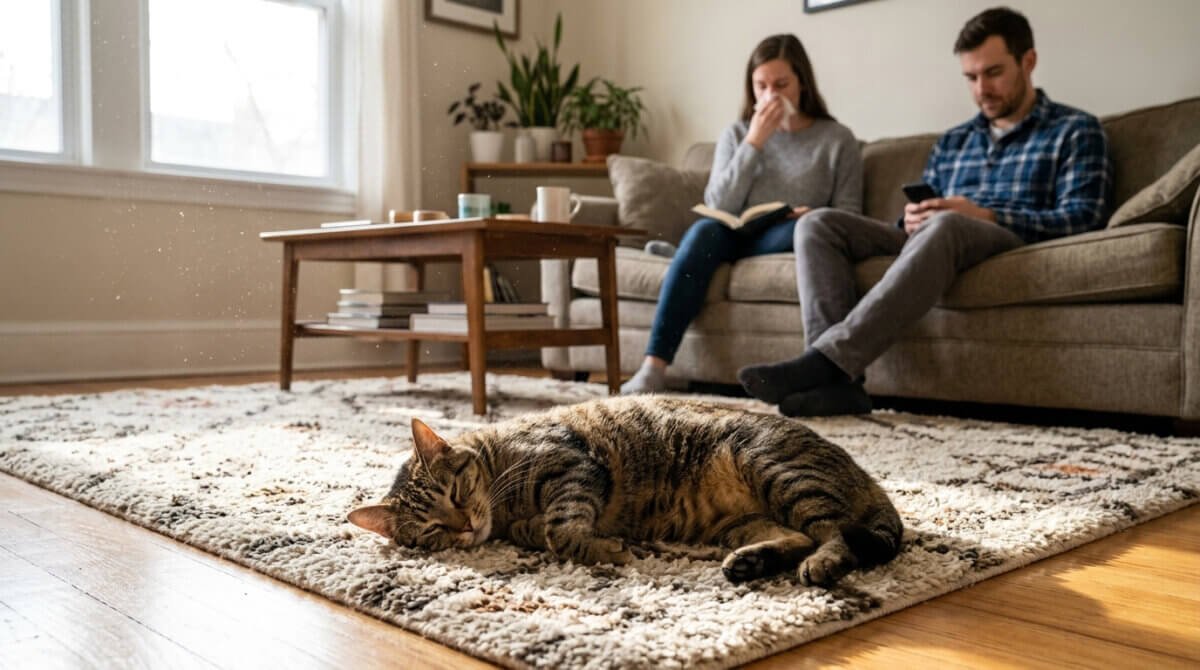
This occurs because carpet fibres create multiple contact points where particles stick, rather than resting on smooth surfaces where foot traffic easily redistributes them.
Regular maintenance determines how effectively this trapping works. Studies show that properly cleaned carpet samples – after vacuuming, cleaning solution application, agitation and hot water extraction – showed further allergen reduction.
Without consistent care, however, carpets accumulate particles over time and may release them when disturbed.
The construction science behind hypoallergenic carpets
Modern hypoallergenic carpets feature tightly woven fibres specifically designed to resist dust mites and mould. Construction characteristics significantly influence how well carpets retain allergens.
Research examining 182 carpet samples found that fluorocarbon treatment, square-hollow fibre shape, high-denier fibre, low-pile height in cut-pile carpets and low-pile density in loop carpets were associated with increased allergen release and recovery.
The best hypoallergenic carpets therefore use opposite characteristics: untreated fibres with lower denier and appropriate pile configurations.
Low-pile carpets trap fewer allergens than high-pile varieties because they provide less surface area for particles to embed deeply.
Synthetic fibres such as nylon and polyester naturally resist moisture, preventing mould growth that triggers allergic responses. Approximately 90% of volatile organic compounds dissipate within days of carpet installation, addressing concerns about chemical emissions.
Carpets versus hard flooring for allergen control
Hard flooring creates its own allergen challenges. Dust and allergens settle on smooth surfaces and become airborne when disturbed through walking or other activities, unless properly cleaned.
Studies examining particle resuspension found that for particles sized 3.0 to 10.0 micrometres, more particles were resuspended from carpeted floors compared to hard floors. For smaller particles between 0.4 to 3.0 micrometres, differences were not significant.
Hard floors require equally diligent cleaning to prevent allergen exposure. This dispels the common belief that they inherently provide superior allergy protection compared to properly maintained carpets.
What are the best hypoallergenic carpet materials?
Wool carpets: natural air purification
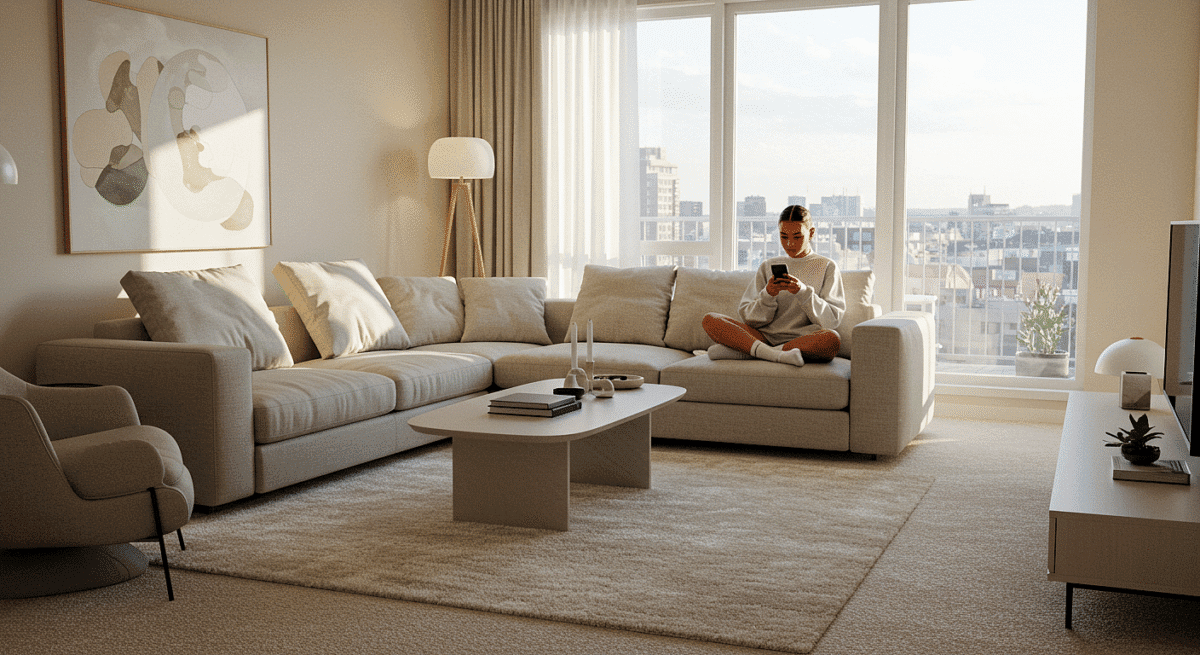
Wool represents the premium choice for hypoallergenic carpets, backed by scientific research demonstrating genuine air-purifying capabilities.
AgResearch scientists found that wool carpets reduce formaldehyde levels to virtually zero within four hours, even when heated. The material also absorbs nitrogen dioxide and sulphur dioxide rapidly, with these purifying effects continuing for up to 30 years.
The natural lanolin coating on wool fibres acts as a dust trap, capturing pollen and pet dander until removed through vacuuming. Wool’s distinctive coil-shaped structure creates an environment that dust mites find inhospitable, whilst the material’s moisture-regulating properties prevent mould and mildew development.
These carpets need weekly vacuuming and professional deep cleaning every 12 to 18 months.
Nylon: durability meets allergen resistance
Nylon carpets deliver excellent allergen control through their smooth, tightly constructed fibres. This structure stops dust, pet dander and pollen from embedding deep into the surface, allowing regular vacuuming to remove allergens more effectively.
Moisture-resistant treatments help reduce mould and mildew growth, particularly valuable in humid conditions.
The material costs significantly less than wool whilst offering comparable hypoallergenic benefits. Nylon also withstands heavy-duty cleaning agents and steam cleaning treatments, making maintenance straightforward for allergy sufferers.
Polypropylene: affordable synthetic protection
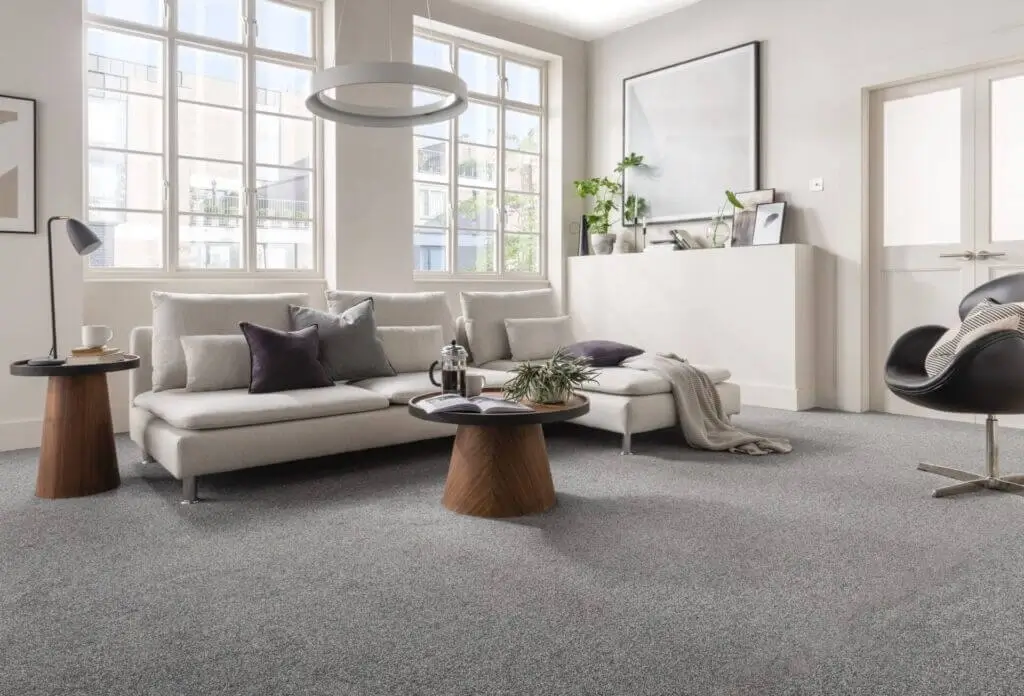
Polypropylene provides budget-friendly allergen resistance through its tight weave and synthetic composition. Unlike natural fibres, polypropylene doesn’t trap allergens within its structure, simplifying upkeep considerably.
The material’s water-repelling properties prevent the damp conditions that encourage allergen growth.
This option offers affordability compared to wool or nylon alternatives, making it suitable for large areas or households managing tight budgets.
Specialist treatments and technologies
Some manufacturers boost hypoallergenic performance through targeted treatments. Allergy Guard contains active ingredients that prevent debris from breaking down into dust mite food sources. This permanent treatment remains effective throughout the carpet’s lifetime.
SmartStrand Forever Clean technology releases up to three times more dirt during vacuuming compared to standard carpets, significantly reducing allergen accumulation.
Which rooms need hypoallergenic carpets most?
If you’re considering hypoallergenic carpets, you should prioritise certain rooms based on allergen risk levels and your specific triggers.
Identifying your highest-risk areas
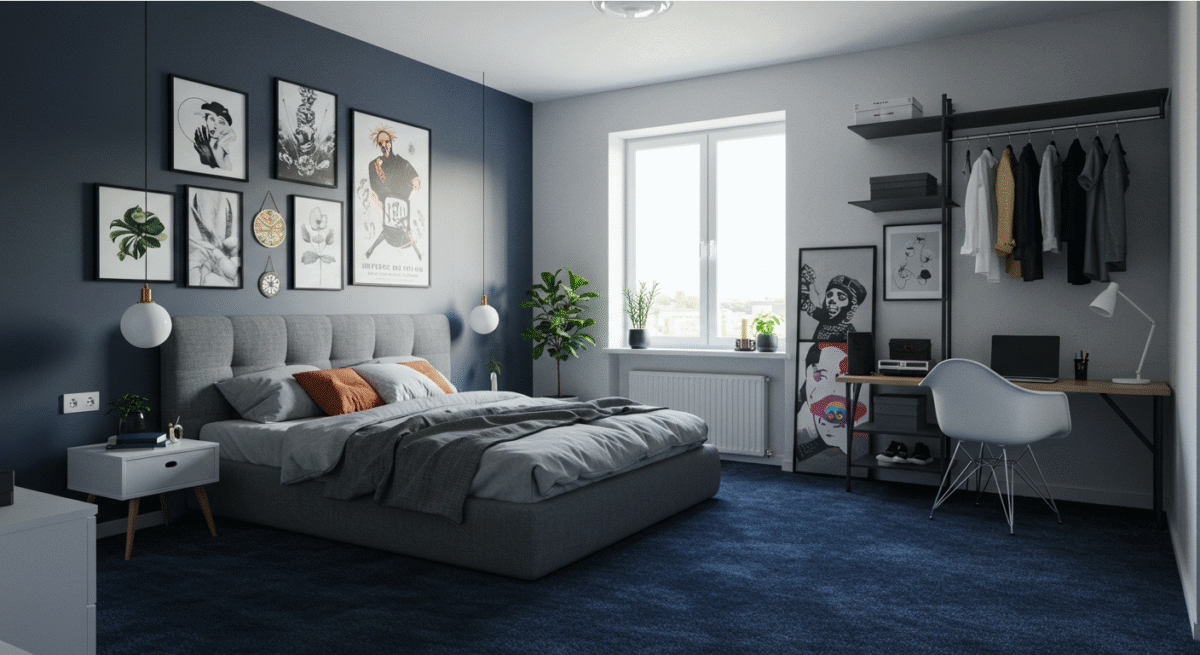
Bedrooms present the greatest allergen challenge, as they harbour dust mite faecal pellets in mattresses, bedding and carpets. These rooms deserve first priority when selecting hypoallergenic options. High-traffic areas accumulate allergens more rapidly because outdoor pollutants enter through foot traffic.
Bathrooms and kitchens require moisture-resistant carpets to prevent mould growth, whilst living rooms benefit from durable materials that withstand frequent vacuuming. This is particularly important if you have family members with asthma or severe allergies.
Understanding your allergen triggers
Your specific allergen profile determines which carpet material suits you best. Dust mites thrive in warm, humid environments, particularly in bedding and carpets. Pet dander becomes airborne from skin flakes, urine and saliva.
Hay fever sufferers face unique challenges, as ventilation that reduces indoor allergens simultaneously introduces pollen from outside. You may need air purifiers during high pollen seasons rather than relying solely on window ventilation.
Mould spores develop in damp, poorly ventilated spaces, requiring carpets with antimicrobial properties in susceptible rooms.
Balancing style with health benefits
Modern hypoallergenic carpets offer style without compromising your well-being. Low-pile nylon carpets suit asthma sufferers whilst providing diverse colours and patterns.
Hypoallergenic fibres like nylon or low-VOC materials create environments that support better health. Short fibres and tight loops prevent allergen entrapment whilst maintaining visual appeal.
Budget considerations for carpet selection
Budget significantly influences your material choices. Nylon costs less than wool whilst delivering comparable hypoallergenic performance. Polypropylene represents the most affordable option for large areas.
Underlay selection also affects total expenditure – hypoallergenic underlay traps dust and allergens, protecting your investment. Professional installation ensures proper fitting, preventing gaps where allergens accumulate.
Prioritising high-risk rooms allows strategic budget allocation, installing premium materials in bedrooms whilst using economical options elsewhere.
What should you consider when choosing and installing hypoallergenic carpet?
Questions to ask carpet suppliers
Request information about VOC ratings before purchasing any carpet. Low-VOC carpets release fewer chemical compounds into the air, reducing allergic reactions. Ask suppliers whether their products meet indoor air quality certifications or standards.
Enquire about the carpet’s pile height and fibre construction, as short fibres with tight loops prevent allergen entrapment.
Question whether anti-microbial treatments contain toxic chemicals, since some add unnecessary VOCs whilst hypoallergenic fibres like recycled PET achieve antimicrobial properties naturally.
Selecting appropriate underlay
Your underlay choice significantly affects overall allergen control. Specialist underlays feature anti-microbial and anti-fungal properties, with breathable membranes and moisture-blocking layers preventing allergen accumulation.
Waffle sponge rubber underlay traps dust and allergens in its pockets. SpringBond underlay, made from recycled plastic bottles, contains no toxic chemicals or VOCs.
Multirich offers 100% recycled wool fibres requiring no glue during manufacture, with no VOC or formaldehyde emissions above legal limits. For underfloor heating installations, ThermalStream demonstrates low VOC and formaldehyde emissions.
Professional installation considerations
Professional installers ensure proper fitting without gaps where allergens accumulate. Choose moisture barriers in damp-prone areas like basements, as correct installation maximises moisture-blocking benefits.
Post-installation care
Allow carpets to off-gas in well-ventilated areas before occupying spaces. Open windows and use fans to increase airflow, facilitating VOC dissipation.
Is hypoallergenic carpet right for you?

Living with allergies doesn’t require abandoning the comfort and warmth of carpets. Evidence suggests that the right hypoallergenic materials, combined with proper maintenance routines and quality underlay, may help create a more comfortable living environment.
If you’re considering hypoallergenic carpets, it’s worth speaking to your healthcare professional to understand your specific allergen triggers and ensure this approach is suitable for your circumstances.
This is particularly important if you experience severe allergic reactions or have multiple sensitivities. Starting with high-risk rooms like bedrooms allows you to test effectiveness whilst managing costs, then expanding to other areas as your experience and budget allow.
Have you found hypoallergenic carpets helpful for managing your allergies? We’d be interested to hear about your experiences in the comments below.
FAQs
Q1. Which type of carpet works best for people with allergies?
Wool carpets are excellent for allergy sufferers as they naturally trap allergens in their fibres and can purify indoor air for up to 30 years. Nylon carpets also work well due to their smooth, tightly woven construction that prevents dust and pet dander from embedding into the surface. For budget-conscious households, polypropylene offers good allergen resistance through its tight weave and moisture-repelling properties.
Q2. Is 100% wool carpet better than an 80/20 wool blend?
Pure wool carpets provide superior hypoallergenic benefits compared to blends. The natural lanolin coating on 100% wool fibres traps dust, pollen and pet dander more effectively, whilst the coil-shaped structure creates an inhospitable environment for dust mites. Additionally, pure wool’s moisture-regulating properties better prevent mould and mildew growth compared to synthetic blends.
Q3. What features should I look for in an anti-allergen carpet?
Look for carpets with low-pile height and tightly woven fibres, as these prevent allergens from embedding deeply. Choose materials with moisture-resistant properties to prevent mould growth, and opt for low-VOC options to reduce chemical emissions. Specialist treatments like Allergy Guard can provide additional protection by preventing debris from decaying into dust mite food sources.
Q4. Are hypoallergenic carpets worth the investment?
Yes, hypoallergenic carpets offer significant benefits for allergy sufferers. They create a cleaner, healthier living environment by reducing allergen accumulation and improving indoor air quality. When properly maintained with regular vacuuming and professional cleaning, these carpets can trap airborne particles more effectively than hard flooring, whilst providing the comfort and aesthetic appeal of traditional carpeting.
Q5. How do carpets compare to hard flooring for managing allergies?
Carpets can actually be better than hard flooring for allergy management when properly maintained. Research shows that airborne allergens are lower over carpets than hardwood flooring because carpet fibres trap particles rather than allowing them to circulate. Hard floors require equally diligent cleaning, as dust and allergens on smooth surfaces become airborne when disturbed by foot traffic.