Your pub’s flooring isn’t just about looking good—it’s one of those business decisions that can make or break your profits. The hospitality game is tough enough without having to worry about floors that can’t handle what you throw at them. Every choice you make matters when you’re running a pub.
Whether you’re giving your existing place a fresh look or kitting out a brand new venue, getting your flooring right is absolutely crucial. The right floor creates that atmosphere your customers expect whilst keeping your maintenance bills down and saving you from costly replacements down the line. Most pub owners will tell you that durability tops their list when choosing commercial flooring. And who can blame them? Your floors face constant foot traffic, endless spilt drinks, and furniture being dragged about every single day.
Think about it—from classic hardwood that brings warmth and character to smart non-slip options that put safety first, your choice depends on what your pub needs, what you like, and what your budget allows. Quality timber like Oak, Maple, or Walnut can take the punishment whilst keeping that timeless charm your punters love.
Ready to discover which flooring options actually work in the real world? We’ve pulled together 9 hard-wearing bar flooring solutions that pub owners swear by—each one tested in proper working environments where durability isn’t optional.
Luxury Vinyl Tile (LVT)
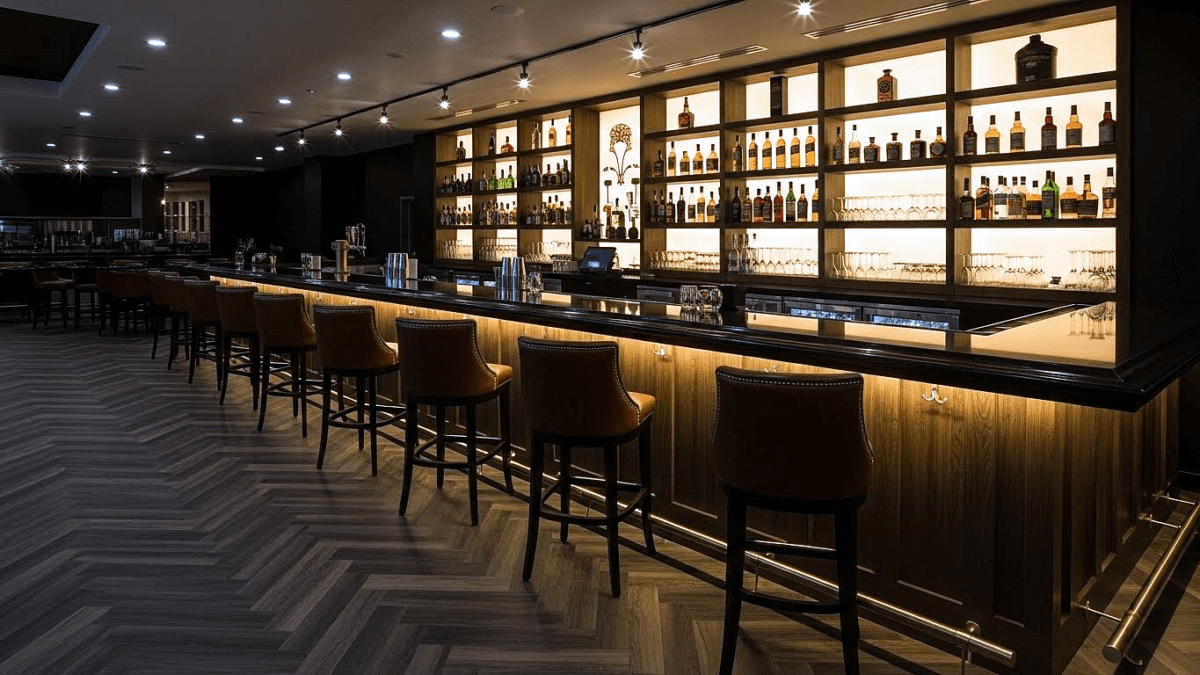
Luxury Vinyl Tile sits at the top of most pub owners’ wish lists for good reason. This smart flooring solution gives you the best of both worlds—stunning looks that fool everyone into thinking you’ve splashed out on premium materials, plus the rock-solid performance your business actually needs.
What makes LVT such a winner?
LVT builds its strength from multiple layers of PVC and polymers, creating a floor that mimics expensive wood and stone so well you’ll have customers asking where you sourced your “timber”. Commercial-grade versions pack reinforced cores with chunky wear layers (typically 0.5-0.7mm) built specifically for places where feet never stop moving. And here’s the brilliant bit—because it’s made from PVC, it’s completely waterproof, which means those inevitable spills won’t send you into a panic.
The design flexibility is pretty remarkable too. Whether you fancy authentic wood effects or natural stone looks, LVT adapts to whatever style you’re after. Some suppliers can even work your branding, logos, or lettering right into the design, giving you a completely unique floor.
How well does it handle pub life?
LVT takes everything your pub throws at it and asks for more. That layered construction creates a floor that laughs off constant footfall, spills, impacts, and the daily furniture shuffle without showing battle scars. The commercial wear layer acts like armour against scratches and scuffs from bar stools and everything else that gets dragged around.
You’re looking at 10-25 years of solid service from quality LVT, depending on how thick that wear layer is and how busy you get. When you break that down, it makes those frequent replacements a thing of the past.
Keeping it looking good
Maintaining LVT is refreshingly simple—brilliant news when you’re already juggling everything else. The smooth surface makes sweeping and mopping a breeze, with minimal fuss needed to keep things looking sharp. Your daily routine should include:
- Quick sweep or vacuum to clear dust and grit
- Weekly mop with the right cleaner
- Tackle spills straight away to avoid staining
- Skip the soap-based products that leave behind residue
Unlike carpet or tiles with grout lines, LVT doesn’t give dust and bacteria anywhere to hide, keeping your bar environment cleaner. Many commercial options come with antibacterial properties built in, helping you maintain those hygiene standards.
What’s the damage to your wallet?
LVT offers solid value for money. Materials typically run £15-£60 per square metre, averaging around £30-£35. Professional fitting adds roughly £10-£60 per square metre, depending on what your subfloor needs and how you want it installed.
You’ve got two main installation options: click-lock systems for quick fitting and easy repairs, or glue-down for maximum stability in moisture-prone areas. Many commercial products come with warranties up to 30 years, giving you proper peace of mind.
Where does LVT work best in your pub?
LVT shines throughout your establishment:
- Main bar areas where you want style without the hardwood headaches
- Behind-the-bar zones where waterproof qualities prevent costly damage
- High-traffic areas like entrances and walkways
- Dining spaces where looks and practicality both matter
The sound-dampening qualities compared to harder surfaces create a more comfortable environment for conversation—important when you want customers lingering longer.
Getting the most from your LVT
Want maximum performance from your investment?
- Go for commercial-grade LVT with at least 20 mil (0.5mm) wear layer in busy areas
- Pop entrance mats down to catch dirt and moisture before it reaches your flooring
- Stick protective pads under furniture legs to prevent scratches and dents
- Consider click-lock if you think you might need to replace sections frequently
- Check slip-resistance ratings (look for PTV ≥36 or R10-R11) to meet safety standards
Choose wisely and maintain properly, and your LVT will keep performing whilst looking the business for decades to come.
Engineered Wood Flooring
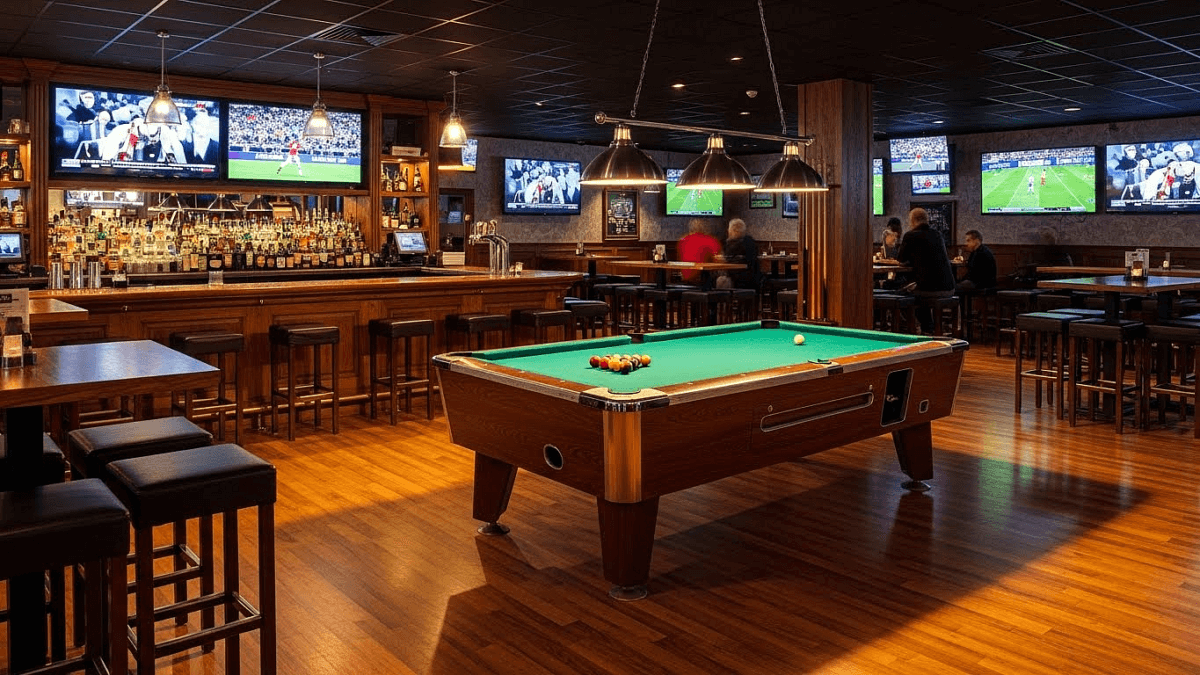
Want the authentic look of wood without all the headaches? Engineered wood flooring might just be your answer. This clever option gives you that warm, natural timber feel whilst being far more forgiving than traditional solid wood in busy pub environments.
What makes engineered wood different?
Here’s the clever bit—engineered wood isn’t just one piece of timber. It’s built from multiple layers bonded together, with a real hardwood veneer sitting on top of a plywood or softwood base. This layered approach creates serious stability, making it much better at handling moisture and temperature changes. You get that genuine wood appearance and texture on top, whilst the layers underneath provide the strength and resistance to environmental changes.
Commercial-grade options come with thicker top layers (4-6mm) that you can refinish multiple times over the years. Plus, you’ve got loads of species to choose from—oak, teak, walnut—each with different hardness ratings on the Janka scale.
Why engineered wood works in pubs
Busy pubs put flooring through its paces, and engineered wood handles it brilliantly. That layered construction makes it much less likely to scratch, dent, or suffer moisture damage compared to solid wood. This matters especially in areas where humidity levels change—think near your bar or kitchen areas.
The Janka Ball Hardness Test tells you how tough different woods are. Oak typically scores around 1,300, whilst harder varieties like cumaru can hit around 3,000. Higher numbers mean better resistance to denting and wear—exactly what you need for high-traffic pub floors.
Keeping it looking good
The beauty of engineered wood is that maintenance doesn’t have to be complicated:
- Daily sweeping or vacuuming keeps abrasive particles away
- Weekly damp mopping with wood-friendly cleaners (never soaking wet though)
- Deal with spills straight away to stop moisture getting in
- Professional deep cleaning now and then removes stubborn dirt
Stick to this routine and you’ll keep both the appearance and structural integrity intact for years. Many pub owners go for premium hard-wax oil finishes that give slip resistance whilst keeping that natural wood beauty.
What you’ll pay
Engineered wood typically runs £25-£70 per square metre for materials—much more reasonable than solid wood at £50-£120 per square metre. Installation adds about £22.50 per square metre on average, though this depends on the installation method and what prep work your subfloor needs.
You’ve got options for installation: floating floor systems, glue-down, or nail-down methods. The click-lock profiles that come with many engineered products make installation faster than traditional solid wood.
Where engineered wood shines
This flooring really comes into its own in:
- Main bar areas where you want that premium aesthetic
- Spaces with underfloor heating (solid wood can’t handle this)
- Areas that see temperature and humidity changes
- High-traffic zones where you need durability and style together
The stability makes it suitable for far more pub environments than solid wood, including spots near entrances or bar service points where moisture is common.
Smart choices for pub owners
Get the most from your engineered wood investment:
- Go commercial-grade with wear layers of at least 4-6mm so you can refinish multiple times
- Look at brushed or cross-brushed finishes for high-traffic areas—they’re more durable
- Stick protective furniture pads under everything to prevent scratches and dents
- Put entrance matting down to catch dirt and moisture before it reaches your wood
- Keep indoor conditions as consistent as possible to reduce expansion and contraction
Rubber Flooring
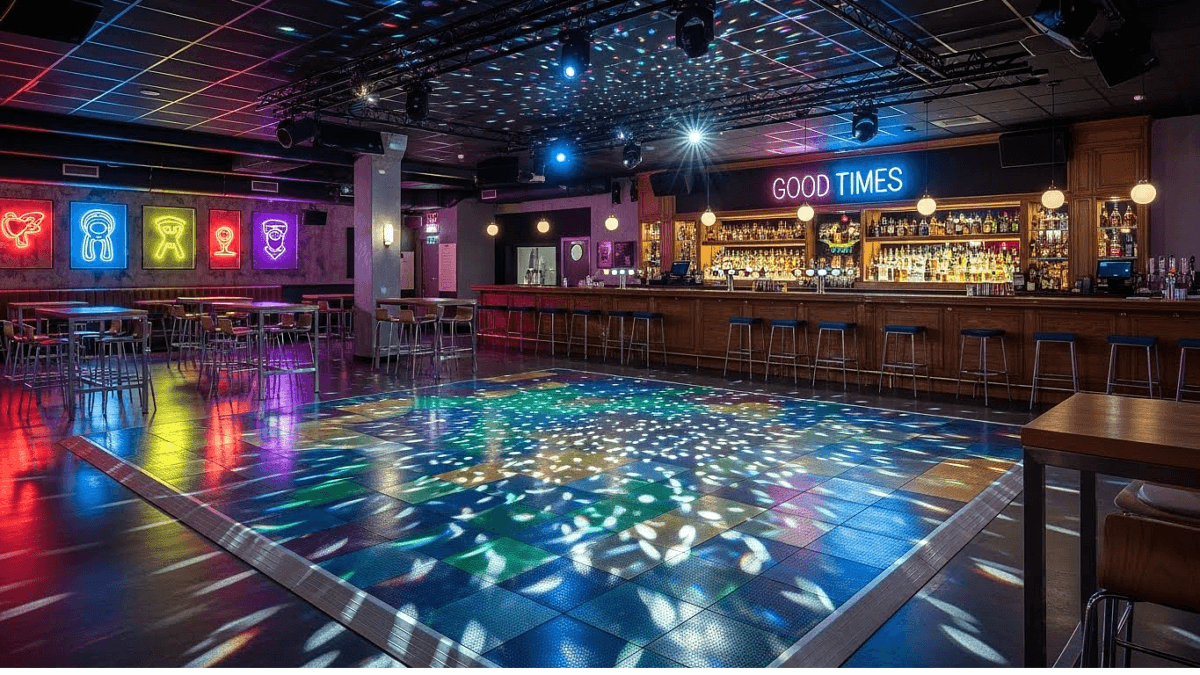
Safety first, comfort second—that’s what rubber flooring brings to your pub. This practical option has become a favourite in commercial settings where wet floors and non-stop foot traffic spell trouble for other materials.
What makes rubber flooring special?
Rubber flooring delivers exactly what busy pubs need:
- Slip resistance that works even when soaked
- Exceptional durability that takes a beating
- Low maintenance that won’t drain your time
- Simple cleaning that gets the job done
- Cushioned comfort for your staff’s feet
- Sound absorption that keeps noise down
Gone are the days of dull black rubber floors. Today’s options come in smooth profiles and stylish colours that actually look good in modern bar designs.
How does it handle pub life?
Your rubber floor won’t flinch at the daily punishment. Its tough construction shrugs off constant footfall, dropped glasses, and heavy equipment without showing battle scars. Keep it properly maintained and you’re looking at decades of service—now that’s what we call a smart investment.
Keeping it clean
Here’s the beauty of rubber flooring—it’s refreshingly simple to maintain. Forget about heavy waxing or refinishing jobs that other floors demand. Your cleaning routine couldn’t be easier:
Daily dust mopping or a quick vacuum, weekly mopping with neutral cleaners, and dealing with spills as they happen. Most of the time, all you need is your trusty mop and bucket to get things back to pristine condition. Just steer clear of bleach, harsh cleaners, and wax-based products that can cause discolouration and nasty buildup.
What’s the investment?
Rubber flooring might not be the cheapest upfront, but its staying power and easy upkeep make it brilliant value over time. Many pub owners choose it specifically because it needs fewer cleaning products than other materials.
Where does rubber flooring work best?
Think about your problem areas—rubber flooring sorts them right out:
Behind your bar where staff are on their feet all day, kitchen and wet zones where spills happen, busy service corridors that see endless traffic, and anywhere you want to dampen sound.
Make the most of your rubber flooring
Want to get the best from your investment?
- Pop entrance mats by your doors to stop dirt tracking onto the rubber
- Add soft feet to your furniture and tables—no scratches that way
- Stick with pH-neutral cleaners instead of harsh chemicals
- Deal with spills straight away to keep that slip resistance working
- Watch areas in direct sunlight—they might need extra attention to protect the surface
Safety Vinyl Flooring
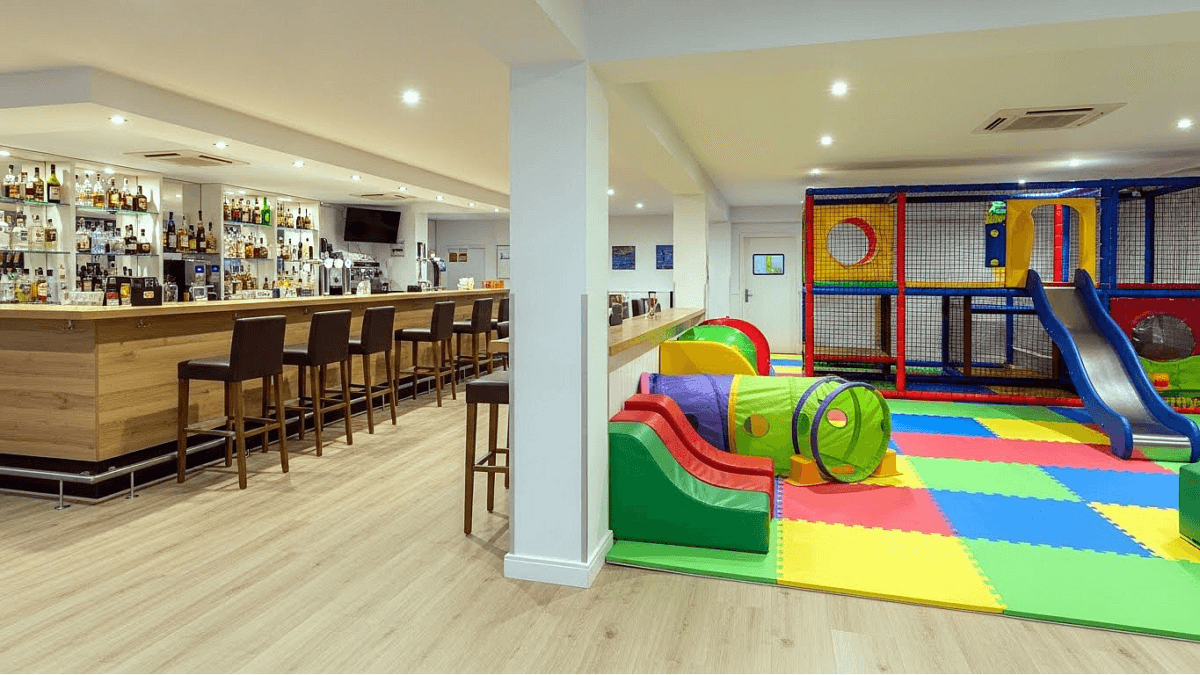
When spills are just part of running a pub, safety vinyl flooring becomes your best defence against slip accidents—the number one workplace hazard according to the statistics. This specially designed flooring helps you tick those essential safety boxes whilst keeping your venue looking smart.
What makes safety vinyl different from regular vinyl?
Safety vinyl isn’t your average floor covering. Its textured, slip-resistant surface keeps people on their feet even when things get wet. Here’s what you get with this smart choice:
- Enhanced slip resistance with R10-R12 ratings (R11 meets HSE requirements for commercial kitchens and bar areas)
- Stain and warp resistance that handles high-traffic punishment
- Completely waterproof properties—perfect for those inevitable spills
- 100% recyclable materials if you’re thinking green
The slip resistance gets measured on an “R rating” scale from R9 (basic) to R13 (maximum grip), with most pub environments needing at least R10 to keep things safe.
How well does it stand up to pub life?
Safety vinyl takes whatever your pub throws at it—constant footfall, endless spills, daily cleaning with commercial products—and keeps performing. The brilliant thing is it maintains that crucial slip resistance even after months of punishment. Your bar areas stay safe and hygienic without you having to worry about the floor giving up.
Keeping it clean
The maintenance routine couldn’t be simpler:
- Quick daily sweep to clear debris that might scratch
- Weekly mop with the right cleaners (skip the harsh chemicals)
- Deal with spills straight away using circular motions, then dry properly
- Don’t use steam mops—they can damage the vinyl
Basically, safety vinyl asks very little of you whilst delivering serious protection.
What will it cost you?
Materials typically run £15-£23 per square metre—pretty reasonable for commercial flooring. Installation can bump up the total cost due to subfloor prep work. Expect around £36 per square metre for standard fitting, or £48.50 if you need cap and cove installation (where the vinyl runs slightly up the walls for wet areas).
Where does safety vinyl work best?
This stuff really shines in:
- Behind-bar areas where drinks get spilled constantly
- Entrances where wet weather creates hazards
- Toilet facilities that need waterproof, hygienic surfaces
- Kitchen and food prep zones
Smart tips for safety vinyl success
Get the most from your safety vinyl investment:
- Put proper entrance matting down to catch dirt before it hits your vinyl
- Add protective feet to furniture and heavy equipment
- Stick to pH-neutral cleaners instead of wax-based products
- Use different colours to mark out wet or hazardous zones clearly
- Double-check all products meet UK HSE slip resistance standards
Don’t forget, safety vinyl does exactly what it says on the tin—it keeps your customers and staff safer whilst looking after your legal requirements.
Commercial Carpet Tiles
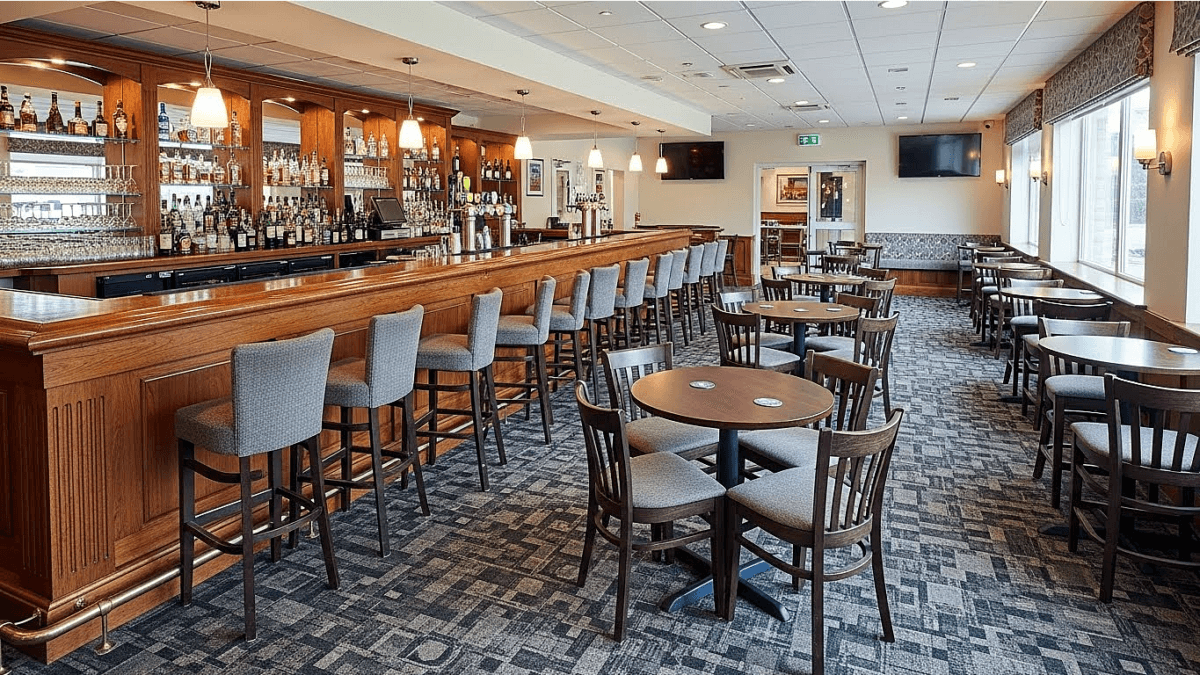
Picture this: those neat little squares of carpet that slot together like a puzzle, each one measuring about 50 x 50cm. That’s commercial carpet tiles for you—and they’re becoming a real game-changer for pub owners who want flexibility without the fuss of traditional carpeting.
What makes commercial carpet tiles special?
The beauty of carpet tiles lies in their modular design. You can mix and match colours, patterns, and textures to create something that’s uniquely yours and perfectly suited to your pub’s character. Modern technology has made these tiles even better, with seamless looks and loads of options to choose from.
But here’s what really matters for busy pubs—sound absorption. The dense construction does wonders for reducing noise levels, which is brilliant when you want your customers to actually hear each other chatting. Your pub becomes a more comfortable place to spend time, and that professional look stays intact.
How do they handle pub life?
These tiles are built specifically for high-traffic commercial spaces, so they can take whatever your customers throw at them whilst keeping their good looks. Today’s manufacturing has cracked the code on making them resist stains, fading, and general wear and tear. The secret? Low-pile, looped construction that’s tight and tough.
Keeping them looking smart
The maintenance routine is pretty straightforward:
- Daily vacuuming in your commercial space
- Deep clean every 6-12 months
- Jump on spills straight away with the right cleaning approach
Here’s a neat trick for pubs—encapsulation cleaning gives you fantastic results with hardly any disruption. Uses 90% less water than other methods and dries in just 10 minutes.
What’s the damage to your wallet?
You’re looking at £12-£35 per square metre for the tiles themselves, plus about £10 per square metre for professional installation. The real winner here is that they’re cost-effective because there’s less waste during fitting, and you can swap out individual tiles if they get damaged. No more ripping up entire sections just because of one stubborn stain.
Where do they work best in your pub?
Carpet tiles are perfect for your lounges, function rooms, and those quieter corners away from the main bar action. The sound-dampening qualities and extra warmth underfoot create just the right atmosphere for proper conversations. They’re brilliant in areas where comfort matters more than dealing with constant spills.
Smart moves for carpet tile success
Want to get the most from your investment?
- Go for quality materials like nylon or polyester blends—they’ll handle the wear much better
- Pop entrance mats down to catch dirt before it hits your carpet
- Think about stain-resistant treatments in areas that might see the odd spill
- Set up a proper maintenance schedule with professional cleaning every so often
- Keep some spare tiles tucked away for quick fixes when you need them
Follow these tips and your carpet tiles will keep looking good whilst delivering that comfort and acoustic control that makes your pub a place people want to linger.
Porcelain and Ceramic Tiles
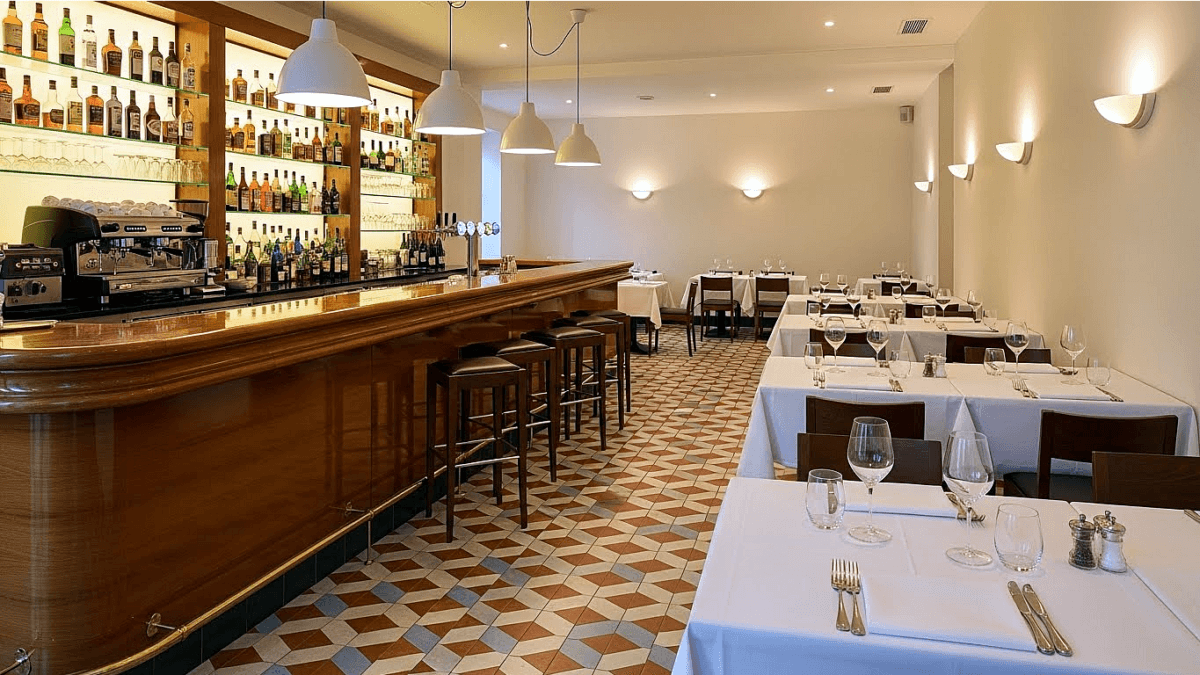
Sometimes the old ways are the best ways. Porcelain and ceramic tiles have been the backbone of commercial flooring for decades, and there’s a good reason why so many pub owners still swear by them. These tiles don’t just look the part—they can handle whatever your busiest nights throw at them.
What makes porcelain and ceramic tiles special?
Porcelain takes the crown for toughness, thanks to its denser build that delivers serious durability. With a Mohs hardness rating of at least 7, these tiles laugh off scratches and wear that would damage softer options. Ceramic tiles offer a more natural, earthy appearance but are slightly more porous.
Here’s what porcelain brings to your pub:
- Outstanding toughness and scratch resistance
- Non-porous surface that keeps stains at bay
- Works brilliantly on both walls and floors
- Endless style options that can mimic wood, stone, or concrete
How do they handle busy pub life?
Porcelain’s resilience makes it perfect for those high-traffic areas that see constant action. The hard-wearing surface takes foot traffic and general pub chaos in its stride without losing its good looks. When you’re shopping for commercial spaces, look for tiles with PEI (Porcelain Enamel Institute) ratings of 4 or 5—these are built specifically for heavy-duty environments.
Keeping them looking their best
The beauty of tiles? They’re dead simple to maintain:
- Regular sweeping or vacuuming keeps abrasive bits from scratching the surface
- Weekly damp mopping with pH-neutral cleaners does the trick
- Deal with spills quickly to avoid any staining issues
- Give the grout lines some attention now and then with a deeper clean
Stick to neutral pH cleaners rather than harsh abrasives—your tiles will thank you for it.
What’s the damage to your wallet?
Ceramic tiles typically run £15-£25 per square metre, whilst porcelain sits in the £15-£30 range. Factor in around £50 per square metre for professional installation.
Where do tiles work best in your pub?
These workhorses excel in:
- Bar service areas where easy cleaning is essential
- Entrance zones that need to handle wet weather
- Kitchen and prep areas where hygiene matters
- Busy walkways that take a beating
Getting the most from your tile investment
Want tiles that’ll serve you well for years?
- Go for slip-resistant options with textured finishes in areas prone to spills
- Choose darker grout colours—they’re much better at hiding stains in busy areas
- Keep some spare tiles on hand for future repairs
- Seal those grout lines annually with quality sealant
- Pop down some entrance matting to stop grit reaching your beautiful tiles
Keep up with basic maintenance, and these hardy surfaces will keep looking smart no matter how demanding your pub environment gets.
Laminate Flooring
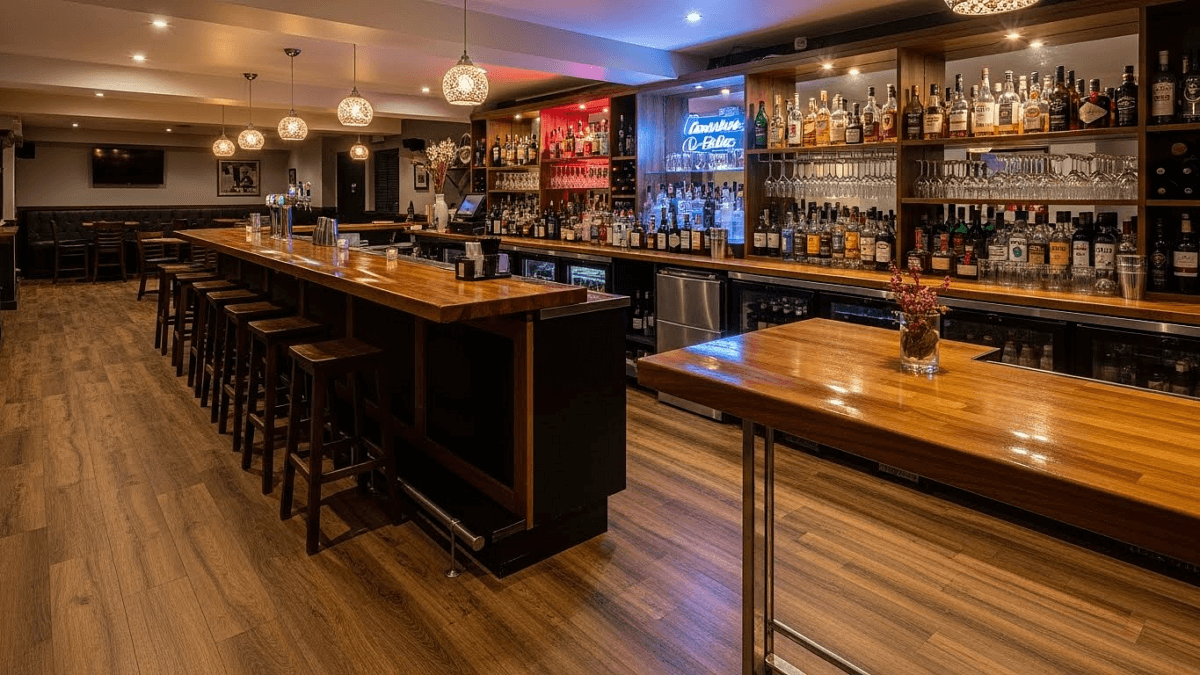
Looking for flooring that won’t break the bank but still looks the part? Laminate flooring could be exactly what you need. This clever synthetic option gives you the appearance of premium materials without the premium price tag—perfect for pub owners who want style on a sensible budget.
What makes laminate tick?
Laminate’s built like a sandwich with four layers doing different jobs: you’ve got your tough resin topcoat protecting everything, a decorative layer that creates those convincing wood or stone looks, a stable HDF core keeping things solid, and a base layer that ties it all together. Modern versions are so realistic, you’d be surprised how many customers can’t tell the difference from the real thing. Best of all, that smooth surface shrugs off scratches, stains, and tears.
How does it handle pub life?
Laminate’s popularity in hospitality venues comes down to one thing—it’s genuinely tough. Commercial-grade options keep looking good even when you’re throwing everything at them day after day. You’re looking at anywhere from 10-30 years of service life, depending on what grade you choose and how well you look after it.
Keeping it clean
Here’s the beauty of laminate—cleaning couldn’t be simpler:
Daily sweep or vacuum to get rid of the grit, weekly damp mop with something pH-neutral, and jump on spills straight away because too much moisture getting into those seams is bad news.
What you’ll pay
Laminate delivers proper value. You’re looking at roughly £10-£20 per m² for budget options, £20-£35 for mid-range, and £35-£60+ if you fancy the luxury stuff. Factor in installation at £12-£25 per m², and you’re still miles cheaper than proper hardwood.
Where does laminate work best?
Laminate loves dry areas where you need something hard-wearing without spending a fortune. Keep it away from moisture-heavy spots like your kitchen or loos though—it doesn’t appreciate getting too wet.
Getting the most from your laminate
Want it to perform properly? Here’s what works:
- Go for commercial-grade with AC4 or AC5 ratings in busy areas
- Stick felt pads under your furniture legs
- Get some decent entrance mats to stop dirt tracking in
- Consider foam underlayment—it cuts down that hollow sound and makes things more comfortable underfoot
Don’t forget, laminate might not have the prestige of solid wood, but it certainly knows how to work for its living.
Commercial Linoleum
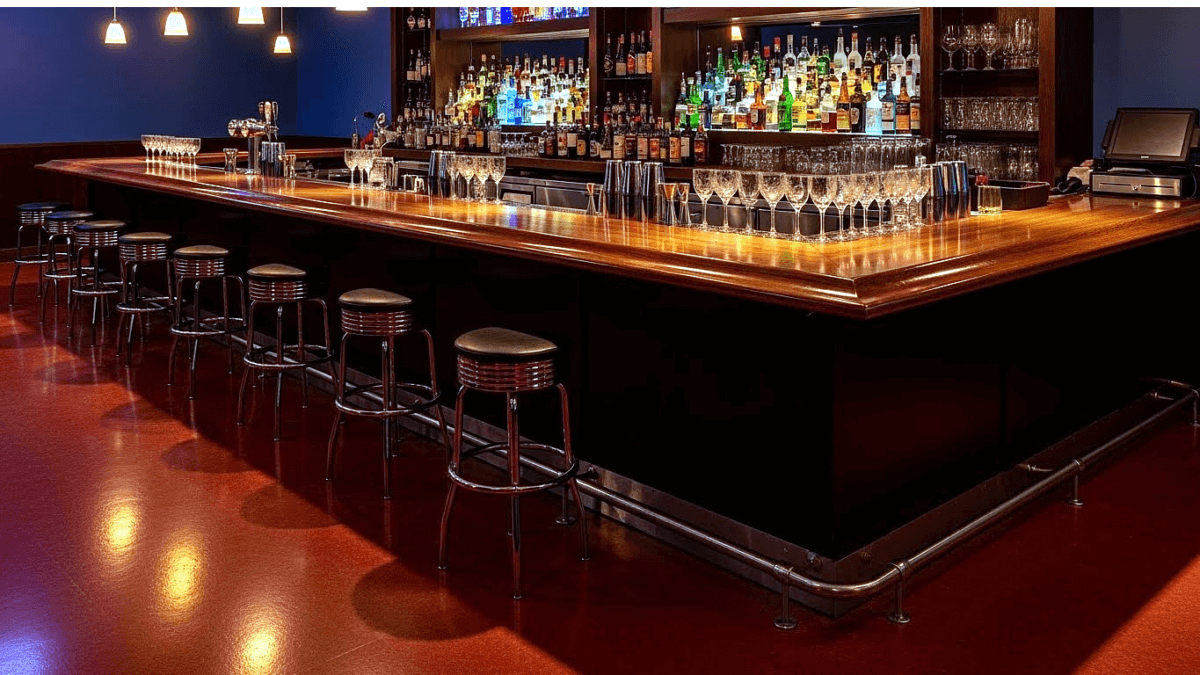
Want to do something good for the planet whilst still getting floors that work hard? Commercial linoleum might just be your answer. Made from natural goodies like linseed oil, wood flour, and resins, this isn’t your grandmother’s lino—it’s a seriously impressive performer that happens to love the environment.
What makes commercial linoleum special?
Modern commercial linoleum (you’ll often see it called Marmoleum) is absolutely brilliant for eco-conscious pub owners. Here’s what’s really exciting—it’s made from completely biodegradable materials, making it CO2 neutral and fully recyclable. Your customers with allergies will thank you too, as its ultra-smooth surface stops dust mites in their tracks, earning proper allergy-friendly certification.
But there’s more good news for food-serving establishments. This flooring actually fights back against nasty bacteria including MRSA, Norovirus, and E-Coli—now that’s what we call working overtime for your business.
How does it handle busy pub life?
Commercial linoleum is tougher than you might think. Look after it properly and you’re looking at 25-40 years of service. Here’s the clever bit—because the design goes right through each tile, your busiest walkways won’t start looking tatty as there’s no surface pattern to wear away. Its scratch-resistant surface just gets on with the job, day after day.
Keeping it looking good
Linoleum doesn’t ask for much:
- Regular sweep and vacuum to clear debris
- Weekly damp mop with pH-neutral cleaners (steer clear of acidic products)
- Deal with spills quickly—too much moisture can cause warping
- Pop on some appropriate floor finish now and then to keep it protected
What’s it going to cost you?
Commercial linoleum comes in at roughly 22 euros per square metre including installation, making it a smart choice compared to many other options.
Where does linoleum work best in your pub?
This flooring shines in dining spaces, function rooms, and anywhere hygiene matters most. It handles heavy footfall brilliantly. Plus, if you’ve got staff on their feet all day or want to keep noise levels comfortable for conversation, linoleum delivers on both counts.
Smart moves for linoleum success
Get the most from your linoleum investment:
- Pop protective mats at entrances to stop dirt tracking through
- Stick felt pads under furniture legs to prevent scratches
- Apply the recommended floor finish regularly to maintain that fresh look
- Go for darker patterns in your busiest areas to hide any wear
- Check those manufacturer warranties—many offer 25-year coverage
Solid Wood Flooring
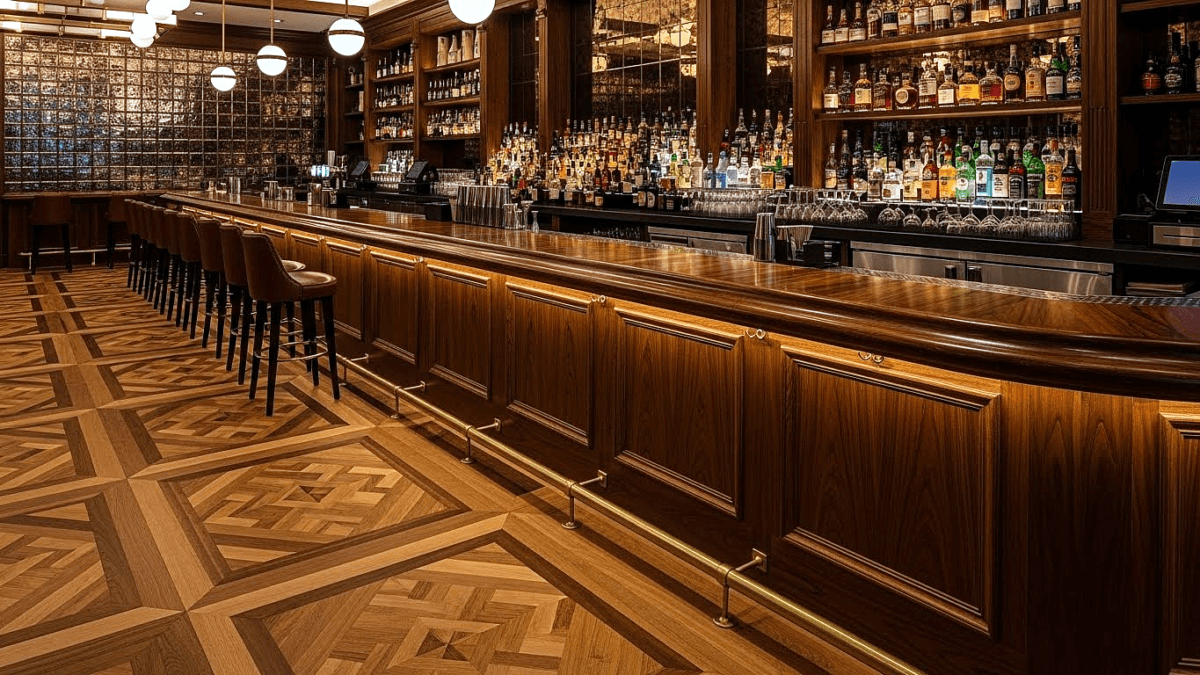
Solid wood flooring brings that authentic charm you simply can’t fake—crafted from single timber planks that deliver natural warmth and character to your pub. But here’s the thing: whilst it looks absolutely stunning, it demands respect and the right environment to perform well.
What makes solid wood flooring special?
Solid hardwood is exactly what it sounds like—planks milled from single pieces of timber, making it completely natural and toxin-free. It’s actually considered the safest and least toxic commercial flooring option you can choose. You’ve got plenty of timber species to pick from, with oak, maple, and pine being popular choices for commercial settings.
How does it handle bar environments?
Now, let’s be honest about solid wood’s limitations. Without proper protection, it’s vulnerable to moisture damage—not ideal when you’re dealing with spilt pints every night. But in dry areas where you can control the environment, it handles heavy footfall brilliantly. Choose hardwoods like oak over softer options like pine if you want better resistance to damage.
Keeping it looking good
Your solid wood floors need regular attention:
- Polish them regularly to build up that protective layer
- Stick to damp microfibre mops rather than soaking them with water
- Jump on spills immediately to prevent permanent damage
The upside? Periodic refinishing can extend the lifespan substantially, making solid wood a smart long-term investment.
What will it cost you?
Materials start at £80+ per square metre, with professional installation adding another £35-£60 per square metre. Installation typically takes 1-2 days for smaller rooms.
Where does solid wood work best in pubs?
Solid wood shines in main dining areas and hallways where moisture stays minimal. Skip it for bar service areas or kitchens where spills are inevitable.
Smart choices for pub owners
Go for commercial-grade finishes designed for heavy-duty use. Semi-gloss, satin, or matt finishes hide scratches much better than high-gloss options—trust us on this one.
Your Pub Flooring Comparison Guide
How do you choose between all these flooring options when each one seems to have its merits? Sometimes having too many choices makes the decision harder, not easier. That’s why we’ve pulled together this handy comparison to help you weigh up the key factors that matter most to your pub.
Don’t forget, you’ll probably want different flooring in different areas of your establishment—there’s no rule saying you have to stick with just one type throughout. Most successful pub owners mix and match based on what each space needs.
| Flooring Type | Cost Range (per m²) | Typical Lifespan | Key Features | Best Use Areas | Maintenance Requirements | Installation Cost (per m²) |
|---|---|---|---|---|---|---|
| Luxury Vinyl Tile (LVT) | £15-£60 | 10-25 years | Waterproof, scratch-resistant, design flexibility | Main bar areas, behind-bar spaces, high-traffic zones | Daily sweeping, weekly mopping | £10-£60 |
| Engineered Wood | £25-£70 | Not specified | Moisture resistant, stable in temperature changes, real wood veneer | Main bar areas, spaces with underfloor heating | Daily sweeping, weekly damp mopping | £22.50 |
| Rubber Flooring | Not specified | Decades | Slip-resistant, sound-absorbing, cushioned surface | Behind bar, kitchen areas, service corridors | Simple mopping, no waxing required | Not specified |
| Safety Vinyl | £15-£23 | Not specified | Enhanced slip resistance (R10-R12), stain resistant, waterproof | Behind-bar areas, entrances, toilet facilities | Daily sweeping, weekly mopping | £36-£48.50 |
| Commercial Carpet Tiles | £12-£35 | Not specified | Sound-absorbing, modular design, stain-resistant | Lounges, function rooms, quieter areas | Daily vacuuming, deep clean every 6-12 months | £10 |
| Porcelain/Ceramic Tiles | £15-£30 | Not specified | High hardness rating, non-porous, versatile designs | Bar service areas, entrances, kitchen areas | Regular sweeping, damp mopping | £50 |
| Laminate Flooring | £10-£60 | 10-30 years | Scratch-resistant, stain-resistant, realistic designs | Dry areas, low-moisture zones | Daily sweeping, weekly damp mopping | £12-£25 |
| Commercial Linoleum | €22 (installed) | 25-40 years | Eco-friendly, antibacterial, scratch-resistant | Dining spaces, function rooms, high-traffic zones | Regular sweeping, damp mopping | Included in material cost |
| Solid Wood | £80+ | Not specified | Natural material, refinishable, traditional appeal | Main dining areas, dry hallways | Regular polishing, immediate spill cleanup | £35-£60 |
Looking at the numbers, you can see there’s quite a range in both initial costs and what you’ll need to do to keep your floors looking their best. The cheapest isn’t always the best value—especially when you factor in how long each option will last and how much daily maintenance you’re prepared to handle.
Your Perfect Pub Floor Awaits
Choosing your pub’s flooring doesn’t have to feel overwhelming—you’ve got all the information you need right here to make the right call for your business. Each option we’ve covered brings something different to the table, and the trick is finding what works best for your specific situation and budget.
Don’t feel like you have to stick to just one type throughout your entire pub. Many successful establishments mix and match—LVT where spills are guaranteed, engineered wood where you want that cosy atmosphere, safety vinyl near the entrance where wet feet are inevitable. It’s about being smart with your choices.
Yes, budget matters, but here’s the thing—sometimes spending a bit more upfront saves you a fortune down the road. Those commercial-grade options might make you wince at the till initially, but they’ll still be looking good when cheaper alternatives are ready for the skip. Your maintenance routine will thank you for it too.
Your floors are part of your pub’s personality. They’re one of the first things customers notice when they walk in, and they need to feel right for the atmosphere you’re creating. Whether that’s the warmth of real wood or the practical elegance of quality vinyl, make sure it fits with who you are as a business.
Whatever you decide on, don’t skimp on professional installation—it’s not the place to cut corners. And once it’s down, stick to a proper maintenance routine from day one. Your floors will repay the effort by lasting longer and looking better throughout their lifetime.
The best pub flooring is the one that handles everything you throw at it whilst making your customers feel welcome and comfortable. You’ve got the knowledge now—trust your instincts and choose the option that feels right for your pub’s future.
Key Takeaways
Choosing the right pub flooring is a critical business decision that directly impacts your bottom line, customer experience, and long-term operational costs.
• LVT leads for versatility: Luxury Vinyl Flooring offers the best balance of waterproof durability, design flexibility, and 10-25 year lifespan for most pub areas.
• Match flooring to function: Different pub zones need different solutions—waterproof LVT behind bars, engineered wood in dining areas, safety vinyl at entrances.
• Commercial-grade pays off: Investing in commercial-grade materials with proper ratings (AC4/AC5 for laminate, R10+ for slip resistance) delivers better long-term value.
• Maintenance makes the difference: Simple daily cleaning routines and immediate spill attention can extend any flooring’s lifespan by years whilst preserving appearance.
• Professional installation essential: Proper installation maximises durability and appearance, making it worth the additional £10-60 per square metre investment.
The most successful pub owners view flooring as a long-term investment rather than an expense, selecting materials that withstand daily challenges whilst creating the welcoming atmosphere that keeps customers returning. Your flooring choice should ultimately balance durability, maintenance requirements, aesthetic appeal, and budget to serve your business effectively for decades.
FAQs
Q1. What is the most durable flooring option for pubs? Luxury Vinyl Tile (LVT) is one of the most durable options for pubs. It offers excellent water resistance, scratch resistance, and can withstand heavy foot traffic for 10-25 years with proper maintenance.
Q2. How often should pub flooring be cleaned? Most pub flooring requires daily sweeping or vacuuming to remove debris, with weekly damp mopping using appropriate cleaners. Immediate attention to spills is crucial for all flooring types to prevent staining and damage.
Q3. Which flooring is best for areas prone to spills in a pub? Safety vinyl flooring is ideal for areas prone to spills, such as behind the bar or near entrances. It offers enhanced slip resistance (R10-R12 ratings) and is waterproof, making it safer and easier to clean.
Q4. How cost-effective is commercial-grade carpet tiling for pubs? Commercial carpet tiles are a cost-effective option for pubs, especially in quieter areas. They typically cost £12-£35 per square metre, offer sound absorption, and allow for easy replacement of individual tiles if damaged.
Q5. What should pub owners consider when choosing wood flooring? When considering wood flooring, pub owners should opt for engineered wood over solid wood in most cases. Engineered wood offers better moisture resistance and stability in temperature changes, making it more suitable for pub environments.