Table of contents
Best Carpet Underlay for Insulation
Choosing the best carpet underlay for insulation is one of the easiest ways to stop draughts and lower domestic heating bills. In fact, uninsulated ground floors allow up to 15% of household heat to escape into the earth or subfloor void.
The resulting temperature difference is remarkable. Bare uninsulated floors often hover around 11°C, whereas insulated floors easily maintain a comfortable 20°C. For this reason, upgrading your underlay provides an immediate thermal barrier before you even turn up the heating.
Understanding Tog Ratings for Thermal Warmth
Thermal resistance in flooring is measured in togs. Therefore, when searching for the best carpet underlay for insulation, always check the product tog rating:
- High-Density PU Foam (2.5 to 3.1 Tog): Lightweight, springy, and exceptional at retaining heat in bedrooms and lounges.
- Wool Felt & Crumb Rubber (2.3 to 2.8 Tog): Denser and extremely hardwearing, making it perfect for drafty suspended timber floors.
- Underfloor Heating Rule: In contrast, if you have underfloor heating, keep combined carpet and underlay tog below 2.5 to let warmth rise.
Benefits of Floor and Underlay Insulation
Underfloor insulation often receives less attention than loft or cavity wall insulation. However, properly fitted insulation delivers valuable advantages that go well beyond warmer feet.
Firstly, it eliminates cold zones and stops ground draughts rising through old timber floorboards. In addition, quality thermal materials act as effective acoustic barriers, reducing footstep noise between upstairs rooms and ground-floor living spaces.
The Energy Saving Trust confirms that floor insulation can save between £70 and £120 annually on gas bills. Furthermore, reducing heat loss lowers your household carbon footprint year after year without any ongoing maintenance.
Comparing Insulation Materials by Performance
Different floor structures require different materials. Here is a breakdown of how the most common materials perform across UK properties:
- Spray Foam Insulation: Expands upon application to form a completely airtight seal between irregular timber joists.
- Mineral Wool Blanket: Cost-effective rolls that sit between floor joists on suspended timber frameworks.
- Rigid PIR Foam Boards: Dense boards (such as Celotex or Kingspan) offering high thermal resistance for concrete slabs.
- Multi-Foil Membranes: Ultra-thin reflective foil layers that bounce radiant heat back into your rooms.
- Insulating Screed: Modified cement mixtures containing lightweight aggregates, ideal for embedding hydronic heating pipes.
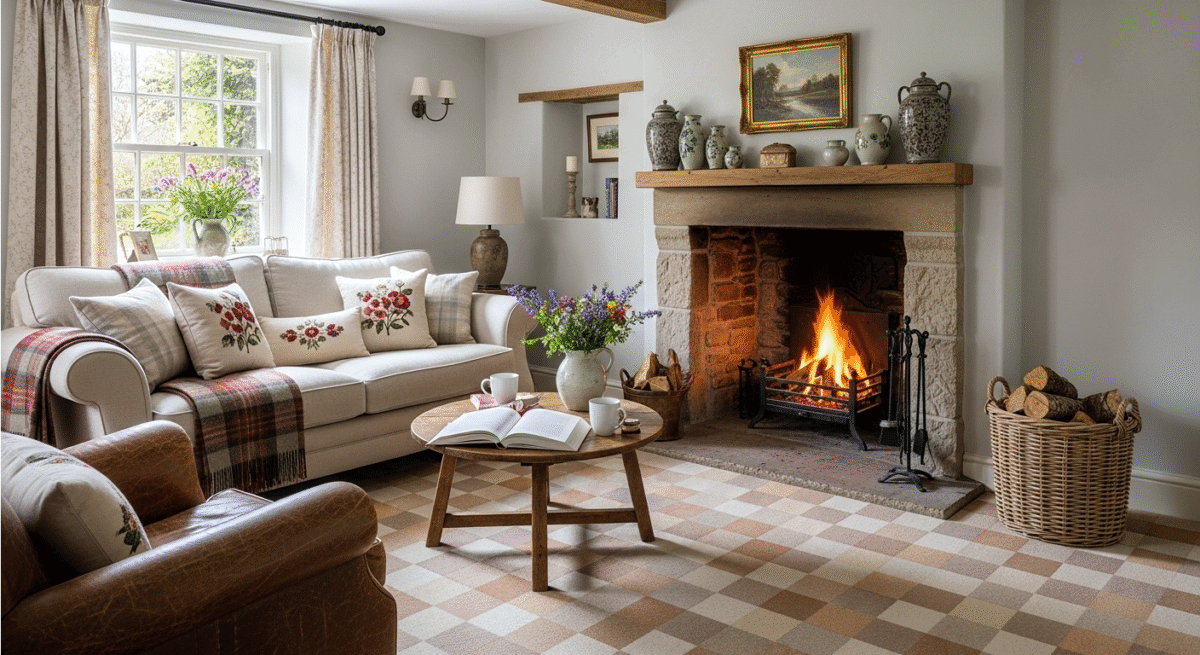
In addition, laying a heavy wool carpet over dense underlay creates an immediate surface thermal barrier, stopping heat transfer across cold screeds.
Concrete Floors vs Suspended Wooden Floors
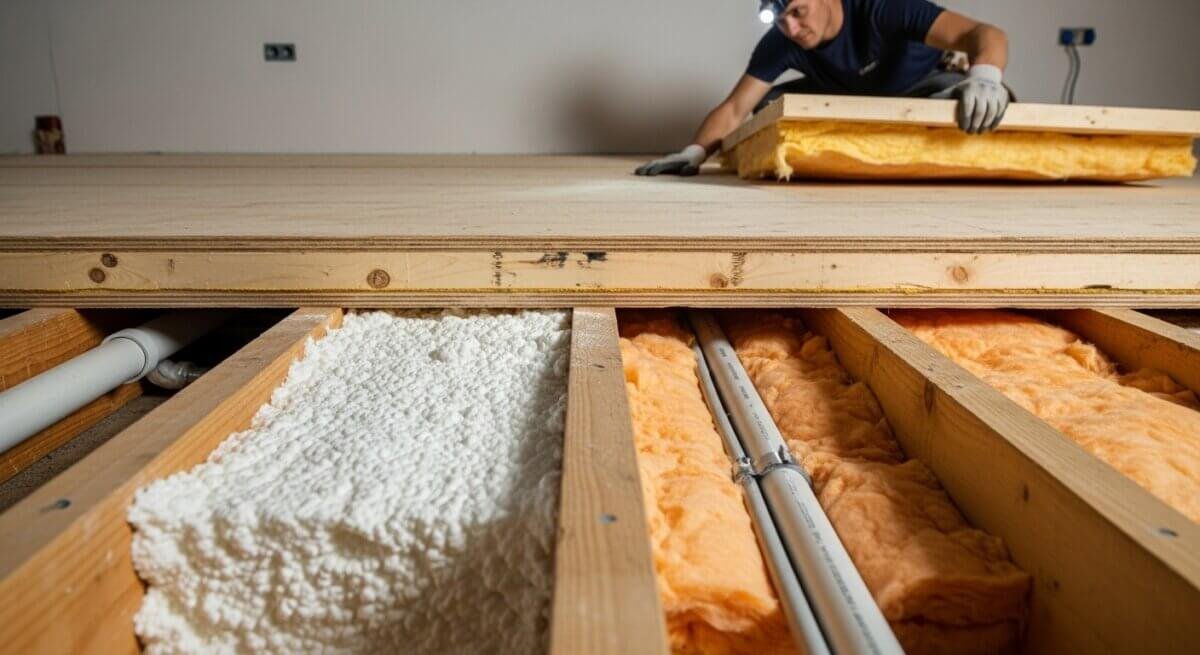
Selecting suitable insulation depends largely on whether you have a solid slab or suspended timber framework. Both require distinctly different installation approaches.
Solid Concrete Floors: Solid concrete floors retain cold from the sub-base. Installing rigid PIR boards (25mm–50mm) directly over a damp-proof membrane followed by screed or floating timber creates a permanent thermal break. If floor height is limited, choosing the best carpet underlay for insulation with a high tog rating provides thermal protection without trimming doors.
Suspended Timber Floors: You can identify suspended floors by external air bricks beneath damp-proof courses. For these structures, breathable mineral wool or sheep’s wool batts should be supported between joists with netting. Crucially, never block air vents, as unrestricted cross-ventilation prevents joist rot.

Moreover, eco-friendly homeowners often turn to natural sheep’s wool. Wool naturally absorbs and releases moisture vapour without compromising its insulating properties, keeping timber joists dry and healthy.
Installation Costs and Annual Energy Savings
Balancing upfront material costs against long-term fuel savings helps verify whether retrofitting insulation makes financial sense for your home:
| Property Type | Estimated Material Cost | Typical Annual Gas Savings | Payback Period |
|---|---|---|---|
| Detached House | £600 – £1,400 (DIY) | £100 – £130 / yr | 5 – 8 Years |
| Semi-Detached | £450 – £900 (DIY) | £60 – £85 / yr | 6 – 9 Years |
| Terraced House | £300 – £600 (DIY) | £40 – £55 / yr | 7 – 10 Years |
| Bungalow | £700 – £1,600 (DIY) | £110 – £145 / yr | 5 – 7 Years |
Furthermore, several UK grant programmes like the Great British Insulation Scheme (GBIS) and ECO4 provide financial assistance for energy efficiency upgrades in qualifying homes. Additionally, eligible insulation materials currently benefit from a 0% VAT rate.
Frequently Asked Questions
The best carpet underlay for thermal insulation is high-density PU foam (10mm to 12mm) or combination wool felt and crumb rubber with a rating between 2.5 and 3.1 tog. These dense materials trap warm air and prevent cold drafts rising through subfloors.
You can insulate concrete floors either by laying rigid PIR foam insulation boards (25mm to 50mm) covered with flooring grade chipboard, or by installing a dedicated thermal acoustic underlay with a tog rating above 2.5 directly over a damp-proof membrane.
Underfloor insulation will not cause damp as long as existing air bricks remain unblocked. Suspended floor voids require continuous cross-ventilation to remove ground moisture and prevent joist rot.
If your home features wet or electric underfloor heating, you should choose a low-tog underlay (typically 0.5 to 1.0 tog). The combined rating of your carpet and underlay should not exceed 2.5 tog to let heat transfer efficiently into your living space.
Conclusion
Investing in the best carpet underlay for insulation provides a fast, cost-effective way to eradicate cold floor surfaces and lower winter energy bills. Whether you fit rigid PIR boards over cold concrete slabs or hang wool batts between suspended timber joists, the improvement in home comfort is immediate.
If you are planning a flooring renovation, inspect our showroom range of luxury carpets and high-performance thermal underlays to find the perfect tog combination for your property.