Table of contents
If you are planning a renovation, you have likely heard decorators and installers recommend Luxury Vinyl Tile. But exactly what is LVT flooring, and why has it become the premier choice for modern UK households? In short, LVT is an engineered modular floor covering that replicates authentic timber, slate, and marble without the maintenance drawbacks of natural surfaces.
Unlike standard sheet vinyl of the past, LVT consists of multiple fused synthetic layers that provide remarkable dimensional stability. Furthermore, modern LVT is 100% waterproof, making it suitable for bathrooms and high-traffic family kitchens. With realistic embossed-in-register surface graining and compatibility with underfloor heating, it combines luxury aesthetics with practical durability.
In this guide, we answer all your questions about what is LVT flooring. We explore its layered anatomy, compare it against laminate and solid hardwood, outline installation systems, and share professional maintenance advice to help you decide if it is right for your home.
What Is LVT Flooring and How Does It Work?
To understand the performance of luxury vinyl flooring, it helps to examine how the material is manufactured. LVT is engineered by bonding high-grade PVC, mineral stabilizers, and protective coatings together under extreme heat and pressure.
Understanding the Multi-Layer Construction
The strength and realistic appearance of LVT stem directly from its distinct layer configuration:
- Clear Polyurethane Wear Layer: The transparent top shield that repels daily scuffs, scratches, and stubborn stains. Domestic thicknesses range from 0.3mm for bedrooms to 0.55mm or 0.7mm for busy hallways.
- High-Definition Print Film: A detailed photographic layer that captures the realistic grain of European oak, rustic pine, or natural Italian marble.
- Rigid Composite Core: The structural backbone providing impact resistance. This core can be traditional virgin PVC, Stone Plastic Composite (SPC), or Wood Plastic Composite (WPC).
- Stabilizing Base Layer: A foundational backing that keeps planks completely flat, often incorporating an acoustic foam underlay for sound reduction.
Where Is LVT Flooring Used in the Home?
Because LVT is completely impervious to standing moisture, you can install it across any room in your home. It performs exceptionally well in moisture-prone zones like kitchens, family bathrooms, utility rooms, and basements where real timber or laminate would warp and delaminate.
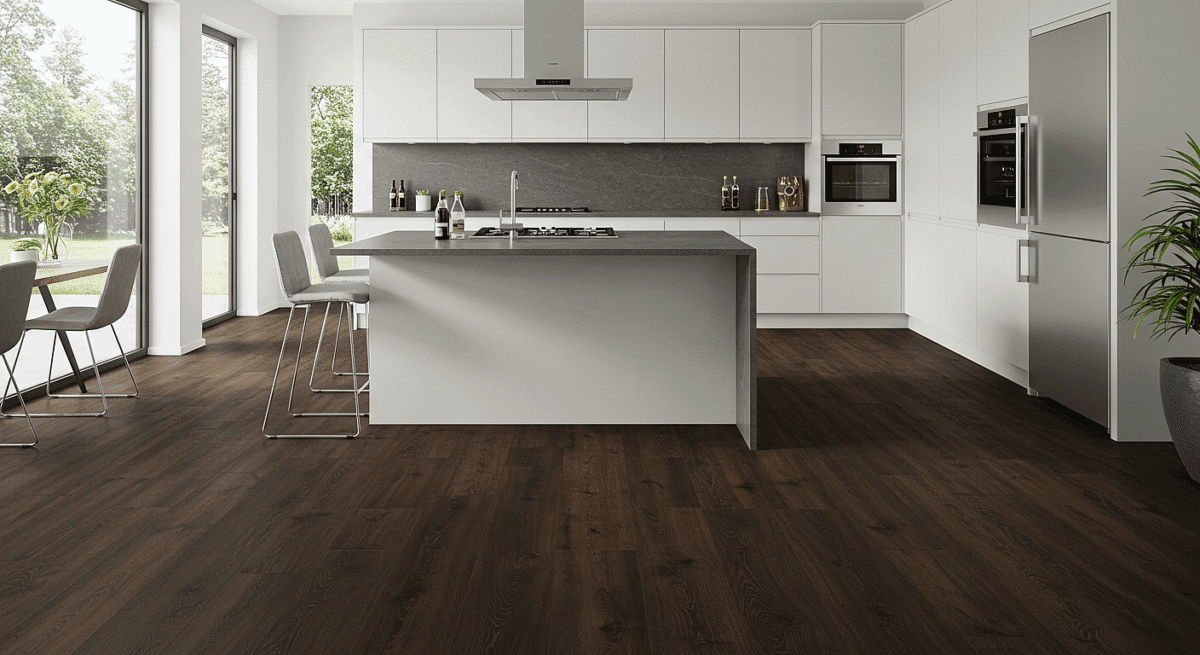
In addition, homes with busy children and energetic pets benefit from its scratch and slip resistance. The resilient core cushions dropped mugs and glassware, while its natural warmth feels pleasant beneath bare feet throughout winter.
Why Luxury Vinyl Tile Is So Popular
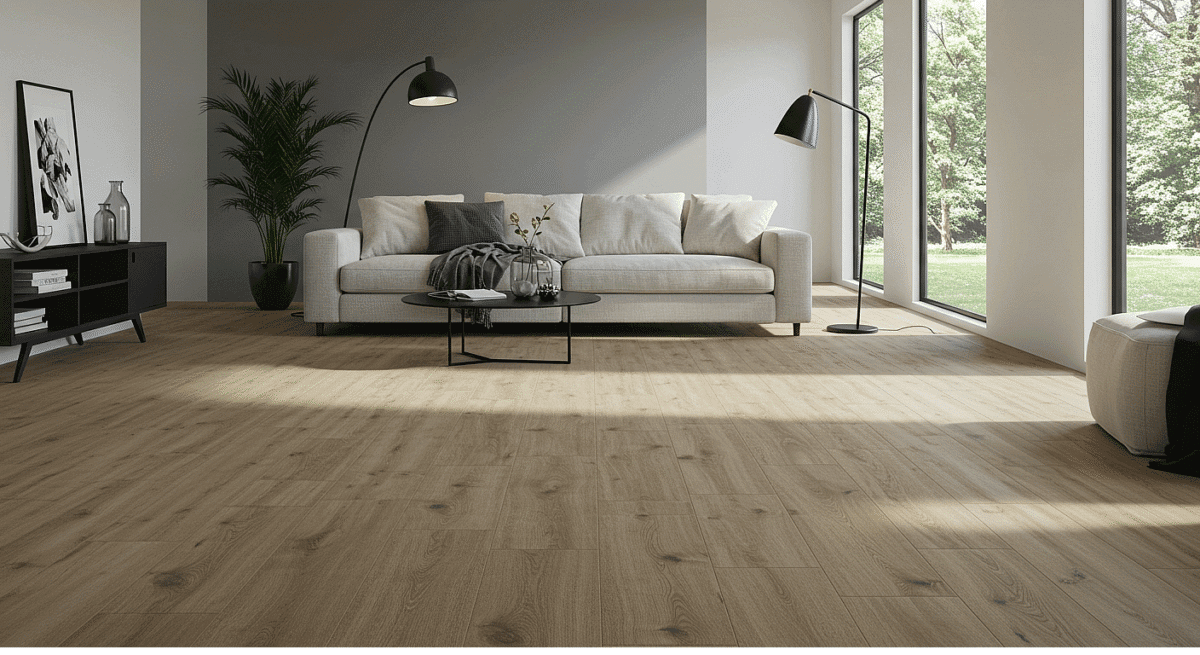
Modern luxury vinyl has largely replaced traditional materials because it combines the visual appeal of hardwood with effortless maintenance. You gain the timeless look of chevron parquet or limestone flags without needing regular specialist oiling, polishing, or stone resealing.
Furthermore, LVT is fully compatible with wet and electric underfloor heating systems. As long as top surface temperatures remain below the standard manufacturer limit of 27°C, the flooring conducts warmth efficiently across open-plan living spaces.
Comparing LVT to Other Flooring Alternatives
When selecting new flooring, comparing how LVT performs against other common materials helps clarify the best investment for your household:
LVT vs Laminate Flooring
While both materials use printed decorative layers, their inner cores differ fundamentally. Laminate relies on High Density Fibreboard (HDF) made from compressed wood fibres, which absorbs standing water and swells along the joints when wet.
In contrast, LVT utilizes a synthetic PVC or stone-composite core that is 100% waterproof. While laminate is slightly cheaper upfront (£15 to £30/m²), LVT delivers greater longevity, quieter acoustic performance, and complete moisture protection.
LVT vs Real Hardwood
Solid hardwood delivers undeniable natural prestige, but it costs between £70 and £120+ per square metre installed. Additionally, genuine timber requires regular maintenance, scratches easily under dog claws, and warps in humid bathrooms.
LVT provides the rich aesthetic of oiled oak or walnut at a fraction of the total budget (£25 to £65/m²). It resists pet scratches, never requires sanding, and wipes completely clean with a simple damp microfibre mop.
LVT vs Ceramic Floor Tiles
Ceramic and porcelain tiles are durable, but they are cold, hard, and unforgiving underfoot. Dropped crockery shatters instantly on porcelain, and unsealed cement grout lines quickly harbour discolouring bacteria.
LVT feels noticeably softer and warmer to walk on barefoot. Moreover, installation is roughly 50% quicker than fitting ceramic tiles, eliminating messy wet cutting and recurring grout maintenance.
Installing LVT Flooring: Methods and Preparation
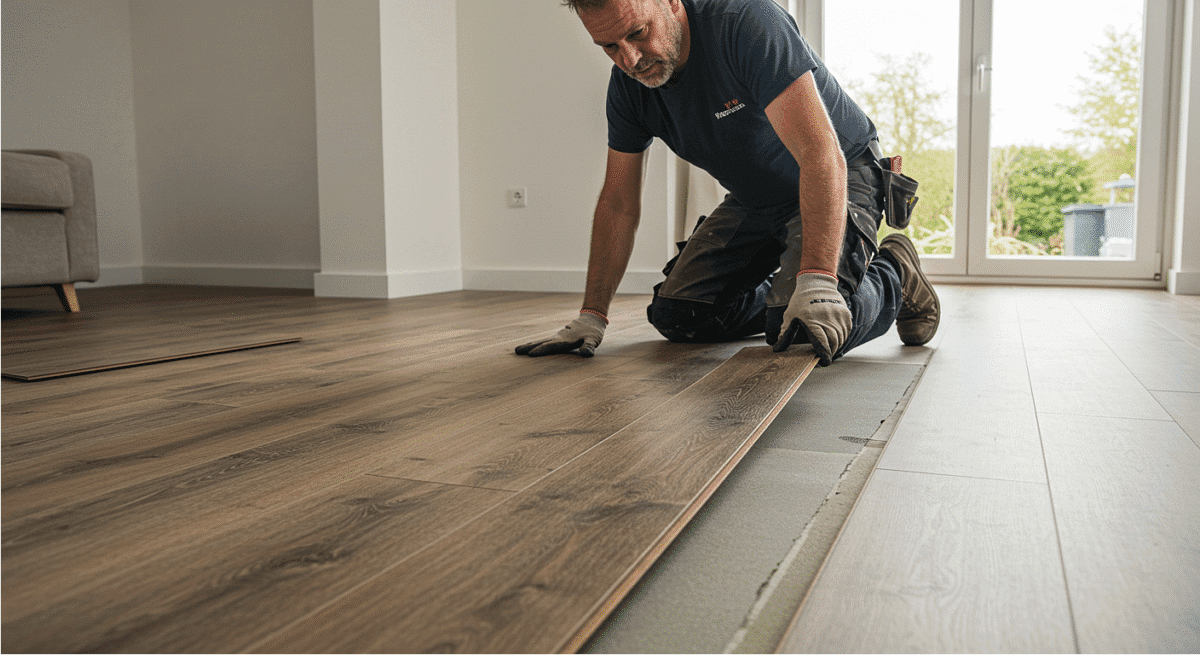
Achieving a flawless finish depends heavily on proper subfloor preparation. Because LVT planks are slender, any substrate bumps will eventually show through the surface.
Subfloor Preparation and Moisture Checks
Your existing subfloor must be clean, dry, and flat before fitting begins. On concrete screeds, relative humidity must test below 75% using a calibrated hygrometer. If moisture levels are higher, an epoxy damp-proof membrane (DPM) must be applied first.
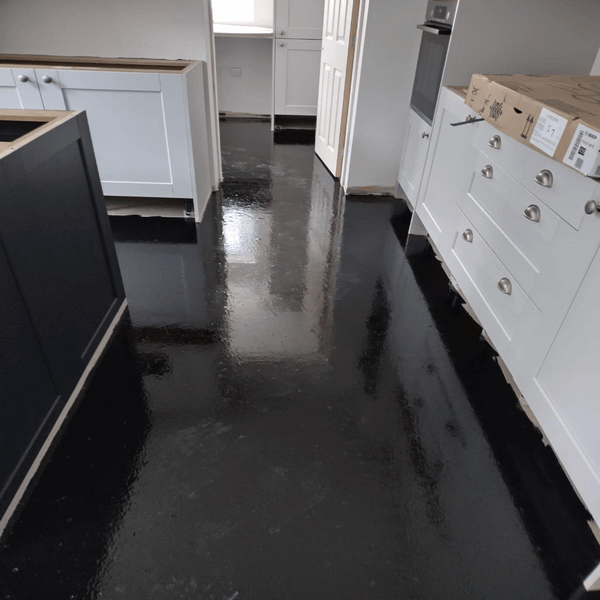
For uneven floors, fitters apply a smoothing latex screed or install flooring-grade 6mm plywood over timber boards. Furthermore, unopened LVT boxes should rest flat inside the room for at least 48 hours to acclimatize to local room temperatures.
Click-Lock Floating vs Glue-Down Installation
LVT is fitted using one of two primary methods:
- Click-Lock (Floating): Rigid planks snap together along precision tongue-and-groove joints over a thin high-density underlay. This system requires no glue, making it faster and accessible for skilled DIYers.
- Glue-Down (Dryback): Individual tiles are adhered directly to a freshly smoothed subfloor using specialist pressure-sensitive adhesive. This method provides maximum stability for complex parquet layouts and heavy commercial footfall.
Cleaning and Long-Term Maintenance
Maintaining luxury vinyl is remarkably straightforward. Establishing a consistent care routine protects the polyurethane wear layer for decades:
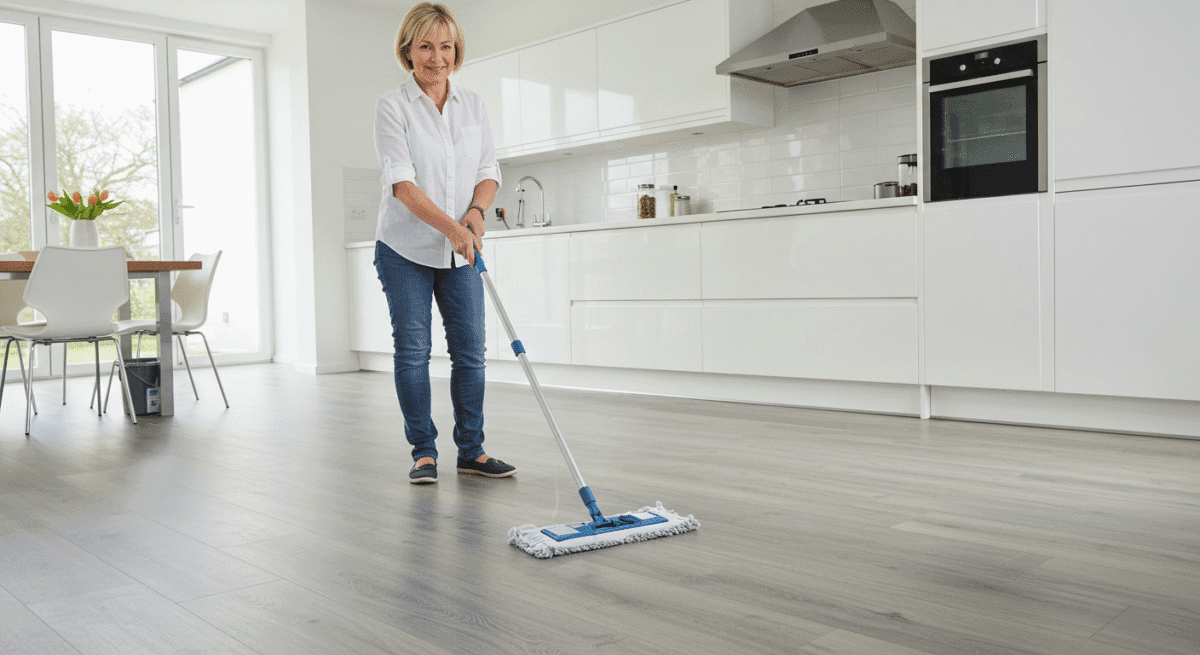
- Routine Sweeping: Sweep or vacuum daily using a soft hard-floor attachment to remove abrasive dust and grit.
- Damp Mopping: Mop weekly with clean warm water and a neutral pH floor cleaner. Avoid excessive standing water.
- Never Use Steam Mops: Extreme pressurised steam can penetrate seams, softening adhesives and warping vinyl cores.
- Fit Furniture Pads: Place felt gliders under chair legs and heavy appliances to avoid surface scoring.
Design Flexibility: Planks, Parquet, and Borders
Design flexibility is where LVT truly outshines sheet flooring. Because boards are supplied as individual pieces, fitters can arrange them in bespoke decorative patterns:
- Herringbone & Parquet: Small planks arranged at 45-degree angles add architectural grandeur to hallways and dining rooms.
- Contrasting Feature Strips: Thin accent strips fitted between stone tiles mimic realistic grout lines without dirt build-up.
- Perimeter Borders: Framing a room with darker contrasting planks creates an elegant, bespoke showroom aesthetic.
Frequently Asked Questions
LVT stands for Luxury Vinyl Tile. It refers to premium modular flooring engineered from multiple PVC layers, high-definition photographic design films, and clear protective wear layers that convincingly replicate timber and stone.
Yes. Because LVT is constructed from synthetic PVC or stone-plastic composite materials, the planks and tiles are 100% waterproof. It will not swell, buckle, or rot when exposed to splashes, making it ideal for bathrooms, kitchens, and utility rooms.
Quality LVT flooring typically lasts between 20 and 30 years in residential settings. Leading manufacturers such as Karndean and Amtico offer 25-year to lifetime residential warranties, provided the floor is maintained properly.
Yes. LVT is an excellent conductor of heat and works safely with both hydronic (water) and electric underfloor heating systems. As standard, ensure the subfloor heating temperature does not exceed 27°C.
Conclusion
Understanding what is LVT flooring makes it easy to see why it has become the favourite flooring choice for UK renovations. By combining 100% waterproof reliability with authentic wood textures and simple cleaning, LVT provides the ideal balance of luxury style and practical durability.
Explore our full collection of luxury vinyl tiles (LVT) online, or visit our Harrogate showroom to view large physical flooring boards and discuss your renovation plans.
Key Takeaways
Key highlights of luxury vinyl tile flooring:
- 100% Waterproof: Advanced synthetic cores allow installation across bathrooms, kitchens, and basements without warping.
- Superior Lifespan: Quality LVT lasts 20 to 30 years with wear layers ranging from 0.3mm to 0.7mm.
- Warm and Quiet: Offers superior underfoot comfort and sound insulation compared to cold ceramic tiles.
- Subfloor Prep Matters: Screeding or plywood preparation is essential to prevent subfloor flaws showing through.