Table of contents
Calculating an accurate commercial flooring cost can feel overwhelming when contractor quotes vary wildly across the UK. Material supply can range from £12 per square metre for contract carpet tiles to over £60 per square metre for heavy-duty acoustic rubber. Furthermore, professional installation labour typically adds another £12 to £35 per square metre on top.
However, focusing solely on initial material prices often leads to costly mistakes. For example, a £14/m² commercial nylon carpet tile and a £32/m² designer tile might both carry identical Class 33 heavy-commercial ratings and 10-year warranties. In that scenario, the price difference reflects aesthetic design rather than structural durability.
In this guide, we break down every element of commercial flooring cost. We examine material prices, subfloor mechanical preparation, out-of-hours labour fees, and ongoing lifecycle expenses to help you budget with confidence.
Understanding Commercial Flooring Types and Costs
Selecting the right commercial material requires balancing heavy footfall demands with practical maintenance budgets. Below are the four core options specified across British businesses:
Carpet Tiles: Modular Flexibility and Acoustic Control
Modular 50x50cm carpet tiles remain the standard choice for modern corporate offices. Because individual squares can be lifted and swapped if stained, maintenance costs drop dramatically compared to rolled broadloom carpets.
In addition, dense loop-pile tiles cut ambient office reverberation by up to 24dB, noticeably improving concentration. Material supply typically ranges between £12 and £35 per square metre, with fitting wastage running at just 3% to 5%.
Commercial Luxury Vinyl Tile (LVT)
Commercial LVT delivers authentic wood, concrete, and stone finishes with 100% waterproof protection. Specify products with a 0.55mm to 0.70mm wear layer to ensure resilience against rolling office chairs and high retail footfall.
Commercial LVT supply ranges between £18 and £55 per square metre. While gluedown installations demand an ultra-smooth screed, click-lock SPC systems can speed up installation across sound subfloors.
Slip-Resistant Safety Vinyl Flooring
Safety vinyl incorporates aluminium oxide or silicon carbide aggregates throughout its matrix to guarantee traction under wet conditions. Established brands like Altro and Polyflor reduce slip risks to one in a million over the material’s service life.
Materials typically cost between £16 and £28 per square metre. When installed with hot-welded joints and cap-and-cove skirting, it creates an impervious water basin essential for commercial kitchens and healthcare cleanrooms.
Heavy-Duty Commercial Rubber Flooring
Commercial rubber offers exceptional impact absorption, chemical resistance, and natural elasticity. Because high-grade rubber incorporates self-migrating waxes, it never requires stripping or resealing.
While rubber represents a higher initial investment at £35 to £65 per square metre, its 25-plus year lifespan and minimal chemical cleaning requirements deliver outstanding lifecycle economy.
Key Factors That Influence Commercial Flooring Cost
Your final invoice involves far more than picking products from a price list. Several critical job-site factors drive total expenditure:
Subfloor Preparation and Disposal Fees
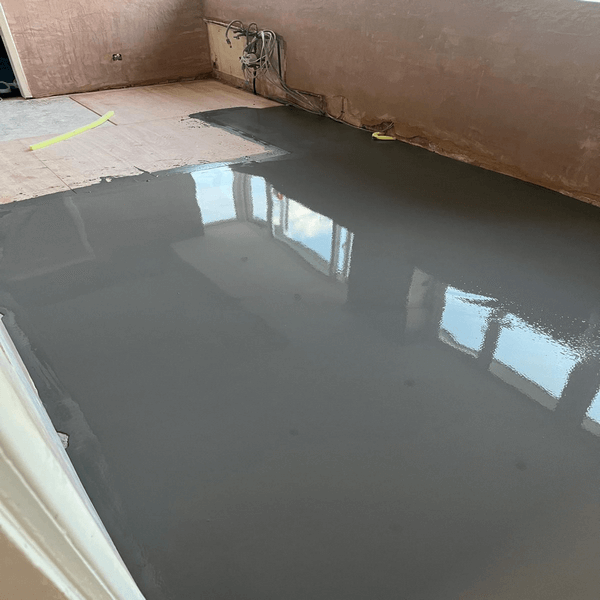
Subfloor preparation frequently accounts for 20% to 30% of total commercial project expenses. Skipping mechanical preparation almost always leads to adhesive failure and visible telegraphing:
- Uplift & Disposal: Stripping old glued vinyl or carpet tiles costs approximately £2.50 to £5.50 per m², with commercial skip disposal adding £250 to £500 per load.
- Concrete Smoothing: Applying latex or water-based smoothing compounds (3mm thickness) adds roughly £4.50 to £7.00 per m².
- Damp-Proof Membranes (DPM): Liquid epoxy surface DPMs for high-moisture slabs add £8.00 to £14.00 per m².
EN 685 Commercial Durability Ratings
Under European standard EN 685, commercial flooring is certified into standardized traffic classes:
- Class 32 (General Commercial): Suitable for quiet offices, hotel bedrooms, and meeting suites.
- Class 33 (Heavy Commercial): The standard benchmark for department stores, corridors, classrooms, and reception halls.
- Class 34 (Very Heavy Commercial): Built for airports, train stations, and intensive healthcare thoroughfares.
Standard vs Out-of-Hours Fitting Labour
Fitting schedules substantially alter commercial labour rates. Standard weekday installations range from £14 to £25 per square metre. However, if your business cannot interrupt trading, weekend or evening phased work carries a 20% to 35% labour uplift.
Furthermore, moving workstations, server cabling, and office furniture adds approximately £15 to £25 per desk position when handled by specialized installers.
Commercial Flooring Cost Breakdown Table
Below is an estimated cost comparison across typical UK commercial flooring installations:
| Flooring Material | Supply Cost (per m²) | Fitting Labour (per m²) | Total Average Cost | Lifespan |
|---|---|---|---|---|
| Contract Carpet Tiles | £12 – £35 | £8 – £14 | £20 – £49 / m² | 10 – 15 Years |
| Commercial LVT (0.55mm) | £18 – £45 | £15 – £25 | £33 – £70 / m² | 15 – 25 Years |
| Safety Vinyl (R11 Coved) | £16 – £28 | £16 – £24 | £32 – £52 / m² | 10 – 15 Years |
| Commercial Rubber | £35 – £65 | £18 – £30 | £53 – £95 / m² | 20 – 30 Years |
| Porcelain Commercial Tile | £22 – £50 | £35 – £55 | £57 – £105 / m² | 30+ Years |
Selecting Flooring by Commercial Sector
Matching materials to your specific operational environment delivers the lowest total lifecycle expenditure:
- Offices & Boardrooms: Nylon Class 33 carpet tiles offer the optimal acoustic dampening and simple modular replacement.
- Retail Stores: Commercial LVT creates an upscale brand impression that withstands heavy footfall and cleaning machines.
- Healthcare & Education: Coved safety vinyl satisfies strict infection control protocols and prevents slip liabilities.
Frequently Asked Questions
The average commercial flooring cost in the UK ranges from £25 to £75 per square metre, including both material supply and professional installation. Budget carpet tile installations can cost as little as £20/m², while specialist subfloor prep and commercial rubber can exceed £90/m².
Basic subfloor preparation typically costs between £4.50 and £12.00 per square metre. This includes uplifting old floor coverings, applying self-levelling smoothing compounds, and priming. If liquid damp-proof membranes (DPM) are required for wet concrete, expect an additional £8 to £14 per m².
Yes, carpet tiles are generally cheaper to install than commercial vinyl. Carpet tiles create minimal cutting waste (3-5%) and tolerate slight subfloor deviations. In contrast, vinyl requires extensive subfloor screeding, specialist adhesives, and hot-welded seams, increasing labour fees.
Businesses can reduce costs by selecting standard Class 33 materials rather than designer ranges, scheduling installation during regular working hours, clearing office furniture prior to fitters arriving, and purchasing directly through specialist regional contractors.
Conclusion
Understanding your true commercial flooring cost requires evaluating total lifecycle value rather than just initial purchase prices. Certified Class 33 specifications guarantee durability, while proper subfloor screeding protects your investment from premature failure.
Contact First Choice Flooring today to arrange a comprehensive on-site survey, moisture assessment, and transparent commercial quotation for your business premises.
Key Takeaways
Essential budgeting principles for commercial flooring refits:
- Price vs Durability: High pricing often reflects aesthetic design rather than performance; always verify Class 33 or 34 ratings.
- Budget for Prep Work: Subfloor smoothing and damp-proofing represent 20% to 30% of total expenditure.
- Timing Considerations: Out-of-hours or phased weekend installations carry a 20% to 35% labour surcharge.
- Low Waste Options: Modular carpet tiles produce just 3% to 5% fitting wastage compared to 15% for broadloom rolls.