Up to 15% of your home’s heat can escape through uninsulated ground floors. This represents a significant loss that many homeowners overlook when considering energy efficiency improvements.
The temperature difference is substantial. Uninsulated floors typically hover around 11°C, whilst properly insulated floors can reach a comfortable 20°C. This 9°C gap affects both your comfort and your energy bills throughout the year.
The financial case for floor insulation is compelling. The Energy Saving Trust calculates that floor insulation could save you £70-£100 annually on energy bills. For ground floor insulation specifically, the average house in Great Britain can expect savings of around £70 per year. Detached houses see even greater benefits, with potential savings reaching £120 annually.
Floor insulation delivers additional value through reduced gas consumption. A well-insulated floor can save 7 cubic metres of natural gas per square metre each year—worth approximately £200-£250 annually.
The range of available options suits different budgets and requirements. Blanket insulation starts from around £5 per square metre, whilst high-performance spray foam offers superior thermal resistance values. The choice depends on your specific floor construction, budget constraints, and performance expectations.
Effective floor insulation addresses both immediate comfort and long-term energy costs. Your feet stay warmer whilst your heating bills decrease—a combination that makes this improvement particularly worthwhile for most homes.
What are the benefits of underfloor insulation?
Floor insulation receives less attention than loft or wall insulation when homeowners plan energy efficiency improvements. However, properly installed underfloor insulation offers benefits that extend well beyond simply warming your feet.
How does insulation improve comfort and warmth?
Floor insulation eliminates cold spots and drafts that make certain areas of your home uncomfortable. Older properties often lack floor insulation entirely, leaving residents with chilly floors throughout winter months. Proper insulation maintains consistent indoor temperatures year-round.
The comfort benefits extend beyond temperature control. Underfloor insulation acts as a sound barrier, particularly valuable in multi-storey homes where footfall noise can be disruptive. Additionally, insulation prevents ground moisture from entering your property, reducing the risk of mould and related problems.
What energy savings can you expect?
The economic case for floor insulation is strong, although we’ve already seen the potential savings figures. Heat loss through uninsulated floors accounts for 10-20% of a home’s total heat loss. Proper floor insulation significantly reduces the energy your heating system requires to maintain comfortable temperatures.
This efficiency improvement delivers several advantages:
- Reduced energy consumption and lower utility bills
- Decreased carbon emissions from your property
- Maintenance-free performance once correctly installed
Why floor insulation deserves serious consideration
Floor insulation plays a crucial role in your home’s overall thermal performance, despite being less visible than other energy improvements. The insulation creates a more sustainable living environment whilst cutting your property’s carbon emissions.
Property values also benefit from floor insulation. Energy-efficient homes attract more buyers in today’s market, where environmental considerations influence purchasing decisions. The investment typically recovers its cost through energy bill reductions and potentially higher resale values.
Floor insulation represents a worthwhile investment that provides immediate comfort improvements alongside long-term financial and environmental advantages. The combination of enhanced comfort, reduced running costs, and environmental benefits makes this upgrade particularly attractive for most homeowners.
Which floor insulation performs best for your home?
The choice of insulation material significantly affects both performance and cost. Each option suits different floor types and budgets, with varying installation requirements and thermal efficiency levels.
1. Spray foam insulation
Spray foam delivers superior thermal performance, achieving R-values up to 8 per inch. Open-cell versions provide R-values of 3.5, whilst closed-cell options offer higher resistance. This polyurethane-based material expands after application to create an airtight seal. Installation costs range from £20-£50 per square metre, however it can reduce heating and cooling expenses by 30-50%.
2. Blanket insulation
Made from mineral wool, fibreglass, or natural fibres, blanket insulation costs approximately £5 per square metre. Available in rolls or batts, this flexible material fits between floor joists and suits suspended timber floors particularly well. It cuts easily to accommodate irregular spaces.
3. Rigid foam boards
Constructed from polystyrene, polyisocyanurate, or polyurethane, rigid boards provide excellent thermal resistance in compact form. Prices range from £5-£21 per square metre, with R-values between R-4 and R-6.5 per inch. These boards work exceptionally well for concrete floors and can last up to 100 years when properly installed.
4. Multi-foil insulation
This lightweight material consists of multiple reflective foil layers and wadding. When compressed to typically 6mm thickness, it reflects up to 95% of radiant energy back into your room. Multi-foil performs equivalent to approximately 50mm of rigid board insulation and costs £7-£15 per square metre.
5. Draught-proofing
Basic draught-proofing involves sealing floorboard gaps using silicon sealant or wooden beadings. Whilst affordable for DIY projects (under £10), it addresses only part of the heat loss problem. Professional installation ranges from £80-£200.
6. Rugs and carpets
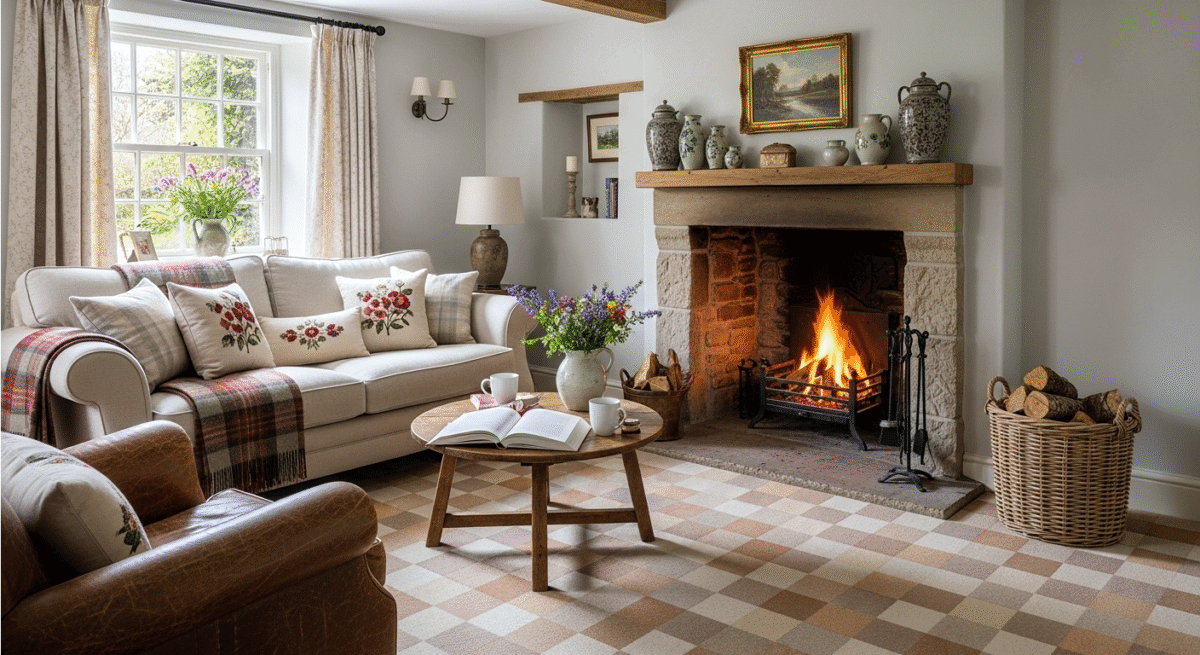
Thick wool rugs create a thermal barrier that improves comfort and reduces floor heat loss. Prices vary considerably from £5-£100+ per square metre, making this a flexible option for immediate results.
7. Insulating screed
Combining insulation with levelling compound, insulating screed costs £10-£15 per square metre. Products like ThermScreed use lightweight mineral aggregates with modified cement binder to achieve thermal conductivity of 0.088 W/mK. This option works particularly well with underfloor heating systems.
8. Structural insulated panels
SIPs consist of insulating foam sandwiched between oriented strand board sheets, providing both structural support and insulation. These panels offer strength, durability, and excellent thermal performance for extensions and roof conversions, though at higher cost of £50-£155 per square metre.
How to choose the right insulation for your floor type
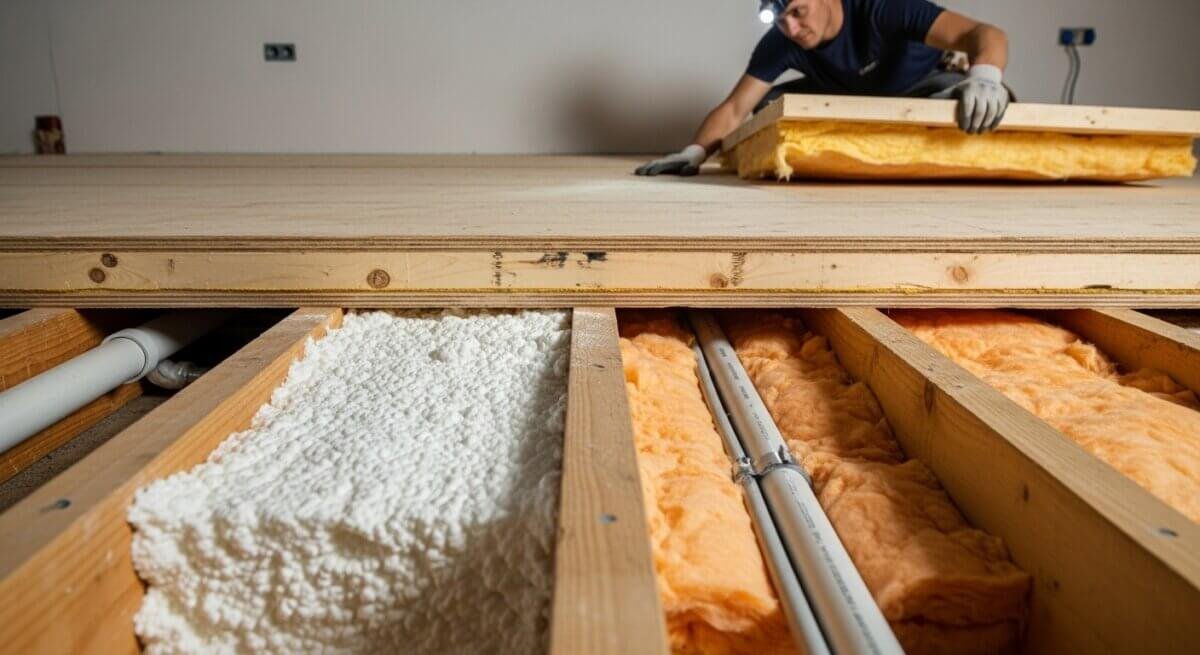
Selecting appropriate underfloor insulation depends largely on your floor’s construction. Different floor types require different approaches to achieve optimal thermal performance.
Solid floors vs suspended floors
Solid floors, constructed from concrete or screed, typically lose less heat than suspended timber floors. You can identify a suspended floor by looking for air vents through the outer brick walls. These ventilated spaces underneath make suspended floors more vulnerable to heat loss and draughts.
For solid floors, rigid insulation boards work effectively when placed directly on top. Suspended timber floors present different challenges and opportunities for insulation placement.
When to use rigid boards or spray foam
Rigid foam boards suit solid floors because of their compressive strength and load-bearing capacity. They can support the weight of flooring and furniture without compressing.
Suspended timber floors benefit from different solutions. Open-cell spray foam performs exceptionally well here, expanding up to 100 times its original size during application. This expansion fills gaps and spaces that rigid boards might miss, whilst remaining flexible enough to accommodate natural building movement.
However, cutting rigid boards precisely can be challenging. Any gaps left during installation significantly reduce the overall thermal efficiency.
Moisture and ventilation considerations
You should check joists for signs of damp or rot before installing any insulation.
Insulation changes how air and moisture behave beneath floors. This alteration may increase dampness risks if ventilation isn’t properly managed. Adequate ventilation through air bricks remains essential to prevent moisture buildup.
Suspended floors require particular attention to moisture management. Breathable insulation materials help regulate humidity levels in these spaces.
Natural insulation alternatives
Several eco-friendly options provide effective thermal performance:
Sheep’s wool absorbs and releases moisture without losing its insulation properties. This natural regulation helps prevent condensation problems.

Hemp and wood fibre offer excellent thermal characteristics combined with humidity control. Both materials resist moisture naturally.
Jute insulation uses recycled coffee bags and has carbon-negative production. This option appeals to environmentally conscious homeowners.
Natural materials typically require less energy to manufacture than synthetic alternatives. They also provide better indoor air quality and can be composted at the end of their useful life.
What floor insulation costs and whether it’s worth it
If you’re considering floor insulation, you should weigh the upfront investment against long-term energy savings to determine whether it’s appropriate for your situation.
Understanding the costs involved helps you make informed decisions about this home improvement. Material prices vary significantly depending on the insulation type you choose.
What different insulation materials cost
Floor insulation prices depend largely on the materials selected:
- PIR board: £5-£15 per m²
- Polystyrene board: £10 per m²
- Mineral wool: £13-£17.5 per m²
- Rigid foam: £21.5 per m²
- Open-cell spray foam: £55 per m²
- Closed-cell spray foam: £70 per m²
Professional installation versus DIY approaches
Professional installation for suspended floor insulation typically costs around £4,700, with solid floor projects often commanding higher fees. Labour charges generally range between £150-£200 per day.
DIY installation reduces expenses substantially, limiting costs primarily to materials. However, professional installers provide guarantees and ensure compliance with building regulations. This becomes particularly important for more complex installations or where building control approval is required.
Annual savings by property type
Energy bill reductions vary depending on your home’s characteristics:
- Detached houses: £100-£120
- Semi-detached houses: £60[254]
- Mid-terrace houses: £40[254]
- Detached bungalows: £110[254]
Financial support and grant schemes
Several government programmes can help reduce installation costs:
- Great British Insulation Scheme (GBIS): Offers free or discounted insulation through March 2026
- Energy Company Obligation (ECO4): Available for qualifying low-income households
- Home Upgrade Grant (HUG): Designed for properties not connected to the gas grid
- 0% VAT: Applied to eligible energy-saving improvements until March 2027
These schemes can significantly reduce the financial barrier to floor insulation, making this improvement more accessible for many homeowners.
What this means for your home
Underfloor insulation represents one of the most practical yet frequently overlooked home improvements available. The combination of improved comfort, reduced energy bills, and environmental benefits makes this investment particularly worthwhile for most properties.
Your floor construction largely determines the most suitable approach. Suspended timber floors respond well to blanket insulation or spray foam applications, whilst solid concrete floors perform best with rigid boards or insulating screed. Budget considerations matter, with options spanning from £5 per square metre for DIY solutions to £70 per square metre for professional installations.
The benefits extend beyond immediate comfort improvements. Reduced energy consumption, lower carbon emissions, and protection against moisture problems create long-term value for your property. Government schemes such as the Great British Insulation Scheme may provide financial support to make this investment more accessible.
Material choice depends on your priorities and circumstances. Natural options like sheep’s wool and hemp offer environmental credentials alongside effective thermal performance. Synthetic alternatives provide different benefits, including superior moisture resistance and durability.
If you’re considering underfloor insulation, assess your specific floor construction and consult with professionals to ensure the chosen solution suits your property’s needs. The investment typically recovers its cost through energy savings whilst creating a more comfortable living environment throughout your home.
This information is provided for general guidance only. Building regulations and specific property requirements may affect your insulation choices, so professional advice should be sought where appropriate.