Table of contents
- Vinyl vs LVT Flooring: Key Differences
- Material Composition and Build Quality
- Visual Appeal and Design Options
- Durability, Wear Layers, and Lifespan
- Waterproofing and Underfloor Heating
- Installation: Glue-Down vs Click-Lock
- Cost and Long-Term Value Comparison
- Vinyl vs LVT Comparison Table
- Frequently Asked Questions
- Conclusion
- Key Takeaways
Vinyl vs LVT Flooring: Key Differences
Deciding between vinyl vs LVT flooring is a common dilemma for UK homeowners planning a renovation. While both surfaces are synthetic and water-resistant, their build quality and durability differ substantially. Standard sheet vinyl typically lasts 10 to 15 years, whereas Luxury Vinyl Tile (LVT) easily lasts 20 to 30 years under proper maintenance.
Standard sheet vinyl is produced as a flexible continuous roll with a lightweight wear layer. In contrast, LVT arrives as individual rigid planks or stone tiles with wear layers measuring up to 0.7mm thick. Furthermore, LVT handles heavy furniture and pet claws far better than softer roll vinyl.
Budget naturally influences your project. Standard sheet vinyl generally costs £10 to £35 per square metre, while LVT ranges from £20 to £70 per square metre. In this guide, we evaluate vinyl vs LVT flooring across wear layers, acoustics, fitting systems, and long-term value.
Material Composition and Build Quality
The core difference between standard vinyl and luxury vinyl tiles lies in their physical layer structure. This construction directly influences underfoot comfort and indentation resistance.
Sheet Vinyl Layers and Composition
Standard sheet vinyl uses bonded flexible layers to create a water-resistant roll. Its base consists of a fibreglass fleece that keeps the material flat across subfloors, topped with a PVC backing, a printed decorative pattern, and a thin protective lacquer.
Because sheet vinyl is lightweight and flexible, it cushions steps nicely. However, its thin protective coating makes it vulnerable to punctures from sharp heels and heavy dropped items.
LVT Multi-Layered Rigid Core Construction
Luxury vinyl flooring utilizes an advanced multi-tier construction. It incorporates a reinforced backing, a rigid composite core, a high-resolution 3D decorative film, and an ultra-tough transparent wear layer.
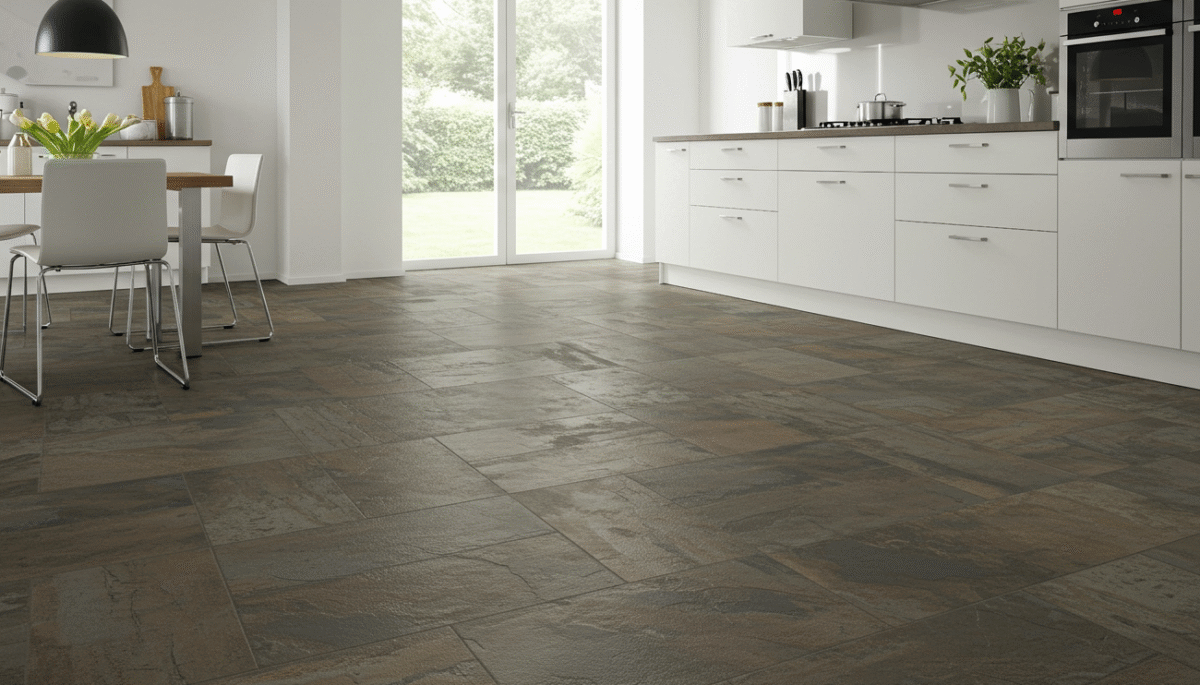
The protective wear layer on LVT ranges between 0.3mm and 0.7mm. Leading manufacturers like Karndean and Amtico reinforce this surface with aluminium oxide or ceramic beads, delivering remarkable scratch resistance against daily family life.
Thickness Comparison: 2mm–3mm vs 4mm–8mm
The depth of the material creates an immediate tactile difference. Standard sheet vinyl measures just 2mm to 3mm thick, offering minimal acoustic sound deadening across subfloors.
In contrast, LVT measures between 4mm and 8mm thick. Modern rigid Stone Plastic Composite (SPC) cores add structural density, bridging small substrate imperfections and insulating rooms against cold concrete subfloors.
Visual Appeal and Design Options
Aesthetics often settle the vinyl vs LVT flooring debate. While older vinyl products looked synthetic, modern luxury tiles provide hyper-realistic alternatives to hardwood and natural stone.
Surface Texture: Smooth vs Embossed-in-Register
Standard roll vinyl typically features a flat or lightly stippled texture that does not match the printed decor beneath. As a result, wood patterns feel artificially smooth under bare feet.
Conversely, premium LVT uses Embossed-in-Register (EIR) technology. This precision manufacturing process engraves tactile surface graining directly over the printed wood knots and mineral veins, creating authentic optical depth.
Wood and Stone Realism
Because sheet vinyl is printed on continuous rolls, patterns repeat predictably across the room. LVT boards are manufactured as individual planks, allowing fitters to stagger joins and lay intricate patterns such as herringbone or chevron.
Moreover, stone-effect LVT features bevelled edges and realistic grout strips, successfully replicating slate and marble without the coldness of natural tiles.
Durability, Wear Layers, and Lifespan
Durability is where the investment value of LVT becomes obvious. While standard vinyl lasts roughly 10 years, rigid-core LVT delivers up to 30 years of dependable service.
For high-traffic residential areas, choose an LVT wear layer of 0.55mm or greater. These commercial-grade surfaces withstand dragging chairs, pet claws, and grit from outdoor shoes without developing cloudy scuffs.
Waterproofing and Underfloor Heating
Both options handle humidity well, but their installation formats offer different water protection benefits:
- Sheet Vinyl Waterproofing: Unrolls seamlessly across bathrooms, preventing water puddles from finding joints.
- LVT Waterproofing: Planks feature 100% waterproof synthetic cores. However, standing water left along edges can eventually migrate beneath unsealed joints.
- Underfloor Heating: Both materials operate safely over wet and electric underfloor heating systems up to a maximum surface temperature of 27°C.
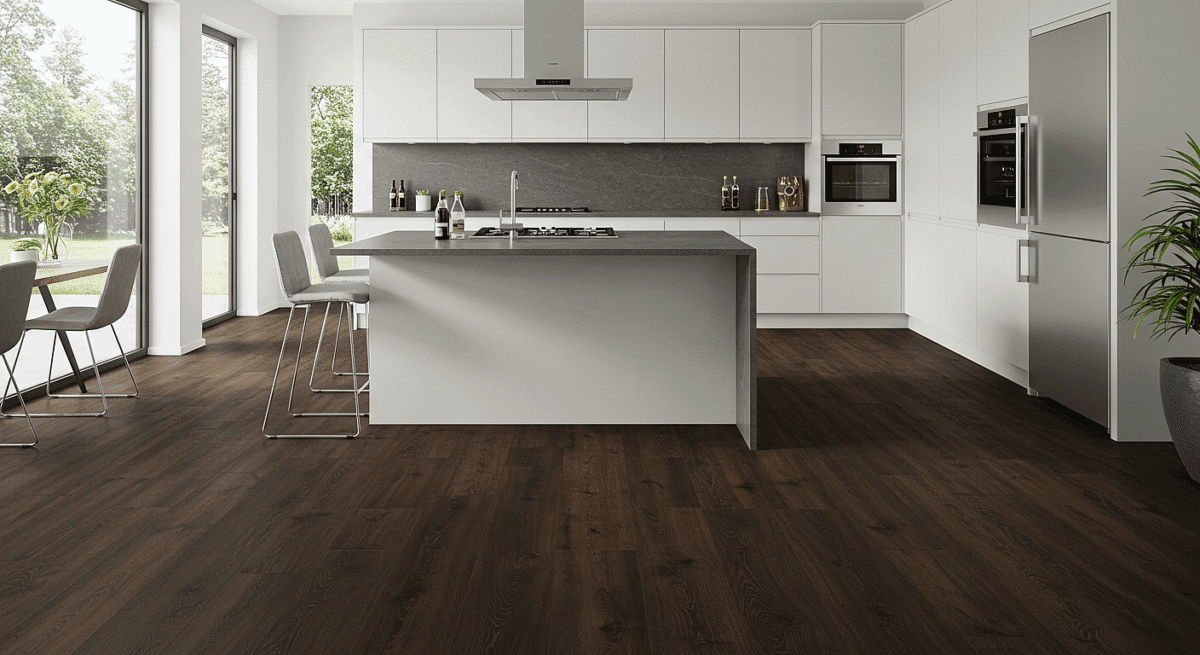
Installation: Glue-Down vs Click-Lock
Installation methods dictate project complexity and labour expenses. Standard sheet vinyl requires precise template trimming and adhesive perimeter bonding to prevent bubbling.
In contrast, click-lock LVT floats over underlay without messy adhesives. Planks snap together securely using a utility knife and rubber mallet, making it an ideal choice for capable DIY enthusiasts.
Cost and Long-Term Value Comparison
When comparing vinyl vs LVT flooring costs, evaluate the complete installed figure alongside replacement cycles:
| Flooring Format | Material Cost (per m²) | Fitting Fee (per m²) | Total Estimated Spend |
|---|---|---|---|
| Standard Sheet Vinyl | £10 – £35 | £12 – £18 | £22 – £53 / m² |
| Click-Lock LVT | £22 – £48 | £15 – £22 | £37 – £70 / m² |
| Gluedown LVT (Parquet) | £35 – £70 | £25 – £45 | £60 – £115 / m² |
While sheet vinyl costs less upfront, LVT adds measurable appeal for prospective home buyers. Its authentic timber appearance and 25-year lifespan make it a far more lucrative long-term investment.
Vinyl vs LVT Comparison Table
| Feature | Standard Sheet Vinyl | Luxury Vinyl Tile (LVT) |
|---|---|---|
| Thickness | 2mm – 3mm | 4mm – 8mm |
| Wear Layer | 0.15mm – 0.25mm | 0.30mm – 0.70mm |
| Expected Lifespan | 10 – 15 Years | 20 – 30 Years |
| Texture | Smooth or Basic Embossing | Embossed-in-Register (EIR) |
| Fitting Format | Continuous Wide Rolls | Individual Click or Glued Planks |
| Scratch Resistance | Moderate | High (Ceramic Bead / PU) |
| Underfloor Heating | Compatible (Max 27°C) | Compatible (Max 27°C) |
Frequently Asked Questions
The main difference lies in construction and format. Standard vinyl is sold as a thin, flexible roll (2mm-3mm thick) with a printed surface, while LVT is produced as thick, rigid planks or tiles (4mm-8mm thick) with textured wear layers that convincingly replicate natural wood and stone.
Both are 100% waterproof, but sheet vinyl offers seamless protection against standing bath water puddles. However, LVT feels noticeably warmer underfoot, provides better slip resistance, and delivers a far more luxurious appearance.
Yes. If an LVT plank is scratched or scorched, it can be lifted and replaced individually without disturbing the surrounding floor. Damaged sheet vinyl, however, requires patching or complete roll replacement.
LVT materials generally cost £20 to £70 per square metre compared to £10 to £35 for standard vinyl. Fitting labour for LVT is slightly higher, but its 25-year lifespan offers greater long-term value than replacing sheet vinyl every decade.
Conclusion
When weighing vinyl vs LVT flooring, your priorities will guide the final decision. Standard sheet vinyl remains a practical, budget-conscious choice for rental properties and wet bathrooms requiring seamless coverage. However, for enduring style, authentic wood textures, and high resistance to daily wear, Luxury Vinyl Tile (LVT) represents the superior long-term investment.
Visit our Harrogate flooring showroom to compare physical boards, or explore our full collection of luxury vinyl tiles (LVT) today.
Key Takeaways
Summary of core distinctions between both floor coverings:
- Superior Longevity: LVT lasts 20 to 30 years compared to sheet vinyl’s 10 to 15 years.
- Realistic Textures: LVT utilises Embossed-in-Register graining to replicate real timber and stone.
- Thicker Build: LVT measures 4mm to 8mm with heavy wear layers, providing superior scratch and dent protection.
- DIY Friendly: Click-lock LVT floating floors snap together easily without adhesives.