Table of contents
When choosing a stair runner, homeowners quickly realize that their staircase can be far more than just a functional pathway between floors. Because the entryway is one of the first features guests see when entering your hallway, a well-chosen runner establishes your interior style from the front door.
Beyond visual elegance, carpet runners deliver essential safety benefits. Bare hardwood stairs create serious slip hazards, particularly for young children, elderly family members, or energetic pets. Installing a textured runner provides dependable grip, cushions accidental falls, and protects original timber treads from daily footwear scuffs.
In this guide, we walk you through everything you need to know about choosing a stair runner. We explore trending herringbone patterns, compare wool with durable synthetics, and break down fitting costs to help you transform your staircase with confidence.
What to Consider Before Choosing a Stair Runner
Before selecting a striking pattern or colour palette, consider the practical demands of your home. A staircase endures heavy downward impact, meaning your runner must combine resilient construction with reliable safety.
Slip Resistance and Family Safety: Polished or freshly varnished timber steps can be treacherous in socks. A quality stair runner creates traction, dampens footfall noise between floors, and clearly defines step edges through contrasting border lines.
Footfall Traffic and Pressure: Descending stairs concentrates your body weight onto the front nosing of each step with greater force than walking across flat ground. For busy households, choose dense low-profile weaves or tightly spun twist piles that resist flattening over time.
Budget and Installation Costs: Material prices for standard runners generally range from £15 to £35 per linear foot, with a typical straight flight requiring around 22 linear feet. Furthermore, professional installation generally costs between £200 and £375 depending on whether your staircase features straight steps or curved winders. You can explore our dedicated guide on calculating your stair runner cost to plan your complete project budget.
Popular Stair Runner Design Trends
Your staircase offers a fantastic canvas for creative design. The right pattern highlights period joinery while making narrow hallways feel open and welcoming.
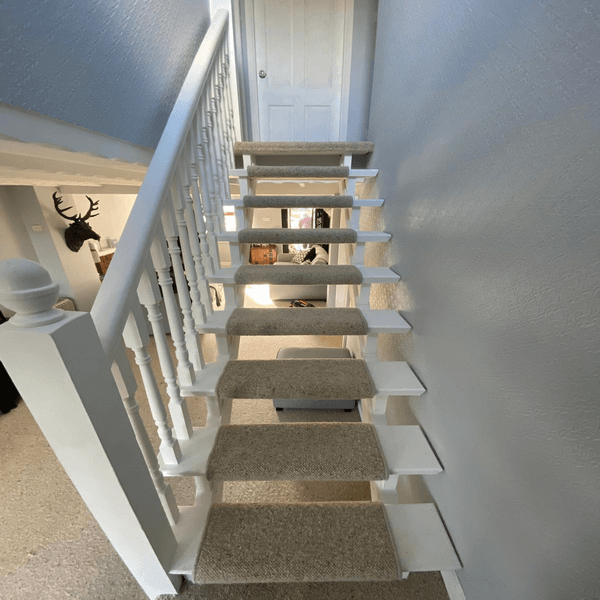
Timeless Herringbone and Geometric Motifs
Herringbone remains one of the most sought-after designs in UK homes. The subtle V-shaped zigzag flow adds architectural sophistication without clashing with hallway artwork, making it equally suited to Victorian townhouses and modern builds.
In addition, bold geometric patterns introduce dynamic visual energy. These structured designs also cleverly conceal light dust and tracking marks between weekly cleans.
Striped Runners and Contrasting Border Tapes
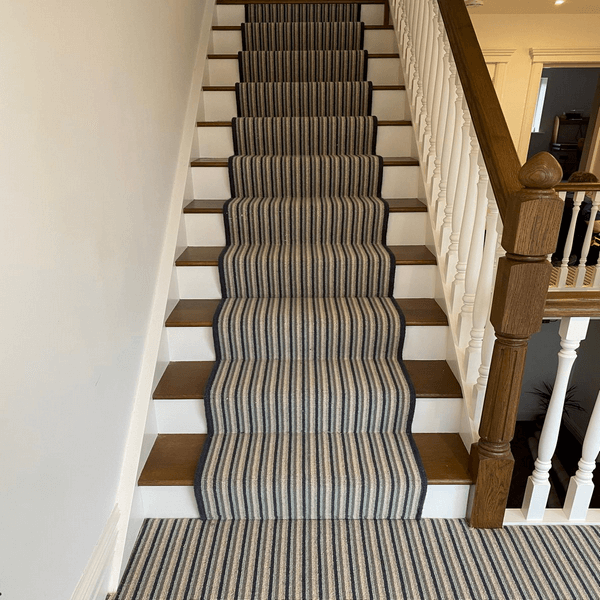
Vertical stripes create an optical illusion that elongates the appearance of your staircase, making narrow flights feel broader. Medium grey, charcoal, and warm navy stripes provide timeless versatility for busy family homes with pets.
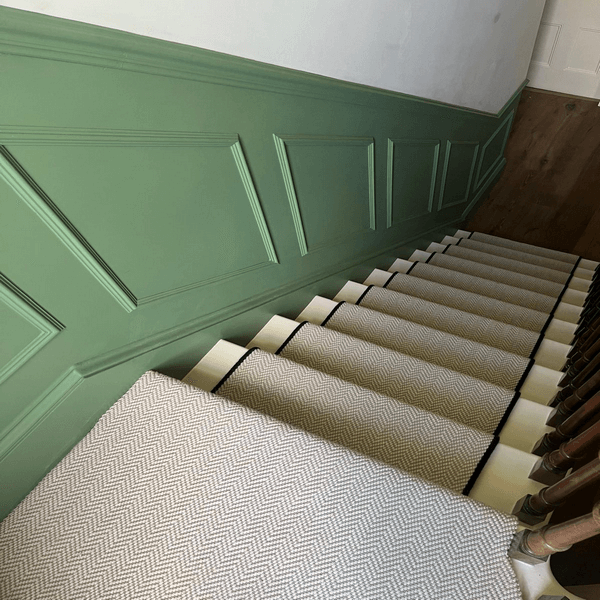
Similarly, wide cotton herringbone border tapes provide a tailored, bespoke finish. Leaving 5cm to 10cm of painted timber exposed on each side showcases traditional craftsmanship while anchoring the runner neatly in the centre.
Best Materials for Durability and Comfort
Fibre selection dictates how gracefully your runner ages under daily use. Because steps endure concentrated foot friction, choosing the correct material is vital:
- 100% Pure Wool: The benchmark choice for stairs. Wool fibres feature natural spring-like elasticity that recovers after compression, alongside inherent soil resistance and acoustic dampening.
- 80/20 Wool Blends: Pairing 80% British wool with 20% nylon provides maximum tensile durability, preventing premature wear across the nosings.
- Polypropylene & Nylon Synthetics: Budget-conscious alternatives offering complete stain resistance and easy spot-cleaning for homes with young children.
- Natural Plant Fibres (Sisal & Coir): Highly durable with organic texture, though slightly firmer underfoot and sensitive to water spills.
Installation Methods and Long-Term Care
Professional fitting ensures your runner is pulled with consistent tension across every step, preventing dangerous loose edges. Fitters use narrow gripper rods and high-density 9mm underlay on each tread to deliver secure cushioning without creating rounded step edges.
Furthermore, decorative metal stair rods can be installed across the riser junction. While modern runners are securely fixed by grippers and staples, stair rods in antique brass, chrome, or pewter add a polished decorative statement.
To keep your runner looking fresh, vacuum weekly using a handheld brush attachment along the direction of the pile. When spills happen, blot immediately with clean paper towels rather than scrubbing, and consider professional hot-water extraction every two years.
Frequently Asked Questions
The ideal stair runner width typically leaves 5cm to 10cm of exposed painted or polished timber on either side of the step. For a standard UK staircase measuring around 85cm to 90cm wide, a 65cm to 70cm wide runner achieves a balanced, tailored appearance.
An 80/20 wool-nylon twist or 100% British wool loop is the most durable choice for stairs. Wool fibres naturally spring back under compression, while nylon provides extra tensile strength to prevent pile flattening over step nosings.
Yes. Always install high-density underlay beneath a stair runner. Use a specialist crumb rubber or high-density PU underlay with a maximum thickness of 9mm to ensure safe, secure fitting without creating thick, rounded edges on the treads.
No. Modern stair runners are secured invisibly using gripper rods, high-density underlay, and specialist staple fixings. Stair rods are purely decorative accents that add traditional luxury to your hallway design.
Conclusion
Carefully choosing a stair runner transforms an everyday hallway into a stunning architectural feature while delivering dependable slip protection for your household. Whether you prefer classic herringbone wool or bold geometric stripes with taped edges, the right runner balances safety with lasting design.
If you are planning a hallway makeover, explore our complete range of bespoke stair runners or browse our collection of luxury wool carpets at our Harrogate showroom.
Key Takeaways
Essential advice when selecting a runner for your home:
- Prioritise Wool Resilience: Wool and 80/20 blends recover naturally from foot traffic on steep step edges.
- Leave Balanced Margins: Expose 5cm to 10cm of timber tread on either side for a classic architectural look.
- Use 9mm High-Density Underlay: Keep underlay thickness to 9mm maximum to avoid creating slippery, rounded step profiles.
- Professional Fitting Matters: Experienced installers ensure pattern alignment and tight tension around winder turns.