Stair runner prices vary significantly, from £5 per square metre for basic options to over £100 per square metre for luxury carpets. Many homeowners discover these price differences only when they start planning their staircase makeover.
A typical straight staircase will require around £600 for a complete stair runner installation. However, staircases with turns and landings can push costs up to £1,700. Your final bill depends largely on the carpet you choose, with options ranging from under £20 per square metre to well over £100.
Getting an accurate quote means understanding several key factors. Carpet quality affects pricing substantially, but installation complexity and additional features like binding and stair rods also contribute to your total expense. We’ll show you exactly how to calculate these costs and what to expect when budgeting for your project this year.
What makes up your stair runner cost?
Understanding the individual cost components helps you budget accurately for your stair runner project. The carpet itself represents just one part of your total expense—several other elements contribute to the final price.
Carpet material and quality
Your material choice has the biggest impact on cost. Wool carpets offer exceptional durability and luxury, typically priced between £30-£50 per square metre. These natural fibres resist wear and provide excellent cushioning underfoot.
Synthetic alternatives like polypropylene or polyester cost significantly less at £5-£15 per square metre. These materials work well for high-traffic areas and resist staining, though they may not feel as luxurious as wool.
Natural fibres such as sisal and jute occupy the middle ground at £25-£55 per square metre. These materials bring distinctive texture to your staircase and complement contemporary interior designs particularly well.
Edging and binding options
Proper edging protects your investment and adds a professional finish. Standard cotton binding costs approximately £2-£4.50 per linear foot. This essential step prevents fraying and extends your runner’s lifespan considerably.
Custom edging options like serging or wide leather binding cost more than basic cotton edges. However, these premium finishes can transform your staircase’s appearance and may be worth the additional expense for high-end installations.
Stair runner fitting cost
Installation complexity directly affects labour charges. Straight staircases typically cost £200-£300 for professional fitting. The work involves precise measuring, cutting, and securing the runner to each step.
Staircases with 90-degree turns, landings, or oval steps require specialist techniques, increasing costs to £300-£375 per set. These installations take longer and demand greater skill to ensure proper alignment around corners.
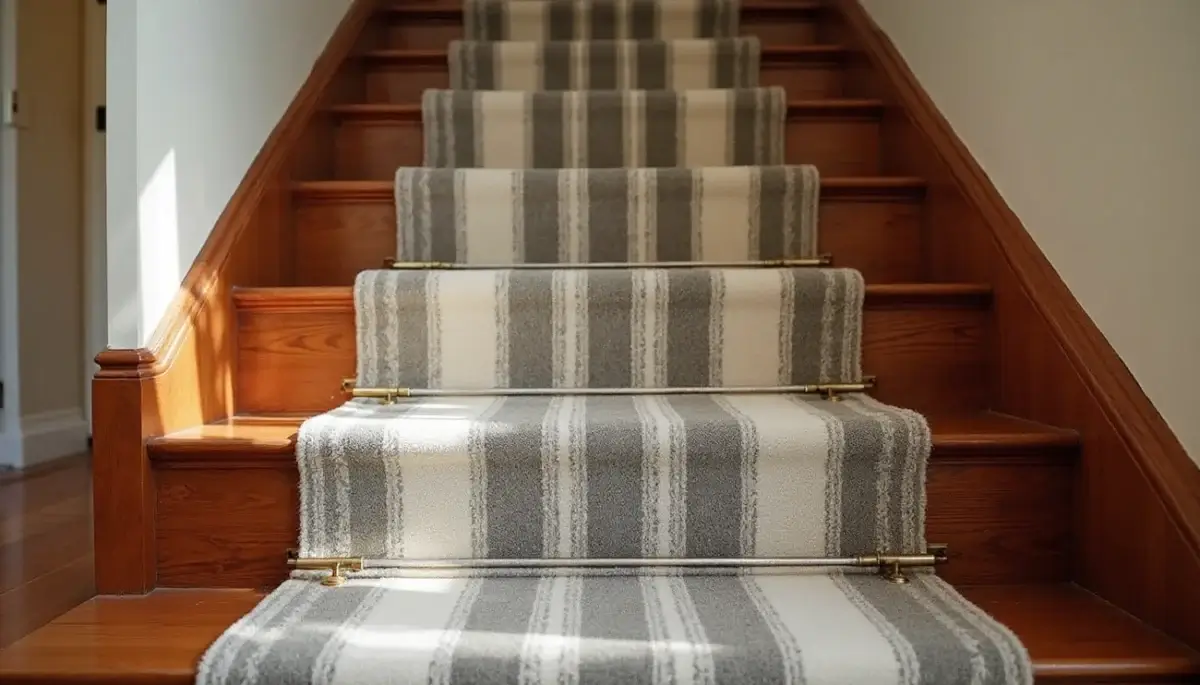
Stair rods and decorative extras
Stair rods serve mainly decorative purposes today but add visual appeal. Basic designs start around £21, whilst premium options with ornate finials can exceed £50. Available finishes include brass, chrome, bronze, and wood to match your interior style.
Quality underlay costs £131 or more but significantly improves comfort and extends your runner’s life. This padding also reduces noise transmission between floors—particularly valuable in multi-storey homes.
What affects your stair runner price?
Several elements determine your final stair runner cost. Recognising these factors early helps you budget accurately and avoid surprises during your project.
Staircase shape and complexity
Your staircase design directly impacts installation costs. Straight staircases offer the most straightforward fitting process, whilst those with turns or landings require significantly more work. Staircases with 90-degree turns will cost more than simple straight runs. Complex designs with multiple turns might need several days for installation, potentially tripling labour costs.
Varying widths within the same staircase create additional challenges. One homeowner found their staircase measured 70.5″ wide at the bottom, narrowing to 47″ further up, requiring a custom solution that increased the final price.
Pattern choice and material wastage
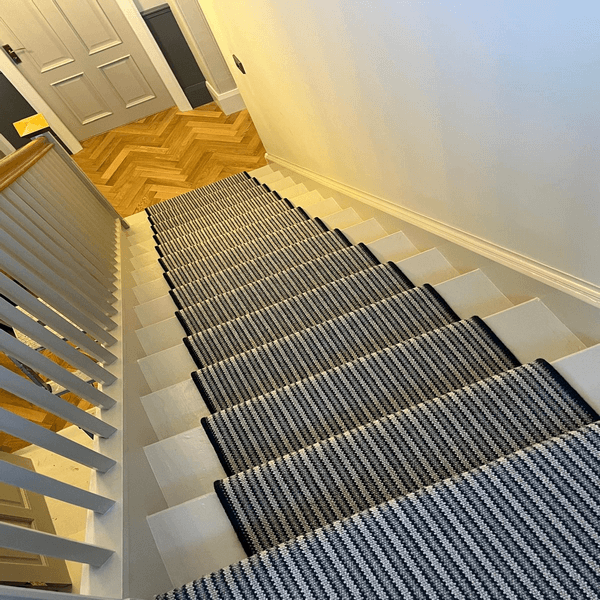
Patterned carpets typically cost more than plain designs because they need extra material for pattern matching during installation. However, patterned options offer practical benefits. They hide stains and dirt marks effectively in high-traffic areas, keeping your stairs looking cleaner for longer. Stripe patterns create visual effects—they can make spaces appear longer or wider depending on their direction.
Installation approach
Choosing between professional installation and DIY affects your total spend considerably. Although DIY appears cost-effective initially, professional fitting ensures accuracy and durability. Professional installation typically costs £200-£476.50 depending on complexity.
Installation costs vary with staircase design. Simple staircases might require just £317.66 for fitting, whereas complex designs could cost between £476.50 and £79.42.
Carpet quantity calculations
Determining the exact carpet amount needed directly influences your budget. Accurate measurements require considering:
- Your stair width
- How much exposed wood you want on each side
- Total number of steps to cover
Wastage must be included in your calculations, particularly for L-shaped hallways or staircases with landings. It’s worth noting that carpet pile direction should always run down the stairs for optimal appearance and longevity.
How to calculate your stair runner cost
Accurate measurements prevent costly mistakes and ensure you order the right amount of material. Getting your calculations wrong can result in delays and additional expense, so it’s worth taking time to measure properly.
Measure each step correctly
Start with precise measurements of a single step to establish your baseline:
- Tread depth – measure the horizontal surface where you step, including any overhang or nosing
- Riser height – measure vertically from the top of one step to the top of the next
Use a metal tape measure for consistency and record all measurements in the same units. Most staircases have uniform dimensions, but older properties may have variations between steps. Measuring each step individually ensures accuracy.
Work out total carpet length needed
Apply this straightforward calculation once you have your measurements:
For straight staircases: Add your tread depth and riser height, then multiply by the number of steps
Here’s a practical example:
- Tread depth: 25cm
- Riser height: 20cm
- Number of steps: 12
Calculation: (25cm + 20cm) × 12 steps = 540cm
Add 10% extra material for wastage and fitting adjustments. This example would need 54cm additional material, making the total 594cm.
For curved or winding staircases: Measure around the outside edge of each step, including both tread and riser dimensions.
Calculate binding requirements
Stair runners with binding need separate calculations for the edge finishing:
- Decide your runner width (typically 10cm of exposed stair showing on each side)
- Multiply this width by 2 for both edges
- Add to your total length measurement
Binding costs £2 to £4.50 per linear foot, so multiply your total edging length accordingly.
Try online calculation tools
Stair runner calculators simplify this process considerably. Most ask for:
- Total number of steps
- Individual stair measurements
- Runner width preferences
- Staircase configuration (straight or curved)
These tools automatically calculate material requirements and add appropriate wastage allowances. Some advanced calculators also estimate total project costs based on your material choices and installation complexity.
Budgeting realistically for your stair runner project
Smart budgeting requires understanding typical price ranges and identifying which extras actually add value. Here’s what you can expect to pay and where you might save money without compromising quality.
Standard price ranges for stair runners
Standard stair runners cost between £15 and £35 per linear foot excluding installation. A typical staircase requiring around 22 linear feet would cost approximately £330 to £725 for the runner alone. Custom designs with special edging add £2 to £4.50 per linear foot.
Total project costs typically start around £600 for straight staircases but may reach £1,700 for complex installations with turns and landings. Price varies substantially based on carpet quality, ranging from under £20 per square metre for budget options to over £100 per square metre for premium materials.
Underlay, grippers and preparation costs
Quality underlay extends your runner’s lifespan significantly. Expect to pay around £34 for 8mm thickness, £39 for 10mm, or £44 for 12mm underlay for a 14-step staircase. Specialists recommend choosing underlay with thickness between 6mm and 9mm with density rating of at least 110kg/m³ for high-traffic areas.
Gripper packs with underlay pads cost approximately £42.69 to £51.22 depending on quality. These typically include pre-cut underlay pads (27 inches × 12 inches) plus 30-inch gripper strips.
Professional fitting versus DIY installation
Professional installation for straight staircases costs approximately £200 to £300, whilst complex staircases with landings or curves range from £300 to £375. Although DIY installation saves on labour costs, professionals ensure proper fitting that maximises longevity.
One DIYer reported spending £240 on four runner rugs (£60 each) plus minimal costs for tacks, filler and carpet tape. Alternatively, similar runners now cost about £34 each at B&Q.
Cost-saving strategies that work
Consider less expensive carpet made special through thoughtful installation and design. Be transparent with suppliers about your budget constraints to receive appropriate recommendations. Look for sales at home improvement stores.
Create custom-looking stair rods inexpensively using wooden dowels, spray paint and copper pipe clips for under £31.77 per staircase instead of standard rods that cost around £11.91 each. Well-chosen budget carpet can create striking visual impact with proper planning and professional installation.
Now read:
Stair runner installation offers both aesthetic appeal and practical benefits for your home. Most projects fall between £600 and £1,700, though this range reflects the considerable variation in staircase complexity and material choices.
Accurate measurements form the backbone of any successful installation. Measuring each step carefully prevents ordering errors and reduces waste. However, it’s equally important to budget for additional elements beyond the carpet itself. Quality underlay, proper edging, and installation costs all contribute to the final expense.
If you’re considering a stair runner project, we recommend speaking to multiple suppliers to compare quotes and material options. This approach helps you understand current pricing for your specific requirements. Professional installation often proves worthwhile, particularly for complex staircases with turns or landings.
Budget-conscious homeowners can still achieve excellent results with careful planning. The key lies in choosing appropriate materials for your usage patterns rather than simply selecting the cheapest option. A well-installed budget carpet often outperforms a premium material that’s poorly fitted.
Remember that stair runners serve multiple purposes beyond decoration. They reduce noise, provide safer footing, and protect your stairs from daily wear. Taking time to calculate costs properly and plan your installation ensures you’ll enjoy these benefits for years to come.
For more home improvement advice and cost guides, explore our related articles on flooring and interior design projects.
Key Takeaways
Understanding stair runner costs helps you budget effectively for this significant home improvement project that can transform your staircase’s appearance and functionality.
• Budget £600-£1,700 total – Straight staircases start around £600, whilst complex designs with turns reach £1,700 including installation
• Measure precisely to avoid waste – Calculate tread depth plus riser height, multiply by steps, then add 10% extra for accurate material requirements
• Material quality drives price variation – Carpet costs range from £5 per square metre for budget options to £100+ for luxury wool runners
• Factor in essential extras early – Include underlay (£34-£44), binding (£2-£4.50 per foot), and installation (£200-£375) in your initial budget
• Professional installation often pays off – Whilst DIY saves labour costs, professional fitting ensures proper installation and maximises your runner’s longevity
Remember that accurate measurements and realistic budgeting prevent costly surprises. Quality materials and professional installation create lasting value that enhances both safety and aesthetics in your home.
FAQs
Q1. How do I accurately measure for a stair runner? Measure the tread depth and riser height for each step. For straight staircases, add these measurements together and multiply by the number of steps. Add 10% extra for wastage. For winding staircases, measure along the outside perimeter of each step individually.
Q2. What’s the typical cost range for a stair runner installation? Stair runner installations generally cost between £600 and £1,700. Straight staircases start around £600, while complex designs with turns can reach £1,700, including installation. The final price depends on factors like carpet quality, staircase complexity, and additional features.
Q3. Is professional installation worth the extra cost? While DIY installation can save on labour costs, professional fitting often proves worthwhile. It ensures proper installation, maximises longevity, and can handle complex staircase designs more effectively. Professional installation typically costs between £200 and £375, depending on the staircase complexity.
Q4. What additional costs should I consider beyond the carpet itself? Factor in costs for underlay (£34-£44 for a typical staircase), binding or edging (£2-£4.50 per linear foot), and installation (£200-£375). You may also want to budget for decorative elements like stair rods, which can range from £21 for basic options to over £50 for premium designs.
Q5. What’s the best carpet material for a stair runner? Wool is often considered an excellent choice for stair runners due to its durability, resilience, and ability to conform to stair contours. However, synthetic options like polypropylene or polyester can be more budget-friendly. The best choice depends on your budget, desired aesthetics, and the level of foot traffic on your stairs.