Table of contents
What kitchen flooring will work best for your space, budget, and lifestyle? Your choice affects both how your kitchen looks and how well it performs under daily use. Kitchen flooring trends for 2026 showcase textured surfaces that replicate stone, timber, and marble appearances, offering more realistic alternatives than ever before.
Whether you’re undertaking a full kitchen renovation or simply refreshing your existing space, practical flooring solutions exist for every budget. Affordable options like luxury vinyl tiles (LVT) and laminate deliver impressive durability and style, whilst premium materials such as natural stone provide timeless elegance for those seeking long-term investment.
This guide examines 12 kitchen flooring options, from budget-friendly choices starting under £10 per square metre to premium materials exceeding £200 per square metre. You’ll discover the benefits, limitations, and best applications for each option, helping you make an informed decision that balances your practical needs with aesthetic preferences.
Laminate Flooring
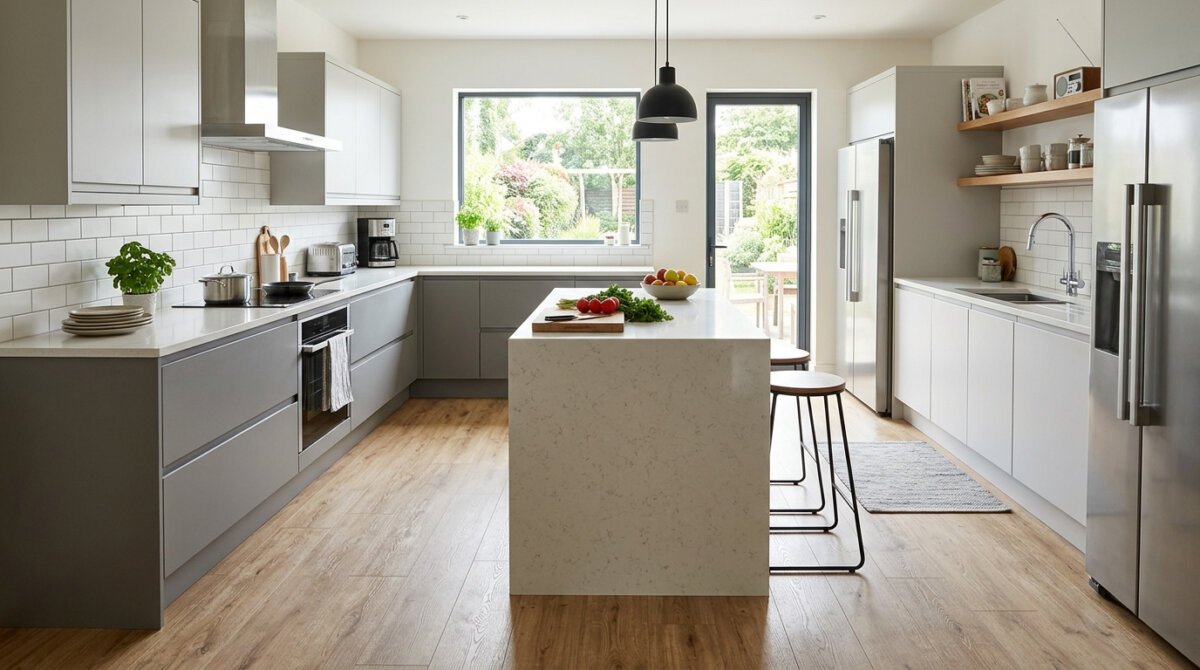
What Is Laminate Kitchen Flooring
Laminate flooring uses engineered construction to create surfaces that withstand kitchen demands. The multi-layer structure begins with a moisture-resistant backing, followed by a high-density fireboard core that provides structural strength, a photographic design layer that reproduces wood or stone patterns, and finally a protective melamine resin coating. This construction makes laminate particularly suitable for areas with heavy foot traffic.
Three distinct types cater to different needs and budgets. Smooth laminate replicates the appearance of varnished wood at lower cost points, though it offers reduced protection against impact damage. Textured variants incorporate protective coatings that boost durability whilst preserving realistic surface textures. Hand-scraped laminate represents the most robust option, delivering enhanced resistance to everyday wear, staining, and minor damage.
Benefits and Features
This kitchen flooring option presents both strengths and limitations:
Advantages:
- Material costs range from £10-£60 per m², considerably less than hardwood alternatives priced at £6.35-£11.91 per m²
- Water-resistant surface provides protection against typical kitchen spills when addressed promptly
- Scratch and dent-resistant top layer handles daily kitchen activities
- Click-lock installation systems enable DIY projects for capable homeowners
- Design variety includes wood-effect, ceramic-effect, and decorative patterns
- Warranty coverage typically spans 10-25 years from manufacturers
Limitations:
- Extended moisture exposure leads to warping and permanent staining
- Refinishing proves impossible; damaged sections require complete replacement
- Plastic wear layer components raise environmental disposal concerns
High-traffic kitchens benefit from laminate rated AC4 or AC5 for wear resistance.
Budget Considerations
Pricing varies across quality tiers: budget selections cost £10-£20 per m², mid-range options range £20-£35 per m², and premium laminate reaches £35-£60+ per m². Professional installation adds £15 per m² for standard plank layouts, increasing to £28.50 per m² for complex herringbone arrangements. A standard 16m² kitchen typically requires approximately £500 for materials plus £240 for professional fitting.
Best for These Kitchen Styles
Wood-effect laminate complements both traditional and contemporary schemes, offering everything from rustic oak character to sleek grey ash finishes. Mediterranean-style kitchens work well with ceramic-effect designs, whilst geometric patterns enhance Art Deco-inspired spaces.
Maintenance Tips
Daily sweeping or vacuuming with soft-bristled attachments removes debris that could scratch surfaces. Address spills immediately using damp cloths, but never allow standing water to remain on the flooring for extended periods. Apply laminate-specific cleaning products to cloths rather than spraying directly onto floors. String mops, polishes, and abrasive cleaning agents damage the protective surface and should be avoided. Allow planks to acclimatise for 48 hours before installation to minimise expansion-related problems.
Vinyl Flooring
What Is Vinyl Kitchen Flooring
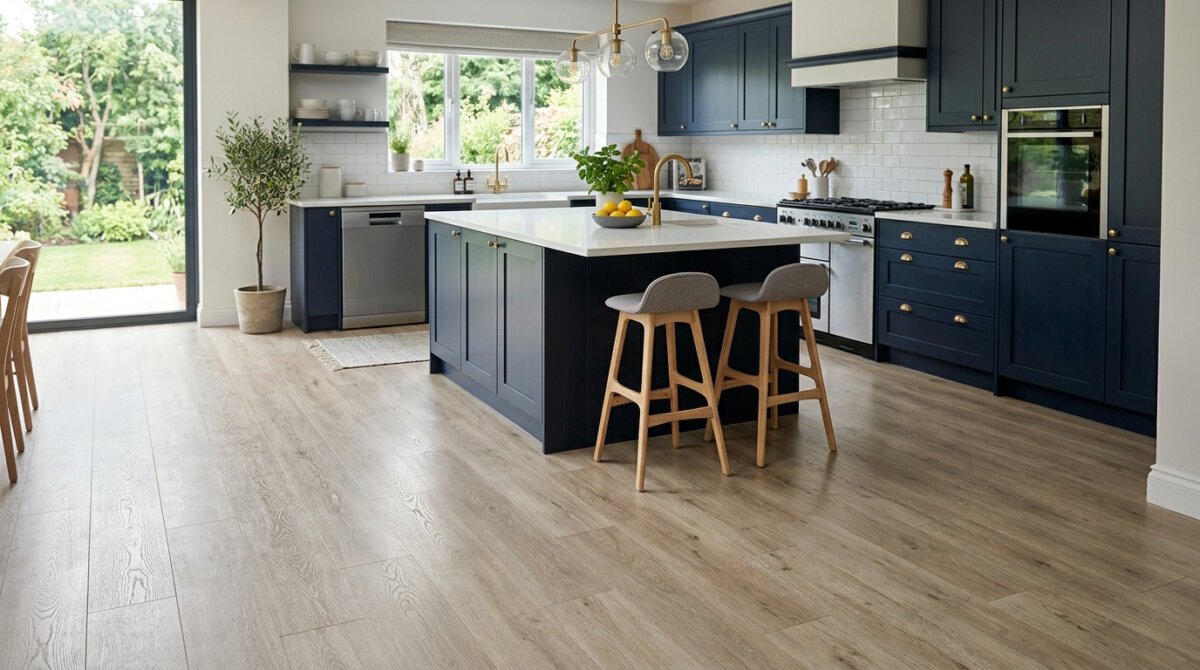
Vinyl flooring features multiple synthetic layers bonded together to create a flexible, resilient surface. The construction includes a backing layer of felt or foam, a core layer for stability, a photographic design layer, and a transparent wear layer that shields against scratches and stains. This wear layer determines longevity, with premium options at 0.5mm to 0.7mm thickness lasting 15 to 25 years in busy households.
Kitchen installations utilise three main formats. Sheet vinyl delivers seamless coverage that prevents water penetration at joins. Luxury Vinyl Tiles (LVT) and Luxury Vinyl Planks (LVP) share identical multi-layer construction but differ in format, with tiles mimicking stone and planks replicating wood through high-resolution photographic layers. Core materials vary significantly: SPC (Stone Plastic Composite) cores provide stability and dent resistance, whilst WPC (Wood Plastic Composite) cores offer a softer feel underfoot.
Benefits and Features
Vinyl flooring delivers practical advantages alongside some limitations:
Pros:
- Water-resistant surface suits spill-prone kitchens; fully waterproof options available
- Lasts 10 to 25 years with proper maintenance
- Softer and warmer underfoot compared to stone or ceramic
- Extensive design range includes realistic wood and stone effects
- Straightforward installation using click or glue-down methods
- Works with underfloor heating systems
- Simple cleaning requires only sweeping and occasional damp mopping
- Reduces noise from foot traffic
- Pet-friendly due to stain resistance and easy maintenance
Cons:
- Sharp objects like dropped knives can puncture or dent the surface
- Non-biodegradable material proves difficult to recycle
- Damaged sections need complete replacement rather than repair
- Prolonged sunlight exposure may cause colour fading
Budget Considerations
Material costs begin at £8.99 per m² for budget ranges, with standard designs at £18.99 per m² and luxury vinyl sheets priced £20-£30 per m². Mid-range LVT costs £25-£40 per m². Medium-sized kitchens typically cost £200-£400 complete for materials and installation, with professional fitting charged at £15-£20 per hour. A standard 18.5m² kitchen averages £530 installed.
Best for These Kitchen Styles
Wood-effect vinyl complements farmhouse kitchens with light wide-plank designs or contemporary spaces featuring dark walnut finishes. Stone-effect options suit modern minimalist kitchens, whilst patterned geometric and Victorian-inspired designs enhance traditional settings.
Maintenance Tips
Sweep or vacuum daily using soft attachments to remove debris. Clean weekly with a damp mop and neutral pH detergent, avoiding excessive water. Address spills immediately to prevent staining. Avoid steam mops, hot water, abrasive cleaners, or rubber-backed mats that cause discolouration. Position felt pads under furniture legs to prevent dents.
Porcelain and Ceramic Tiles
What Are Porcelain and Ceramic Tiles
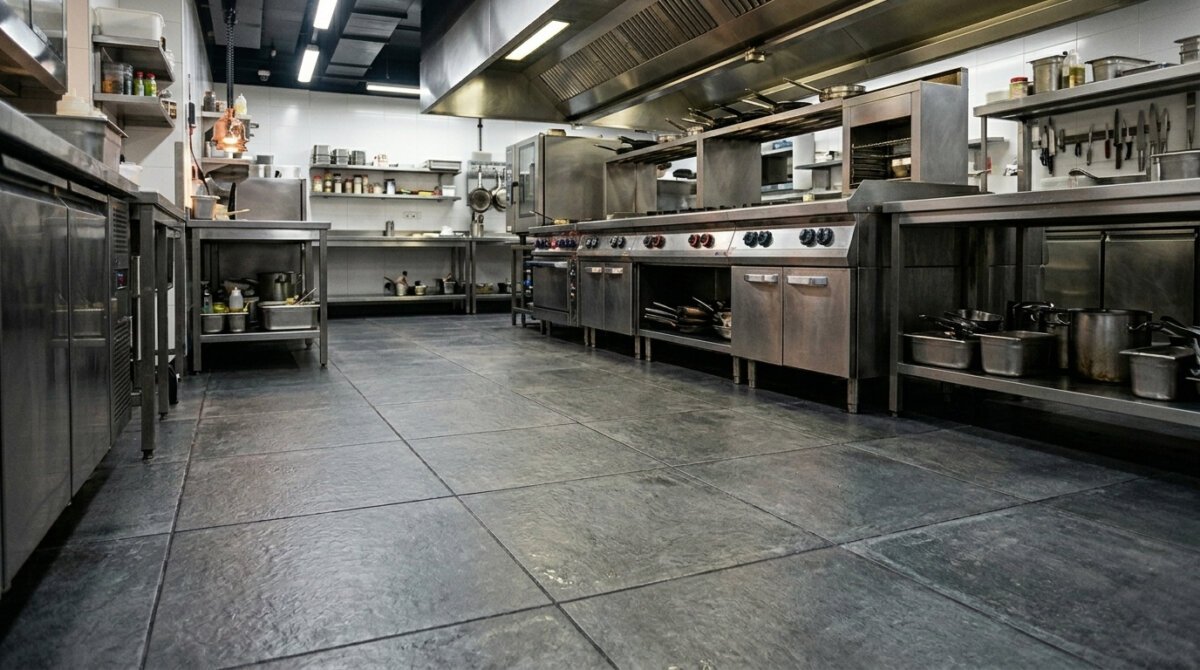
Both porcelain and ceramic tiles begin with clay, but their manufacturing processes create distinctly different materials. Porcelain tiles use refined clay combined with kaolin, feldspar, and silica, then fired at extreme temperatures exceeding 2,300°F. This intense heat transforms the tile into a glass-like state, producing a dense, non-porous surface that absorbs less than 0.5% water.
Ceramic tiles, by contrast, contain red or white clay fired at lower temperatures around 1,800°F, creating a softer, more porous structure with 3% to 7% water absorption. A glazed surface on ceramic tiles provides protection against stains and moisture. Modern manufacturing techniques enable both materials to replicate marble veining, wood grain, and concrete textures through high-definition inkjet printing.
Benefits and Features
These tile options present compelling advantages for kitchen environments:
Strengths:
- Remarkable durability lasting 15 to 50 years depending on quality
- Heat resistance means hot pans cause no damage and sunlight won’t fade colours
- Dense surfaces prevent bacteria, mould, and mildew growth
- No sealing required, unlike natural stone alternatives
- Scratch resistance withstands pet claws, furniture legs, and dropped kitchen tools
- Works excellently with underfloor heating systems
- Porcelain achieves Class 4 or 5 PEI ratings; ceramic reaches Class 2 or 3
Considerations:
- Porcelain proves harder to cut, requiring specialised tools and professional expertise
- Initial costs exceed vinyl or laminate options
- Surfaces feel cold and hard underfoot without heating
- Ceramic shows greater susceptibility to chipping under heavy impact
Budget Considerations
Ceramic tiles typically cost £0.79 to £7.94 per square foot, whilst porcelain ranges from £2.38 to £9.53 per square foot. Installation costs increase for porcelain due to cutting complexity. Although porcelain costs 10% to 30% more initially, reduced maintenance requirements and extended lifespan often result in lower total ownership expenses.
Best for These Kitchen Styles
Marble-effect porcelain creates stunning focal points in both traditional and contemporary kitchens, particularly striking behind hobs and worktops. Wood-effect designs bring rustic warmth to farmhouse kitchens without the maintenance demands of genuine timber.
Concrete-inspired tiles suit modern minimalist schemes perfectly, whilst stone-effect variants complement Mediterranean kitchen designs.
Maintenance Tips
Weekly sweeping or vacuuming with soft-bristled attachments prevents grit from scratching surfaces. Damp mop using pH-balanced, non-hazardous cleaners, allowing 3 to 5 minutes contact time for heavily soiled areas.
Rinse thoroughly with clean water and remove excess moisture promptly. Avoid fluorine compounds, oil-based detergents, and bleach solutions. Polished porcelain may require penetrating sealers before grouting. Address spills immediately, particularly on polished surfaces.
Natural Stone Flooring
What Is Natural Stone Flooring
Natural stone develops over thousands of years through geological processes, creating authentic materials with character that manufactured alternatives cannot match. Several distinct options suit kitchen installations, each with unique properties and appearances.
Granite forms through slow magma crystallisation, producing coarse-grained surfaces in whites, blues, reds, and greens. Slate originates from volcanic ash or clay, split into thin sheets featuring natural undulations and colour veining. Limestone provides softer aesthetics with visible shells and fossils, available in shades from creamy yellows to subtle greys.
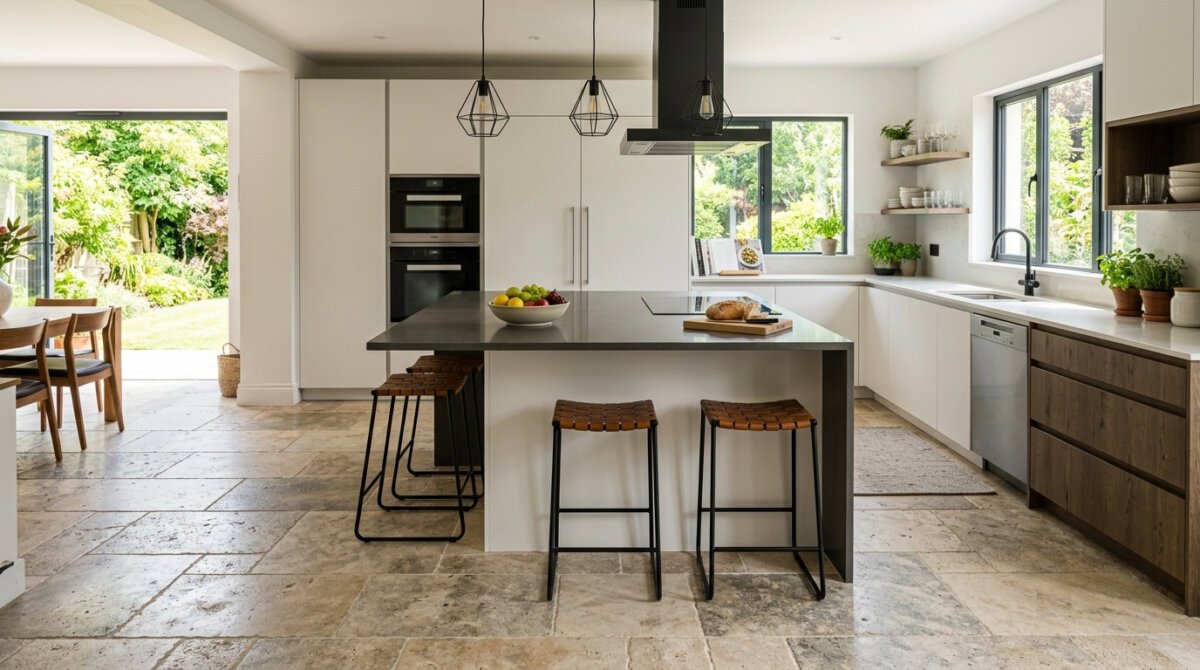
Travertine represents a limestone variant created by hot mineral springs, characterised by natural holes that can be filled for smoother surfaces. Marble develops through recrystallisation processes, resulting in distinctive veining and colouration. Sandstone consists of compacted sand grains bound by minerals including clay or silica.
Surface finishes significantly influence both appearance and performance. Honed surfaces offer sleek aesthetics but become slippery when wet, whereas tumbled or brushed finishes provide superior grip and more forgiving textures for busy family kitchens. Tumbled finishes achieve their aged character through gentle processing, softening natural markings and creating softer, pastel-like appearances.
Benefits and Features
Natural stone offers compelling advantages alongside specific maintenance requirements:
Advantages:
- Exceptional longevity extending to generations with proper care
- Excellent heat retention properties, working particularly well with underfloor heating
- Timeless aesthetic appeal that enhances long-term property value
- Dense, weather-resistant composition withstands heavy foot traffic
- Becomes stain-resistant and water-resistant once properly sealed
- Hygienic surface that doesn’t harbour dust or allergens
- Each tile presents unique characteristics, providing distinctive character
Considerations:
- Requires sealing during installation and resealing every 3-4 years thereafter
- Porous nature makes certain stones susceptible to staining without adequate protection
- Higher initial investment compared to synthetic alternatives
Budget Considerations
Material costs typically range from £50 to £200 per square metre, varying according to stone type, size, design complexity, and finish quality. Budget-conscious options do exist, with limestone flagstones available under £47 per m² including VAT. For example, 40cm wide random length flags cost approximately £47 per m², whilst 60cm Purbeck-coloured limestone begins at £32 per m² plus VAT.
Best for These Kitchen Styles
Different stones complement specific design approaches effectively. Flagstone flooring particularly suits country estates and traditional homes, offering heritage-inspired durability. Marble tiles create sophisticated neoclassical designs, including striking chequerboard patterns for kitchens requiring grandeur. Slate introduces rich darker tones from deep charcoal to soft greys, working well in modern industrial spaces. Limestone proves especially effective in country-style family kitchens when finished with tumbled textures.
Maintenance Tips
Seal tiles during installation following manufacturer specifications, then maintain protection by resealing every 3-4 years. Regular cleaning involves vacuuming with soft attachments followed by washing with pH-neutral cleaners. Address spills immediately to prevent staining. Perform deep cleaning once or twice annually using intensive alkaline cleaners. Avoid bleach, ammonia, abrasive cleaners, and steam cleaning methods.
Engineered Wood Flooring
What Is Engineered Wood Flooring
Engineered wood combines the beauty of natural timber with enhanced stability through clever construction. The flooring features a solid wood top layer bonded to multiple plywood or MDF layers oriented in different directions.
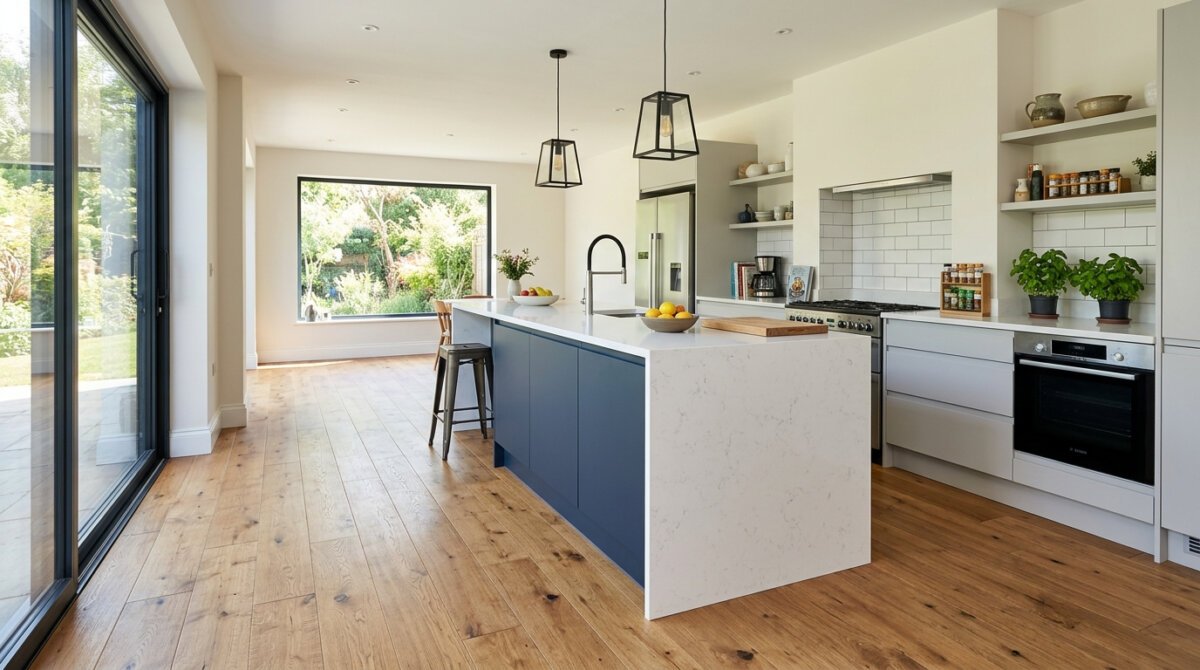
This cross-ply construction provides resistance to temperature and humidity fluctuations common in kitchens, making these floors less likely to warp or bow compared to solid wood counterparts. The layered structure also maintains compatibility with underfloor heating systems.
Benefits and Features
Engineered wood offers natural warmth with practical advantages for kitchen environments:
Pros:
- Better resistance to warping in varying humidity than solid wood
- Longevity matching traditional hardwood with proper maintenance
- Available in oak, walnut, and various finishes including brushed, hand-scraped, lacquered, and oiled
- Click-system installation enables DIY fitting
- Can be sanded and refinished when showing wear, lasting decades
- Compatible with underfloor heating systems
Cons:
- Cannot tolerate prolonged water exposure from leaky appliances
- Refinishing depends on top layer thickness (at least 2mm recommended)
- Higher cost than laminate or vinyl alternatives
Budget Considerations
Engineered wood averages £50 per m² in the UK, with prices ranging from £27.98 to £55.49 per m² depending on veneer thickness and wood source. Professional installation adds approximately £250 per day, though click-lock systems allow self-installation to reduce costs.
Best for These Kitchen Styles
Oak works beautifully in both contemporary and classic designs, offering natural texture and proven durability. Light hardwood creates bright, airy aesthetics in modern kitchens, whilst herringbone patterns introduce luxury finishes to traditional spaces.
Maintenance Tips
Protect floors by placing pads beneath furniture legs to prevent scuffing. Clean with slightly damp mops using wood-specific cleaners; never use bleach or harsh chemical sprays. Address spills promptly to prevent water damage. Maintain humidity levels between 40% and 65% to prevent warping.
Luxury Vinyl Tiles (LVT)
What Are Luxury Vinyl Tiles
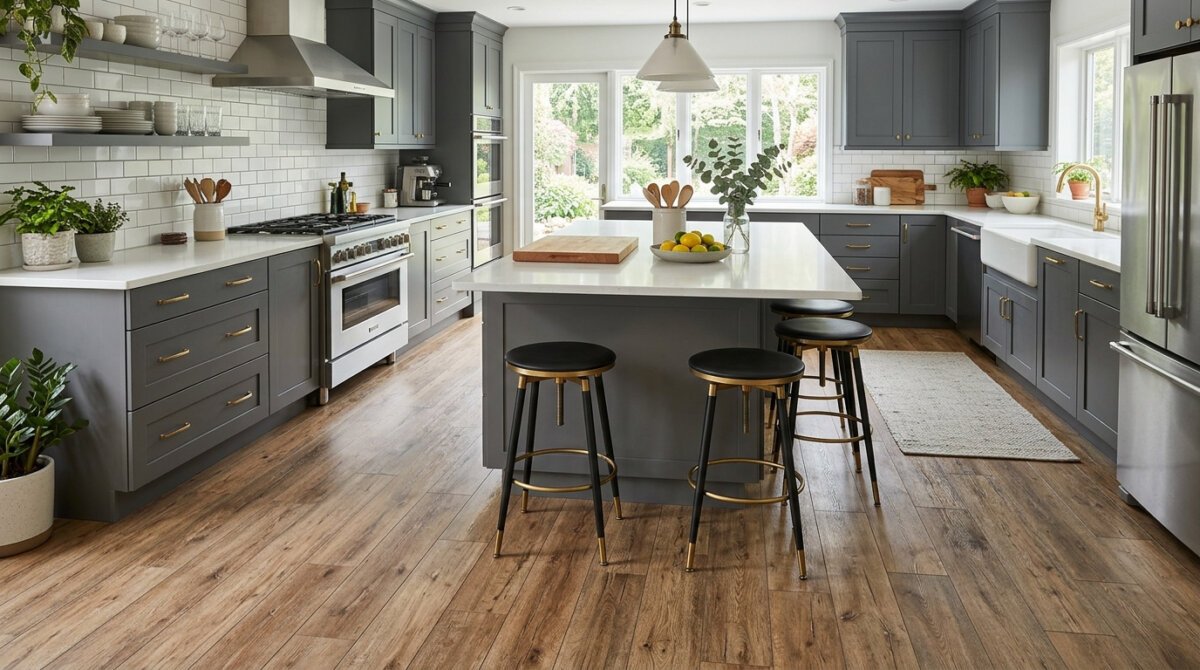
LVT flooring uses sophisticated multi-layer construction to replicate natural materials with remarkable accuracy. The structure comprises a backing layer that provides stability whilst offering insulation and soundproofing benefits, a design layer featuring high-resolution photography that recreates realistic wood or stone textures, and a crucial protective wear layer that defends against daily kitchen activities.
The wear layer thickness determines durability. Standard options include 0.3mm, 0.5mm, and 0.7mm thicknesses, with 0.5mm or 0.7mm recommended for busy family kitchens. Premium ranges feature wear layers up to 28 mil for exceptional longevity.
LVT differs from LVP (Luxury Vinyl Plank) primarily in appearance and format. LVT mimics stone or ceramic tile designs, whilst LVP replicates hardwood planking. Both formats share identical construction methods and durability characteristics.
Benefits and Features
Modern LVT delivers impressive performance for kitchen environments. Many ranges feature rigid PVC or SPC cores that provide complete waterproof protection. The surface resists scratches from pet claws, stains from cooking spills, and dents from dropped items.
Installation proves straightforward with click-together systems that require only utility knives for cutting. LVT works well with underfloor heating systems, making it suitable for year-round comfort. The flooring feels noticeably warmer and quieter underfoot compared to ceramic tiles, particularly when integrated underlay improves both comfort and acoustic performance.
Properly maintained LVT lasts 15 to 30 years, with some manufacturers like Karndean offering 35-year residential warranties.
Budget Considerations
Material costs typically range from £15-£40 per m² for standard designs, rising to £50-£60 per m² for premium collections. Professional installation adds £10-£60 per m² depending on room complexity and pattern choice.
Herringbone installations command premium pricing: approximately £10 per m² for preparation work, £60 per m² for materials, and £60 per m² for skilled fitting. Additional underlay, when required, costs around £7 per m².
Best for These Kitchen Styles
Classic oak effects suit traditional kitchen designs, whilst contemporary grey wood tones complement minimalist spaces. Rustic pine creates authentic farmhouse character, and herringbone patterns add sophisticated detail to both modern and period properties.
Maintenance Tips
Regular vacuuming or sweeping with soft attachments prevents grit accumulation. Weekly damp mopping with LVT-specific cleaning products maintains surface appearance. Address spills promptly to prevent any potential staining.
Avoid steam mops, bleach, ammonia, or abrasive cleaning products that may damage the protective wear layer. Furniture protection pads prevent indentations from chair legs and appliances.
Concrete Effect Flooring
What Is Concrete Effect Flooring
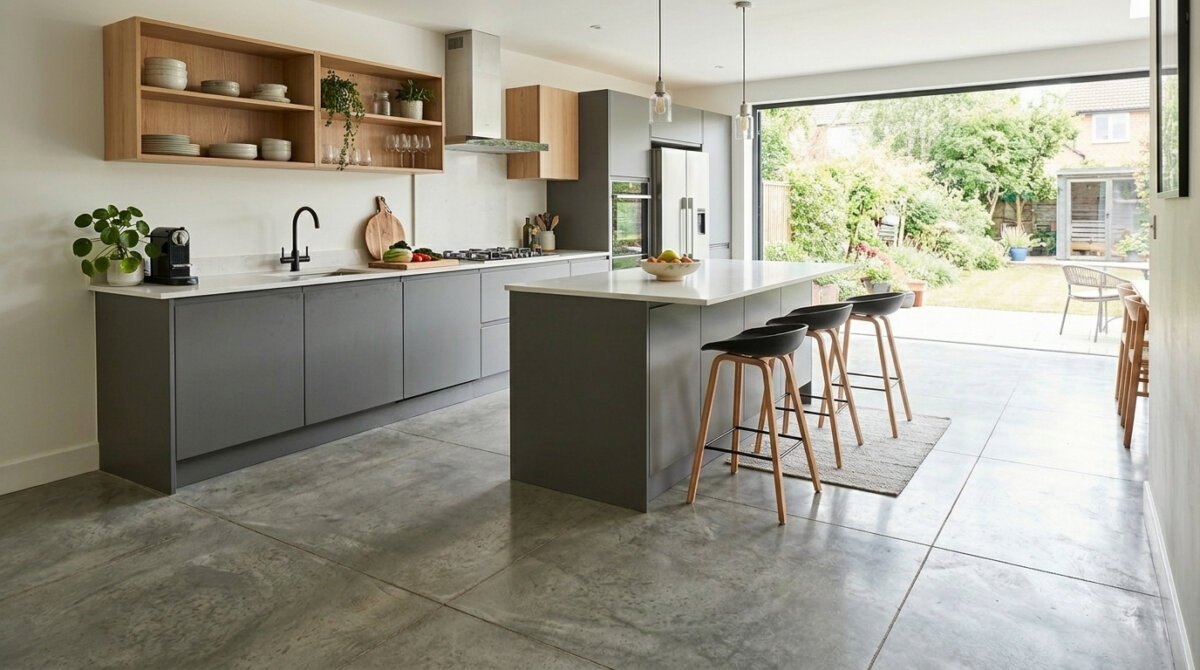
Concrete effect flooring offers both genuine poured concrete and manufactured alternatives that capture its distinctive industrial character. Authentic concrete provides several finishing options: polished surfaces create high-gloss sophistication, stamped textures replicate wood or stone patterns, whilst dyed or stained treatments allow colour customisation.
For those seeking the aesthetic without the commitment, porcelain concrete-effect tiles deliver practical benefits. Available in large formats up to 900x900mm, these tiles reduce grout lines whilst maintaining visual authenticity. LVT concrete-effect products provide another route, offering underfoot warmth that genuine concrete cannot match.
Benefits and Features
Poured concrete demonstrates exceptional resilience against scratches, dents, and staining in busy kitchen environments. The material maintains its integrity across decades with minimal intervention. When properly sealed, concrete surfaces resist moisture, spills, and bacterial growth, whilst the seamless finish proves easier to clean than grouted tiles.
Concrete performs exceptionally with underfloor heating systems, enhancing thermal efficiency and reducing heating costs. Many properties already feature concrete subfloors, potentially reducing installation materials. However, porcelain alternatives eliminate concerns about staining, scratching, or cracking that can affect genuine concrete.
Budget Considerations
Basic concrete installations range from £2.38 to £5.56 per square foot. Decorative finishes increase costs to £6.35-£9.53 per square foot, with bespoke designs reaching £10.32-£15.88+ per square foot. Porcelain concrete-effect tiles offer more affordable alternatives at approximately £20-30 per square metre. Real concrete requires professional resealing every 5-7 years.
Best for These Kitchen Styles
Concrete suits contemporary kitchen designs rather than traditional schemes. The material’s minimalist character complements modern aesthetics, whilst warm beige tones with satin finishes work beautifully alongside oiled timber cabinetry.
Maintenance Tips
Clean concrete using neutral solutions with warm water. Apply wax and sealant every 6-12 months to prevent permanent staining. Use pH-neutral products formulated specifically for concrete surfaces. Clean spills immediately to maintain surface protection.
Herringbone and Parquet Flooring
What Is Herringbone and Parquet Flooring
Parquet describes small wooden blocks arranged in decorative patterns, with herringbone being the most distinctive and recognisable design. This V-shaped arrangement places rectangular pieces at 45-degree angles to create an interlocking zigzag pattern that flows both horizontally and vertically. The technique dates back to ancient Rome and has remained a symbol of craftsmanship in flooring design.
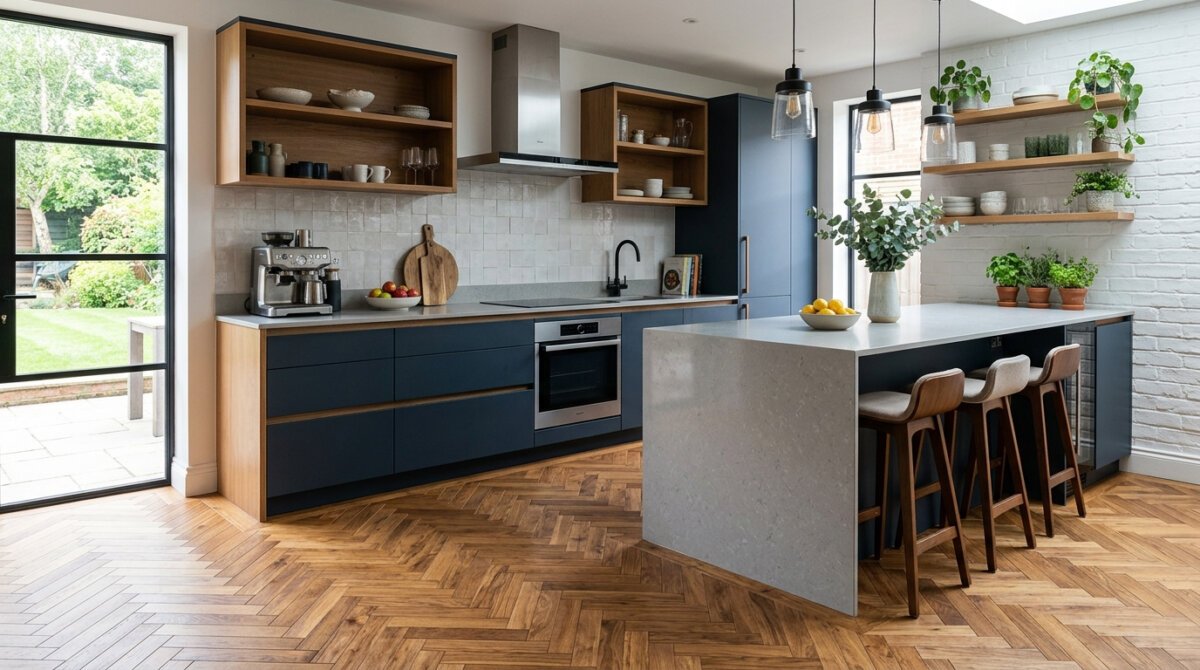
Modern herringbone extends beyond solid timber to include engineered wood options for moisture-prone kitchens, luxury vinyl that replicates authentic wood grain, laminate alternatives, and even terracotta tiles for Mediterranean aesthetics. Oak remains the preferred choice due to its durability and natural resistance to wear in busy household areas.
Benefits and Features
Herringbone patterns create visual illusions that make kitchens appear broader than their actual measurements. The angled blocks guide the eye across the space, adding depth to narrow galley kitchens whilst softening the stark lines common in modern designs.
This classic pattern works equally well with traditional Shaker cabinetry and contemporary handleless units.
The interlocking structure distributes weight effectively, helping to mask minor imperfections and daily wear marks that might be noticeable on straight-plank installations. However, the precision required for proper alignment increases both installation time and labour costs significantly.
Material wastage proves higher than standard installations, typically requiring 10-15% extra for tongue-and-groove engineered options and up to 15% for patterned tiles.
Budget Considerations
Professional installation ranges from £40-£100+ per square metre, with projects typically requiring two to five days depending on room size and complexity. Oak herringbone including supply and fitting costs £45-£65 per square metre, whilst laminate herringbone provides more affordable alternatives at £25-£40 per square metre fitted.
Best for These Kitchen Styles
Natural oak herringbone brings warmth to traditional farmhouse and Shaker-style kitchens, whilst whitewashed or pale finishes suit contemporary spaces seeking texture without overwhelming colour. Dark timber options like ebony create luxury statements in modern kitchens with clean lines and quartz worktops.
Maintenance Tips
Regular vacuuming and dry sweeping form the foundation of herringbone care. Clean with barely damp microfibre mops that dry within two to three minutes – never use traditional string mops that leave excess moisture.
Wooden herringbone requires sealing after installation, with annual resealing recommended using floor-specific products. Address spills immediately, as prolonged moisture exposure causes individual blocks to swell and distort the pattern’s precise alignment.
Patterned Floor Tiles
What Are Patterned Floor Tiles
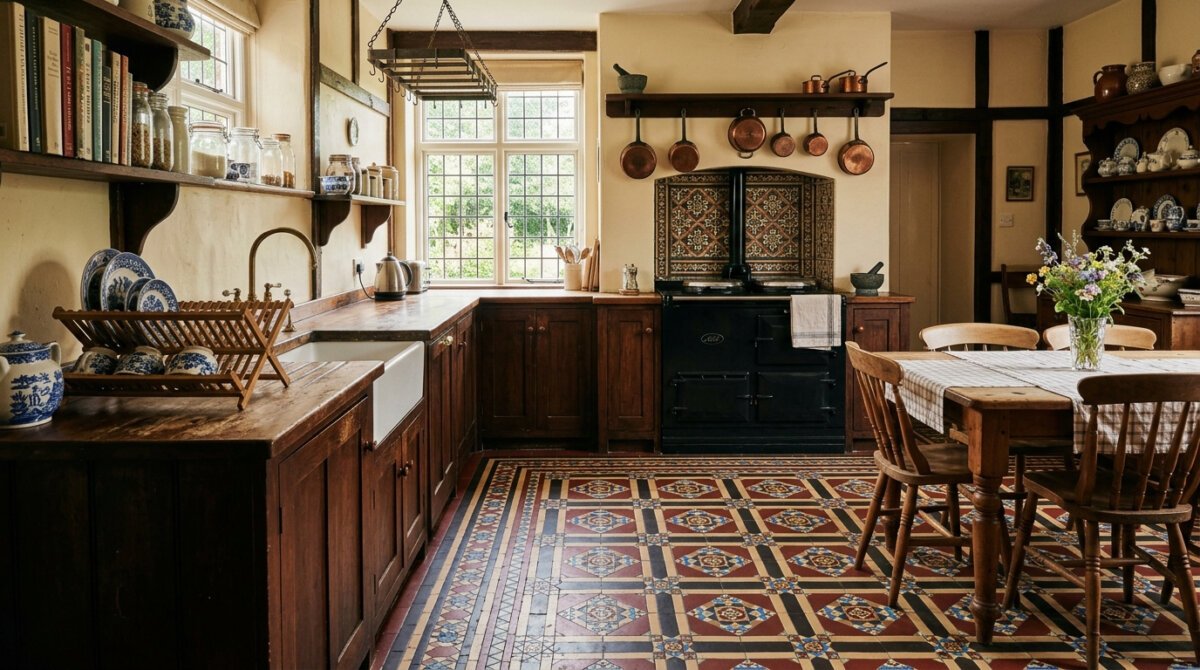
Patterned floor tiles bring decorative flair to kitchen spaces through ceramic, porcelain, or encaustic-effect construction featuring printed, pressed, or inlaid designs that repeat across surfaces. You’ll find motifs ranging from geometric and contemporary graphics to Victorian and Moroccan-inspired patterns. These tiles work particularly well for defining different zones within open-plan layouts whilst adding visual interest to kitchens, bathrooms, hallways, and entrance areas.
Authentic encaustic tiles use different coloured clays to create patterns that run through the entire thickness, ensuring designs remain visible even after years of wear.
Benefits and Features
Beyond their visual appeal, patterned tiles offer practical advantages for kitchen use. The wipe-clean properties make them suitable for busy cooking areas, whilst porcelain variants deliver the durability needed for high-traffic spaces through their dense composition and low water absorption.
These decorative options require no additional maintenance compared to plain ceramic or porcelain tiles. Slip resistance depends on surface texture rather than the pattern itself, with matt or structured finishes providing better grip than smooth alternatives. Available in matt, gloss, and satin finishes, patterned tiles create focal points that add personality to kitchen schemes.
Most options work with underfloor heating systems.
Budget Considerations
Pricing varies significantly based on material choice, with ceramic options proving more affordable than porcelain alternatives. Encaustic tiles typically command premium prices due to their specialised manufacturing process.
Best for These Kitchen Styles
Moroccan patterns suit eclectic kitchen designs, whilst geometric styles complement contemporary schemes perfectly. Victorian motifs enhance traditional or heritage kitchen spaces beautifully. For smaller kitchens, monochrome designs prevent visual clutter whilst still adding pattern interest.
Maintenance Tips
Regular sweeping and cleaning with pH-neutral products maintain surface appearance. Matt finishes prove more forgiving, concealing dust and minor marks better than high-gloss surfaces.
High Gloss Flooring
What Is High Gloss Kitchen Flooring
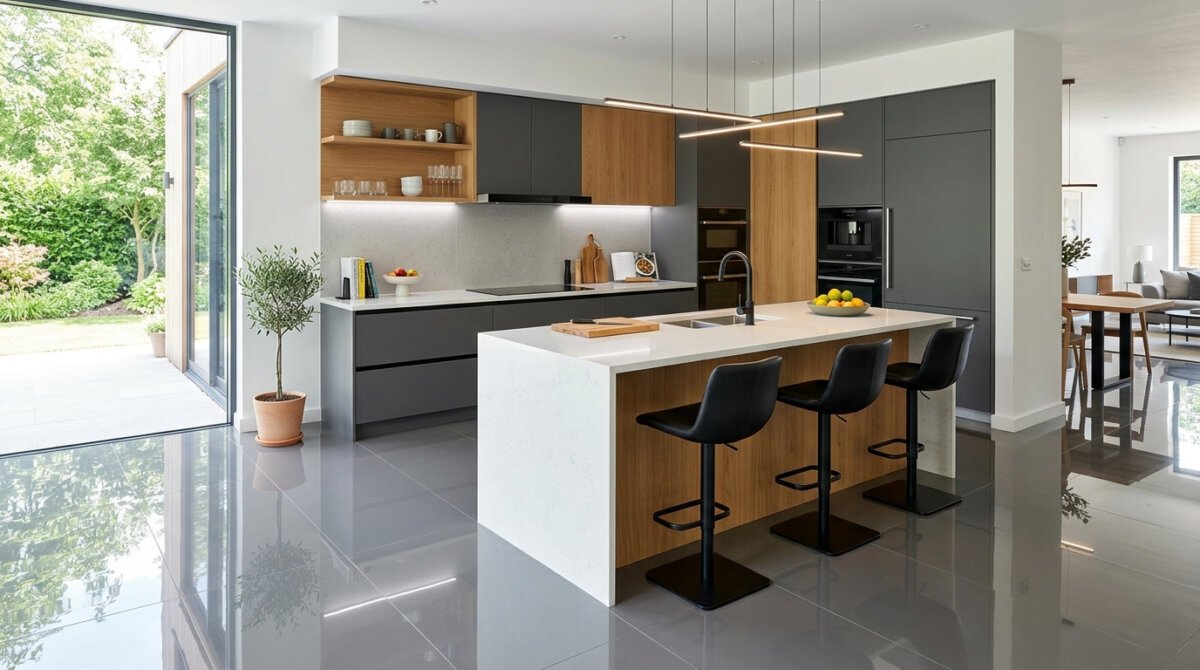
High gloss flooring delivers highly polished surfaces that create reflective, mirror-like finishes. Available in ceramic and porcelain tiles alongside laminate formats, these floors bounce light throughout kitchens, creating bright, elegant spaces. The glossy finish proves both practical and stain-resistant.
Benefits and Features
High gloss flooring presents both strengths and considerations for kitchen applications:
Pros:
- Reflects natural light beautifully, making small kitchens appear larger and brighter
- Easy to clean with only a soft cloth, warm water, and mild detergent
- Stain-resistant and ideal for high-traffic areas
- Creates luxurious, sophisticated aesthetics perfect for contemporary décor
- Available in various sizes, shades, and finishes
Cons:
- Shows fingerprints, scratches, and marks easily, particularly on darker colours
- Requires frequent, regular cleaning to maintain shine
Budget Considerations
High gloss laminate flooring offers budget-conscious options for achieving reflective finishes without the expense of premium tiles.
Best for These Kitchen Styles
High gloss floors suit contemporary and modern designs seeking luxurious, high-end appearances. White gloss creates crisp aesthetics, whilst the reflective properties complement minimalist spaces.
Maintenance Tips
Clean using microfibre cloths with lukewarm water. Mop using figure-eight patterns to prevent streaking. Wipe spills immediately to maintain the surface. Avoid harsh chemicals, bleach, or abrasive materials that damage glossy surfaces.
Marble Flooring
What Is Marble Kitchen Flooring
Marble develops through metamorphic processes where limestone undergoes recrystallisation under intense heat and pressure over geological time periods.
This natural transformation creates the distinctive veining and colour variations that make each marble tile unique.
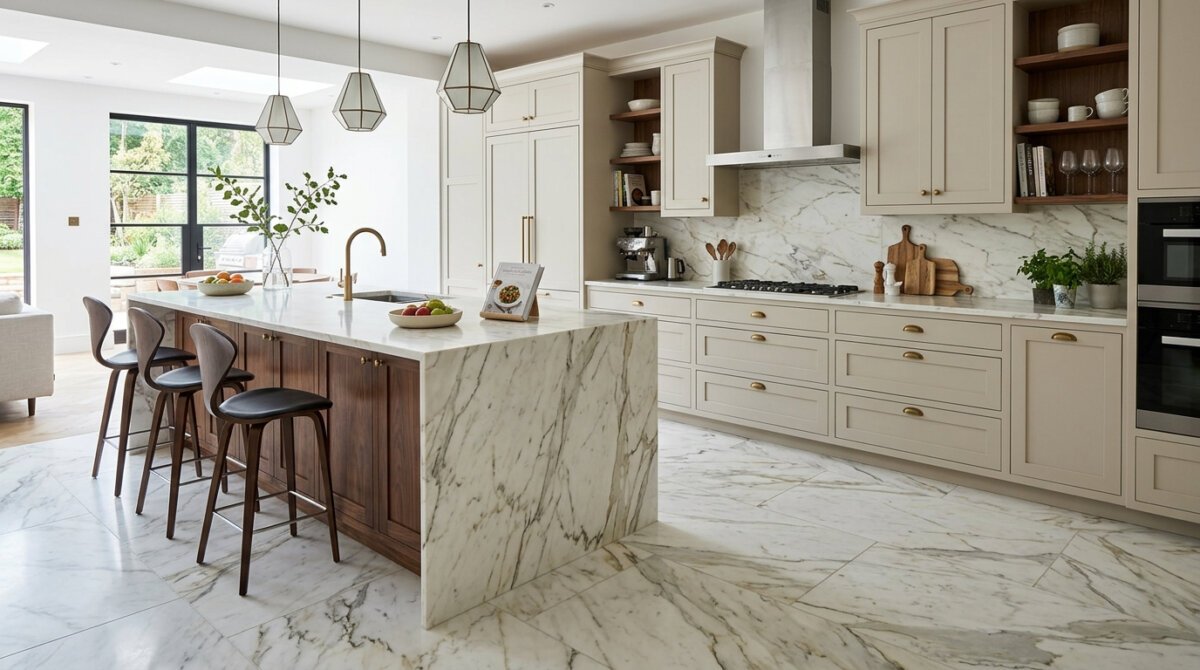
You’ll find several popular varieties available: Carrara marble from Italy displays soft grey tones with delicate veining patterns, whilst Calacatta marble features more dramatic, bold veining against whiter backgrounds.
Beige variants introduce warmth to spaces, grey options provide modern sophistication, and distinctive choices extend to green and purple hues for statement floors.
Benefits and Features
Marble offers both remarkable advantages and specific requirements as a kitchen flooring choice:
Pros:
- Creates instant elegance and refined sophistication in any space
- Proves durable and naturally heat-resistant for kitchen environments
- Works exceptionally well with underfloor heating systems, particularly valuable during British winters
- Increases property value as a premium material
- Each tile provides unique character through natural veining patterns
Cons:
- Requires regular sealing due to its porous nature to prevent stains and damage
- Scratches and stains more readily than alternatives like porcelain
- Less suitable for busy family kitchens with young children or pets
- Demands careful maintenance to preserve appearance
Marble-look porcelain tiles provide a practical alternative for those who appreciate marble’s aesthetics but prefer reduced maintenance requirements.
Budget Considerations
Material costs typically range from £40-50 per m², though total installed prices span £85-£250 per m² depending on marble quality, tile size, and installation complexity. Professional fitting proves essential due to the material’s fragility and the precision required for proper installation.
Best for These Kitchen Styles
Classic chequerboard patterns suit traditional kitchen designs beautifully, whilst Calacatta marble creates stunning focal points in contemporary spaces. Herringbone laying patterns add refined sophistication to both heritage and modern schemes. The timeless nature of marble means it complements diverse design approaches from period properties to cutting-edge contemporary homes.
Maintenance Tips
Seal all surfaces immediately following installation and reseal annually using products specifically formulated for natural stone.
Clean regularly with pH-neutral solutions designed for marble; avoid acidic substances such as vinegar or lemon juice that etch and damage the surface.
Address spills by blotting immediately rather than wiping to prevent spreading stains. Sweep regularly using soft-bristled brooms, avoiding abrasive materials that scratch the polished finish.
Limestone and Travertine Flooring
What Is Limestone and Travertine Flooring
Both limestone and travertine contain calcium carbonate as their primary component, yet their formation processes create distinctly different characteristics. Limestone develops through a gradual process spanning millions of years, as marine organisms accumulate on seabeds under immense pressure.
This extended formation creates a dense sedimentary rock with consistent appearance and gentle colour variations ranging from soft beige through to subtle grey tones.
Travertine follows a different geological path. It forms rapidly near mineral springs where calcium carbonate precipitates from mineral-rich water, creating a more porous stone structure.
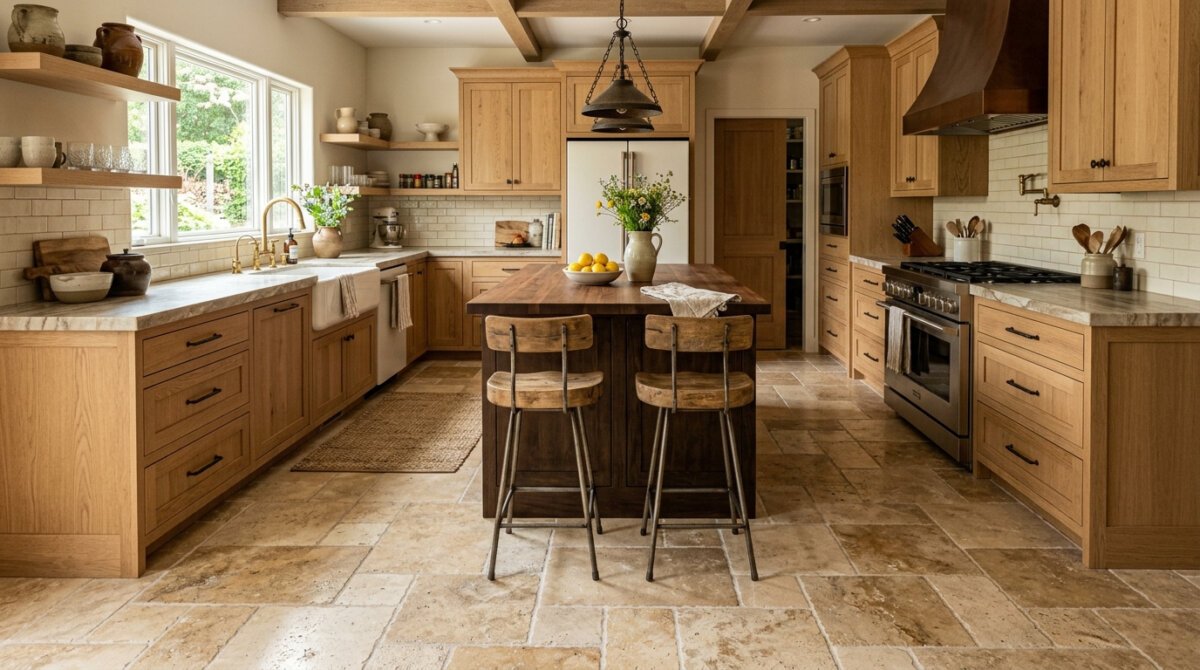
This faster formation process produces pronounced veining and distinctive honeycomb-like textures in warm earth tones. Interestingly, travertine is actually classified as a specific type of limestone, though its unique formation gives it markedly different properties.
Benefits and Features
These natural stones offer contrasting characteristics that suit different kitchen requirements. Limestone provides classic beauty with its smooth, uniform textures that work equally well in contemporary and traditional designs. The stone’s density makes it particularly suitable for areas expecting heavy foot traffic.
Travertine delivers rustic character through its natural textures and veining patterns. Its porous surface structure creates inherent slip resistance, making it particularly effective for areas prone to moisture. However, both stones share similar maintenance requirements due to their porous nature, requiring proper sealing to prevent staining.
The density difference proves significant in practical terms. Limestone’s compact structure provides superior durability for high-traffic areas, whilst travertine develops an attractive patina over time that many homeowners find appealing.
Budget Considerations
Quality limestone and travertine tiles typically cost between £30-90 per square metre in the UK. Installation expenses remain comparable for both stones, though both require specialist fitters with natural stone experience. The initial investment reflects the specialised handling and sealing requirements these materials demand.
Best for These Kitchen Styles
Limestone suits kitchens seeking uniform, sophisticated appearances, particularly in contemporary schemes where consistency proves important. Travertine creates Mediterranean or rustic aesthetics through its natural variation and warm colour palette. The stone’s inherent earth tones complement country and traditional kitchen designs particularly well.
Maintenance Tips
Seal both stones during installation using appropriate impregnating sealants, then reseal every few years to maintain protection. Clean regularly with pH-neutral products specifically designed for natural stone; acidic cleaners such as vinegar or lemon-based solutions can damage the calcium carbonate structure. Address spills immediately to prevent absorption and potential staining.
Comparison Table
How do these 12 flooring options compare when you examine them side by side? This table breaks down the essential details you need to evaluate each choice against your specific requirements. The information helps you weigh cost against longevity, assess maintenance commitments, and match materials to your kitchen style.
Comparison Table: Kitchen Flooring Options
| Flooring Type | Material Cost Range | Lifespan | Water Resistance | Maintenance Level | Best Suited For | Key Advantages | Key Disadvantages |
|---|---|---|---|---|---|---|---|
| Laminate Flooring | £10-£60 per m² | 10-25 years (with warranty) | Water-resistant surface (not waterproof) | Low to moderate; daily sweeping, immediate spill cleanup | Traditional, contemporary, Mediterranean, Art Deco kitchens | Affordable, scratch and dent-resistant, DIY installation, wide design variety | Cannot be refinished, warps with prolonged moisture, environmental concerns |
| Vinyl Flooring | £8.99-£40 per m² | 10-25 years | Water-resistant to fully waterproof | Low; daily sweeping, occasional damp mopping | Farmhouse, contemporary, modern minimalist, traditional kitchens | Affordable, soft underfoot, easy installation, pet-friendly, compatible with underfloor heating | Susceptible to dents from sharp objects, not biodegradable, fades in sunlight |
| Porcelain and Ceramic Tiles | Ceramic: £0.79-£7.94 per sq ft; Porcelain: £2.38-£9.53 per sq ft | 15-50 years | Porcelain: <0.5% absorption; Ceramic: 3-7% absorption | Low; weekly sweeping, damp mopping with pH-balanced cleaners | Traditional, contemporary, farmhouse, Mediterranean, modern minimalist kitchens | Exceptional durability, heat resistant, bacteria resistant, never requires sealing, scratch resistant | Cold and hard underfoot, porcelain difficult to cut, higher upfront cost, ceramic prone to chipping |
| Natural Stone Flooring | £50-£200 per m² | Generations with proper care | Water-resistant once sealed | Moderate to high; requires sealing every 3-4 years, pH-neutral cleaning | Country estates, traditional homes, neoclassical, modern industrial, country-style kitchens | Timeless aesthetic, adds property value, heat retention, hygienic, unique character | Requires regular sealing, porous without protection, higher upfront investment |
| Engineered Wood Flooring | £27.98-£55.49 per m² (average £50 per m²) | Decades (as long as hardwood) | Resists warping better than solid wood but not waterproof | Moderate; damp mopping with wood-specific cleaners, immediate spill cleanup | Contemporary, classic, modern, traditional kitchens | Resists warping, can be refinished, DIY installation available, compatible with underfloor heating | Doesn’t tolerate prolonged water exposure, limited refinishing, more expensive than laminate/vinyl |
| Luxury Vinyl Tiles (LVT) | £15-£60 per m² | 15-30 years | Waterproof (with rigid cores) | Low; regular vacuuming, damp mopping with LVT-specific cleaners | Traditional, minimalist, farmhouse kitchens | Waterproof, scratch/stain/dent resistant, easy installation, warmer than ceramic, compatible with underfloor heating | Susceptible to sharp object damage, limited refinishing options |
| Concrete Effect Flooring | Real concrete: £2.38-£15.88+ per sq ft; Porcelain alternative: £20-30 per m² | Decades (real concrete) | Moisture resistant when sealed | Moderate; neutral cleaning solutions, resealing every 6-12 months (concrete) or 5-7 years | Modern, contemporary kitchens | Resilient, seamless surface, works with radiant heating, minimal upkeep | Real concrete can stain/crack, requires regular resealing, not suitable for traditional designs |
| Herringbone and Parquet Flooring | £25-£65 per m² fitted | Decades with proper care | Depends on material (wood requires sealing) | Moderate to high; regular vacuuming, lightly damp mopping, annual resealing for wood | Traditional Shaker, farmhouse, modern kitchens | Makes spaces appear wider, adds warmth, withstands heavy use, masks imperfections | Higher installation costs, increased material wastage (10-15%), requires precision installation |
| Patterned Floor Tiles | Varies by material type | 15-50 years (porcelain) | Depends on material (porcelain has low absorption) | Low; routine sweeping, pH-neutral cleaning | Eclectic, contemporary, traditional, heritage kitchens | Wipe-clean, high wear resistance (porcelain), compatible with underfloor heating, adds personality | Pattern may date over time, higher cost for quality options |
| High Gloss Flooring | Budget-friendly for laminate versions | Varies by material | Stain-resistant | High; frequent cleaning required to maintain shine | Contemporary, modern, minimalist kitchens | Reflects light, makes spaces appear larger, easy to clean, stain-resistant, luxurious appearance | Shows fingerprints and scratches easily, requires frequent cleaning |
| Marble Flooring | £40-50 per m² materials; £85-£250 per m² installed | Generations with proper care | Porous; requires regular sealing | High; annual sealing, pH-neutral cleaning only, immediate spill cleanup | Traditional, contemporary, heritage kitchens | Elegant, durable, heat-resistant, increases property value, works with underfloor heating | Requires regular sealing, scratches and stains easily, less suitable for families with children/pets |
| Limestone and Travertine Flooring | £30-90 per m² | Generations with proper care | Porous; requires sealing | Moderate to high; sealing every few years, pH-neutral cleaning, immediate spill cleanup | Contemporary, traditional, Mediterranean, rustic, country kitchens | Classic beauty (limestone), rustic character (travertine), natural slip resistance (travertine), develops attractive patina | Both require sealing, porous nature makes them susceptible to staining |
Use this comparison to identify which flooring types align with your budget, maintenance preferences, and design vision. Consider your household’s specific needs – families with young children might prioritise different features than those in adult-only homes.
Conclusion
Your kitchen flooring choice ultimately comes down to three key factors: how much you want to spend, how much maintenance you’re prepared to do, and what look you’re trying to achieve.
If you’re working with a tight budget, vinyl and laminate offer impressive durability and style without breaking the bank.
These options have come a long way in recent years, with some luxury vinyl tiles virtually indistinguishable from real stone or wood.
For those with more to invest, natural stone and marble create floors that will outlast several kitchen renovations whilst adding significant property value.
Think about your household’s specific needs. Busy family kitchens benefit from waterproof materials like LVT or porcelain tiles that can handle spills, pet accidents, and heavy foot traffic.
If you’re drawn to wood but worried about water damage, engineered timber offers a compromise that resists warping better than solid planks.
Remember that installation costs can significantly impact your total budget, particularly for materials like natural stone or intricate patterns such as herringbone.
Sometimes a mid-range material professionally installed proves more cost-effective than attempting DIY with premium options.
Have you recently chosen new kitchen flooring? What factors influenced your decision, and how satisfied are you with the results? Share your experience in the comments below.