What does it take to keep a carpet looking pristine for years—and is it really worth the effort?
High-quality carpets can easily last an average of 10 to 15 years if cared for properly. Yet, most are replaced far sooner simply due to avoidable wear and neglect. The good news is that protecting your flooring investment comes down to a few straightforward habits: deep clean every 8 to 12 months, vacuum high-traffic areas at least twice a week, and schedule a professional deep clean once a year.
Whether you have wool, synthetics, natural fibres, or commercial carpeting, the right approach varies depending on exactly what is underfoot. This expert guide breaks down essential maintenance tips for every carpet type alongside practical strategies to extend your flooring’s lifespan.
1. Know Your Fibre: The Carpet Maintenance Quick-Guide
Not all carpets are maintained the same way. The fibre your carpet is made from determines everything—from which cleaning products are safe to use, to how quickly you need to act when something spills.
Fibre Type
Best For
Stain Resistance
Moisture Sensitivity
Cleaning Method
Wool
Living rooms, premium areas
Natural (Lanolin barrier)
High (Prone to shrinkage)
Low pH (~4.5–8.5), gentle steam
Nylon
High-traffic hallways, stairs
Excellent (Treatments add depth)
Low
Standard steam extraction
Polyester
Bedrooms, low-traffic zones
Exceptional (Hydrophobic)
Low
Target oil-based spots early
Sisal & Jute
Rustic spaces, home offices
Poor
Extreme (Water damages pile)
Strictly dry compounds only
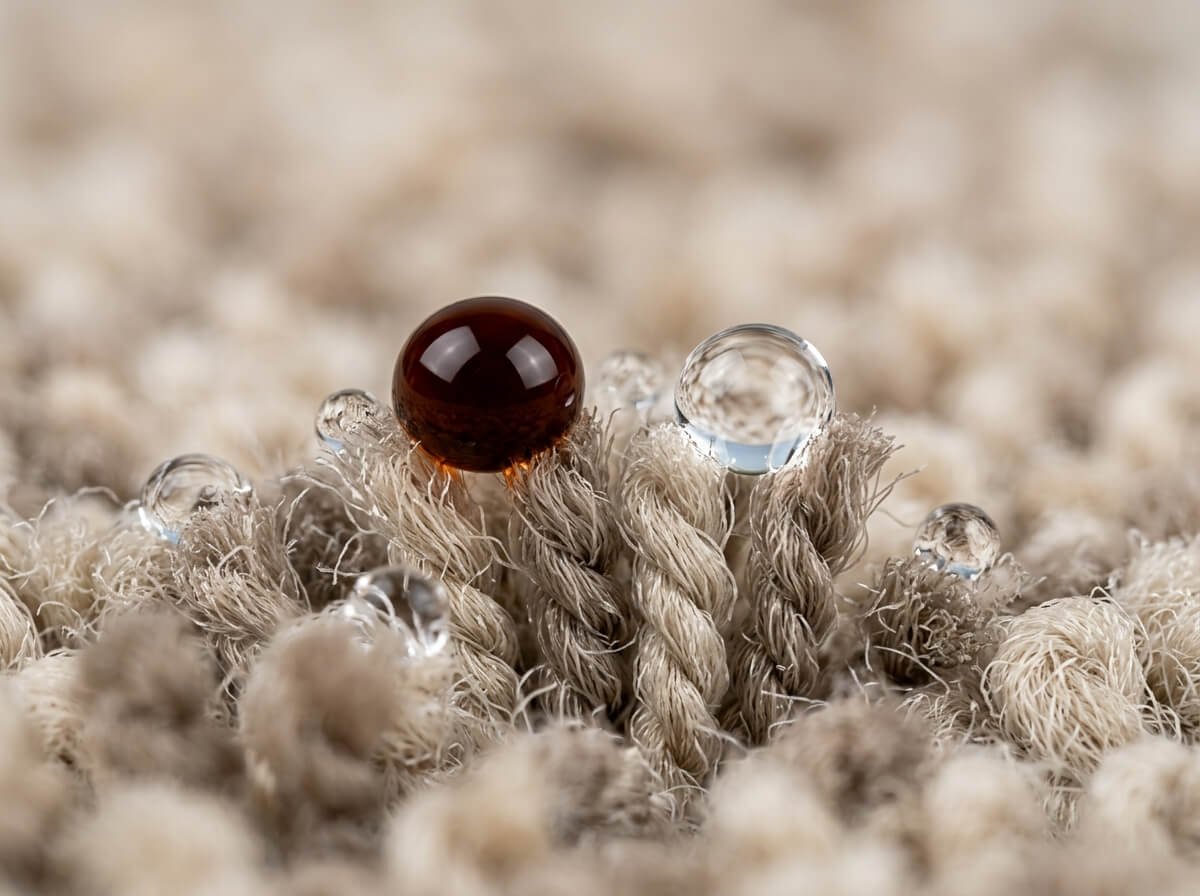
Pictured: An ultra-close-up macro photograph focusing beautifully on individual clean carpet fibres. Several perfectly round, vibrant water and coffee droplets are seen cleanly micro-beading on top of the treated carpet surface, showing the invisible liquid-repellent barrier property.
Wool Carpet Care
Wool is a premium natural fibre with exceptional built-in benefits. It contains natural lanolin, which provides inherent soil resistance, and its protein composition makes it naturally flame-retardant.
However, wool is highly absorbent. It dries slowly after wet cleaning and is vulnerable to “browning” or shrinking if over-wetted.
The Tech Spec: The safe pH range for cleaning wool sits strictly between 4.5 and 8.5. High-pH cleaning chemicals will cause irreversible felting (where the fibres break down and mat together).
The Golden Rule: Never use chlorine bleach on wool—it will dissolve the fibres completely. Schedule a professional steam clean every 12 to 18 months to refresh the fibre’s natural “memory” and maintain any topical stain-resistance treatments.
Synthetic Carpet Fibres (Nylon & Polyester)
Nylon: Generally considered the powerhouse choice for busy households. Its hydrogen-bonded structure gives it superb elastic recovery, allowing the pile to bounce back from heavy foot traffic and heavy furniture weight.
Polyester: Naturally hydrophobic, meaning liquid spills struggle to penetrate the filament. This makes it incredibly resistant to water-based stains. For example, PET polyester(often made from recycled plastic bottles) produces remarkably soft fibres perfect for bedrooms. While it resists liquids, it lacks nylon’s elastic recovery and can flatten faster in main walkways. Note: Oil-based substances require specialised treatments on polyester, as they bond easily with the synthetic material.
Natural Fibre Carpets (Jute & Sisal)
Sisal and jute are highly sensitive to moisture, shaping every aspect of their care. Water-based cleaning methods should be avoided entirely.
The Method: Use dry cleaning powders and compounds instead. Jute benefits from strong-suction vacuuming, but no liquids should ever be applied.
Spill Action: Lift solids carefully, blot liquids gently with absorbent paper, and never scrub. Scrubbing works the dampness deeper into the backing, causing permanent water marking and structural breakdown.
Commercial Carpet Maintenance
Commercial spaces typically face 10 to 20 times more daily foot traffic than a domestic home. This level of wear requires a proactive maintenance schedule rather than reactive spot-cleaning.
Soil Prevention: Effective care starts at the door. Installing 10 to 15 feet of high-quality entrance matting can trap up to 80% of incoming soil before it ever touches your carpet.
Warranty Check: Always document your cleaning schedule and check manufacturer guidelines; failing to follow their specific commercial protocols can void your wear warranty.
2. Daily and Weekly Carpet Care Routines
Your carpets act as a giant air filter, trapping dust, pet dander, and fine particles within their pile. Without regular maintenance, these particles settle deep down, acting like sandpaper that cuts away at the carpet fibres every time you walk on them.
Vacuuming Frequency and Techniques
How often you vacuum depends entirely on household traffic:
High-Traffic Zones (Hallways, Entryways, Main Living Rooms): 2–3 times per week.
Medium-Traffic Zones (Dining Rooms, Home Offices): Twice weekly.
Light-Traffic Spaces (Guest Bedrooms): Once a week is sufficient.
Pro Vacuuming Tip: Move slowly. Don’t just skim the surface. Use a vacuum with strong suction and a rotating brush (beater bar) to vibrate the carpet. Make multiple passes—forward and back—over the same section. The first pass loosens the deeply embedded grit; the second pass lifts it out.
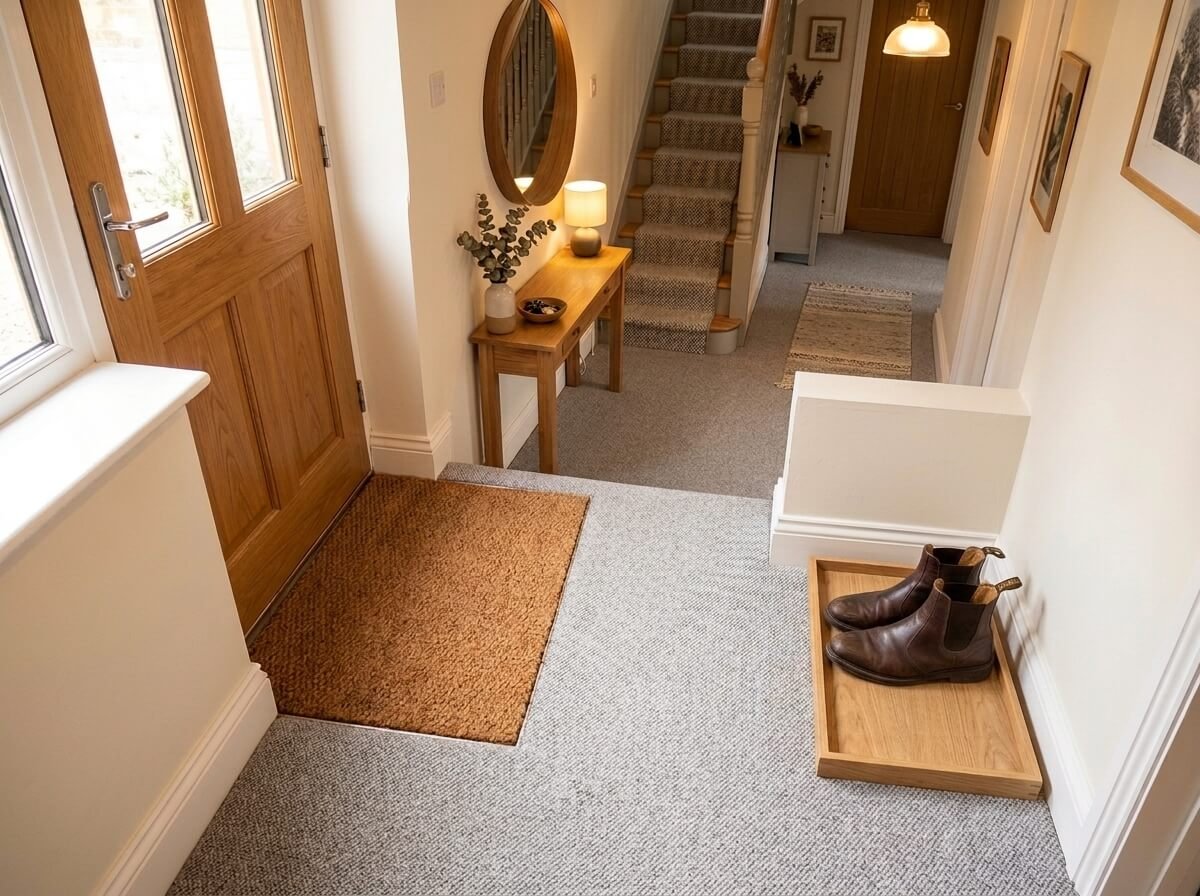
Pictured: A high-angle interior photograph of a modern residential home entrance hallway. At the doorway, a thick, natural rustic coir doormat transitions seamlessly into a pristine, high-density light gray hallway carpet floor.
The Power of Doormats and Removing Shoes
The average household brings in several kilos of dirt per year through footwear alone. Utilising doormats correctly can eliminate 80% to 90% of this incoming grit.
We recommend a two-layer approach: Place a tough coir (coconut fibre) mat outside to scrape away heavy dirt, and an absorbent fabric mat inside to catch residual moisture. Transitioning to a strict no-shoes policy indoors will easily double your carpet’s visual lifespan.
Rotating Furniture and Managing Sunlight
Indentation Prevention: Heavy furniture concentrates massive weight on tiny areas. Shifting your room layout by just a few inches every six months allows compressed fibres to recover.
Sunlight Protection: Direct UV rays cause severe colour fading and fibre degradation over time—especially in natural fibres or delicate dyes. Use curtains, blinds, or UV-protective window films during peak sunlight hours to keep your rooms ventilated but shielded.
3. The Emergency Spill Protocol: Stains & Deep Cleaning
When an accident happens, your response within the first three minutes determines whether a spill becomes a temporary blip or a permanent blemish.
Immediate Spill Response
Blot, Never Scrub: Press firmly down with a clean, white microfibre cloth or paper towel to absorb the liquid. Scrubbing spreads the stain outward and distorts the carpet pile permanently.
Work Inwards: Always clear up a spill starting from the outer edges moving toward the centre to avoid expanding the stain boundary.
Control the Application: Apply any cleaning solution directly to your cloth first, never pour it straight onto the carpet floor.
Spot-Treating Common Household Stains
Wine, Coffee, & Tea: Blot immediately with cold water on a white cloth.
Pet Accidents: Dab gently with cold water. Avoid harsh, heavily perfumed household sprays; their chemicals can chemically “set” the urine proteins into the backing.
Mud: Let it dry completely first. Vacuum up the dry crust thoroughly, then treat any remaining soil residue with damp blotting.
Grease & Oils: Scrape up excess solids. Use a specialised dry volatile solvent spotter. Avoid standard washing-up liquid, as it leaves behind a sticky chemical residue that acts like a magnet for fresh dirt.
4. DIY vs. Professional Carpet Cleaning
While regular vacuuming keeps surface dirt at bay, it cannot reach the deeply embedded allergens, dust mites, and oily residues hidden at the base of the pile. Professional deep cleaning is recommended every 12 to 18 months.
The True Cost Breakdown: A DIY rental machine typically costs around £31.77 to £47.65 per day, plus another £11.91 to £23.82 for the specialised detergent. Hiring a professional service for multiple rooms averages between £119.12 and £238.25.
The real difference lies in extraction power. Industrial truck-mounted or high-end professional extraction units inject water and pull it back out with immense suction. Standard DIY rental machines often lack the vacuum power to extract all the water, leaving your carpets waterlogged. This drastically increases drying times and runs a high risk of developing subfloor mildew or carpet shrinking.
Post-Clean Care
After a professional clean, a carpet typically needs 6 to 8 hours to dry completely. Speed up this process by opening windows to promote cross-ventilation, running ceiling fans, or setting up floor fans across damp paths. Do not walk on the floor until it is bone dry—damp fibres instantly pull oils from bare skin and dirt from socks, causing immediate re-soiling.
5. Long-Term Maintenance Strategies
Reapply Stain Protectants: Professional stain protectors work by coating individual carpet fibres with an invisible, hydrophobic barrier. Liquids bead cleanly on top, buying you critical time to blot. Reapply this treatment after every professional hot-water extraction clean (roughly every 12 to 24 months).
Use Quality Furniture Coasters: Place wide felt or rubber furniture cups under heavy sofa and table legs to distribute weight across a larger surface area.
Look out for Wear Signals: Regularly inspect high-use corridors for signs of pile reversal (where traffic patterns change the direction fibres lay), seam separation, or backing failures. Catching minor edge fraying early prevents a costly, premature full-room replacement.
When Is It Time for Replacement?
Even with flawless maintenance, no carpet lasts forever. It is likely time to browse a replacement floor if you experience:
Persistent odours that survive deep sanitisation (often indicating pet stains have reached the underlayment).
Large areas of matting or bare backing showing through.
A sudden, noticeable spike in household allergy symptoms despite regular vacuuming.
Summary
Consistent, minor habits outperform infrequent major overhauls. Keep a firm vacuuming schedule, keep a clean white cloth ready for unexpected spills, and book an annual professional extraction clean. Your carpets will stay vibrant, soft, and beautifully fresh for years to come.
Unsure which cleaning method fits your specific flooring warranty? Drop your carpet material or questions in the comments below, and our team will guide you!
To provide the best experiences, we use technologies like cookies to store and/or access device information. Consenting to these technologies will allow us to process data such as browsing behaviour or unique IDs on this site. Not consenting or withdrawing consent, may adversely affect certain features and functions.
Functional
Always active
The technical storage or access is strictly necessary for the legitimate purpose of enabling the use of a specific service explicitly requested by the subscriber or user, or for the sole purpose of carrying out the transmission of a communication over an electronic communications network.
Preferences
The technical storage or access is necessary for the legitimate purpose of storing preferences that are not requested by the subscriber or user.
Statistics
The technical storage or access that is used exclusively for statistical purposes.The technical storage or access that is used exclusively for anonymous statistical purposes. Without a subpoena, voluntary compliance on the part of your Internet Service Provider, or additional records from a third party, information stored or retrieved for this purpose alone cannot usually be used to identify you.
Marketing
The technical storage or access is required to create user profiles to send advertising, or to track the user on a website or across several websites for similar marketing purposes.