Table of contents
- 1. Understand What Truly Affects Carpet Quality
- 2. UK Carpet Constructions: Woven vs. Tufted
- 3. How to Choose Carpet Styles and Pile Types
- 4. Compare Carpet Materials and Fibres
- 5. How to Choose Carpet by Room Function
- 6. Don’t Overlook Underlay and Installation
- 7. Smart Ways to Save Money on Carpet
- Frequently Asked Questions
If you are wondering how to choose carpet for a new home, the array of options can be bewildering. Basic synthetic carpets start at just a few pounds per square metre, while luxury wool carpets can cost over £100 per square metre. Choosing the right carpet involves more than just finding a style you like; it acts as a crucial insulator during chilly UK winters and absorbs sound to make living spaces peaceful.
However, the perfect carpet for your hallway won’t necessarily be ideal for your bedroom. This comprehensive carpet buying guide will help you navigate the various constructions, understand pile heights, test for density, and make smart choices for each room—all while keeping your budget intact.
1. Understand What Truly Affects Carpet Quality
Here is what salespeople rarely tell you: face weight alone doesn’t guarantee quality. Most domestic carpets range between 35 to 60 ounces per square yard, but a higher number doesn’t automatically mean a better product. What truly determines performance is density, fibre twist, and construction.
Density Beats Face Weight (The “Grin Test”)
While face weight measures the amount of fibre used per square yard, density measures how tightly packed those fibres are within the backing. The Test: Bend a carpet sample backwards. If you can easily see the backing material through the fibres (it “grins” at you), it has low density and will flatten quickly. A carpet with lower face weight but high density will almost always outperform a heavy, low-density alternative.
Why Fibre Twist Matters
Fibre twist refers to how many times yarn strands are twisted together per inch (Twists Per Inch or TPI). A standard quality carpet sits around 5 TPI, while premium durability carpets boast 7–8 TPI. Tightly twisted fibres act like tiny springs, bouncing back under pressure and hiding footprints.
2. UK Carpet Constructions: Woven vs. Tufted
When browsing carpets in the UK, you will encounter two primary manufacturing styles. Woven carpets (like Axminster and Wilton) have the yarn and backing woven together simultaneously, offering exceptional durability (20+ years) and a premium feel. Tufted carpets are made by punching yarn into a pre-made backing and gluing it. They are the most popular choice in the UK due to affordability, offering a moderate-to-high lifespan (5–10+ years).
3. How to Choose Carpet Styles and Pile Types
Understanding the different pile types helps you select the perfect carpet for each space in your home.
- Twist Pile: The most popular option in UK homes, featuring tightly twisted fibres that create excellent resilience. Ideal for family rooms, hallways, and stairs.
- Saxony (Cut Pile): Offers a more luxurious alternative with longer cut pile and a plush, velvety texture. These feel wonderfully soft but show footprints readily, making them better suited for bedrooms.
- Loop Pile (Berber): Features uncut loops of yarn that remain intact on the surface. These excel in durability and stain resistance, making them perfect for high-traffic zones. Note: loop carpets may snag if you have pets with sharp claws.
How Pile Height Affects Comfort and Wear
Low pile (under 7mm) offers excellent durability and ease of maintenance for busy households. Medium pile (7-13mm) represents the “sweet spot” between comfort and durability. High pile (13-19mm) provides maximum softness and luxury but shows wear more quickly, making it ideal for low-traffic bedrooms.
4. Compare Carpet Materials and Fibres
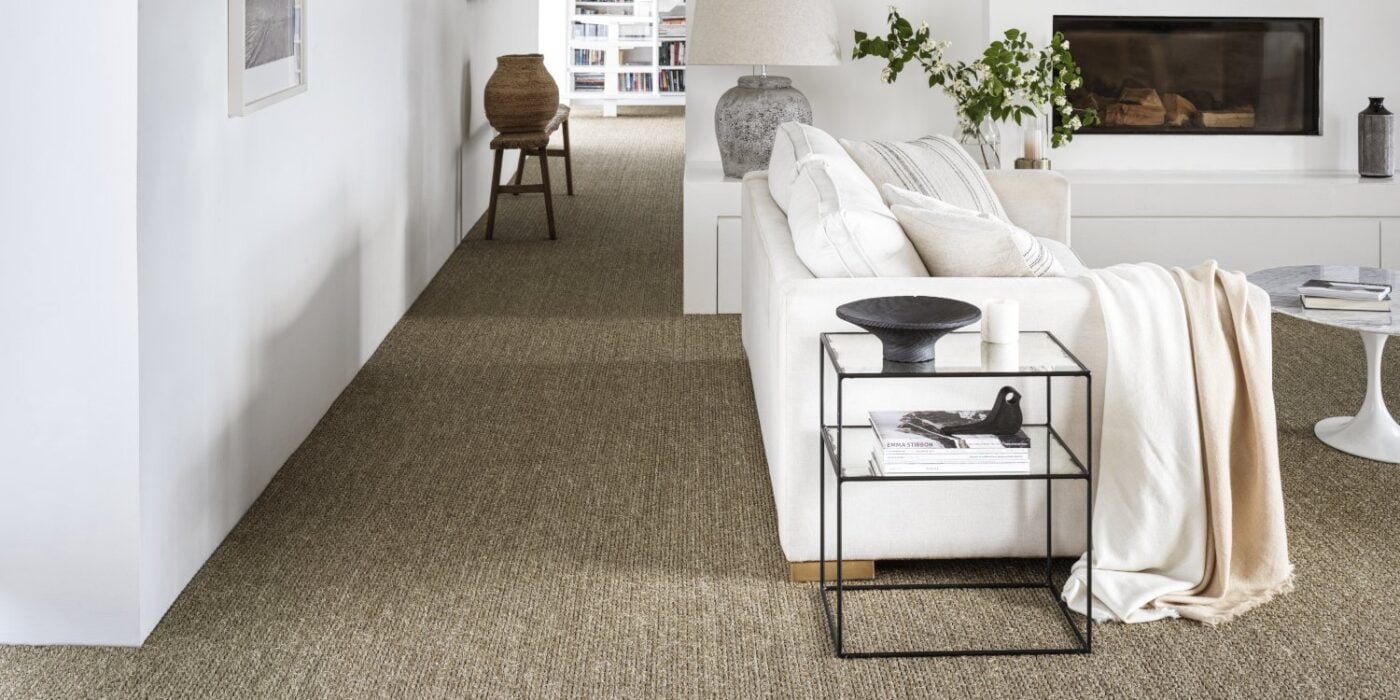
When learning how to choose carpet, selecting the right fibre is perhaps the most crucial decision, as it determines both long-term performance and maintenance requirements.
Wool vs. Synthetic Fibres
Wool remains the gold standard. As a natural fibre, it is inherently flame-resistant, hypoallergenic, and naturally soil-resistant. It regulates humidity and offers superb thermal insulation—qualities often championed by the Campaign for Wool boasting a potential 15-year lifespan.
Synthetic Fibres are practical and budget-friendly:
- Nylon (Polyamide): Extremely resilient, springs back after heavy compression, and resists fading. The king of synthetics for busy family homes.
- Polypropylene: The ultimate budget-friendly, stain-resistant option. It repels water completely and can even be cleaned with a mild bleach solution.
- Polyester: Wonderfully soft with rich colours, perfect for quieter spaces like guest bedrooms, though it lacks the resilience of nylon.
Wool Blends: The Best of Both Worlds
Wool blends typically combine 80% natural wool with 20% synthetic material. Wool-nylon blends are incredibly popular, pairing wool’s luxurious feel with nylon’s durability and stain resistance.
5. How to Choose Carpet by Room Function
The specific function of each room should guide your selection:
- Bedrooms & Living Rooms (Focus on Comfort): Since bedrooms experience lower foot traffic, indulge in luxurious, deeper cut-pile wool or soft Saxony synthetics.
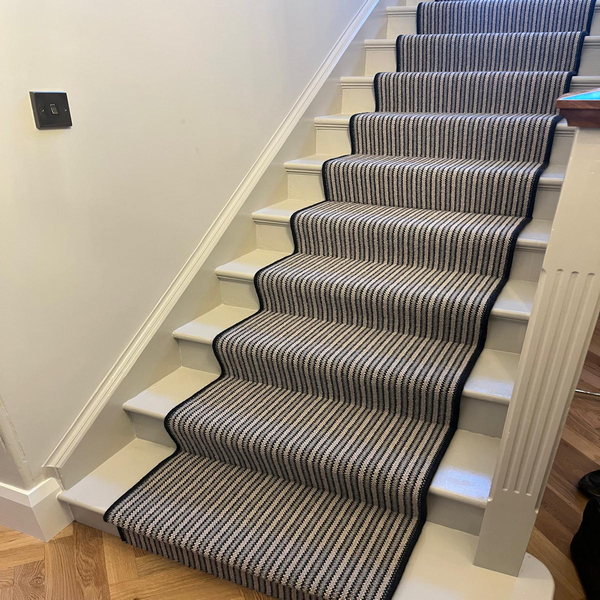
- Hallways and Stairs (Focus on Resilience): For these high-traffic zones, prioritize short, high-density carpets with tightly twisted fibres like a wool loop, dense Berber, or high-twist nylon stair runners.
- Kitchen and Bathroom (Moisture Resistance): Standard backing absorbs moisture, leading to mould. For bathrooms, look for specialized waterproof gel-backed carpets. For kitchens, consider water-resistant luxury vinyl tiles (LVT) instead.
6. Don’t Overlook Underlay and Installation
Never skimp on underlay. A quality underlay can extend your carpet’s lifespan by up to 50%, acting as a shock absorber that prevents the backing from breaking down prematurely. It provides thermal insulation (saving on energy bills) and improves sound absorption.
- PU foam offers excellent cushioning at affordable prices (aim for at least 130kg/m³ for living areas).
- Rubber underlay excels in high-traffic areas due to superior durability.
- Felt underlay delivers outstanding thermal insulation and works perfectly with woven carpets.
7. Smart Ways to Save Money on Carpet
Now that you understand how to choose carpet for quality and durability, you can focus on smart shopping tactics that slash your budget without sacrificing quality.
- Timing is Everything: January, July, and November typically offer the best carpet sales.
- Use Remnants for Small Rooms: Leftover pieces from larger installations sell at significant discounts, perfect for small guest rooms or offices.
- Ask for Itemised Pricing: When comparing quotes, ensure costs for the carpet, underlay, fitting, and removal of old flooring are broken down clearly.
- Reuse Accessories: Existing gripper rods and door trims often remain perfectly functional and can be reused.
Frequently Asked Questions
Q: How important is carpet density, and how can I check it?
A: Density is crucial for durability. Check it using the ‘grin test’ by bending a carpet sample backwards. The less backing visible through the fibres, the higher the density. Dense carpets generally outperform those with higher face weight but lower density.
Q: What is the best carpet material for high-traffic areas in UK homes?
A: For high-traffic areas like hallways and stairs, tightly twisted nylon or wool loop pile (Berber) carpets are excellent choices. They offer superior durability and bounce back from compression.
Q: Is it possible to have carpet in moisture-prone areas like bathrooms?
A: Yes, but you must use specialized carpets. Look for waterproof carpets with gel or waffle backing designed specifically to combat humidity without the need for traditional underlay.
Q: How can I save money when buying carpet without compromising quality?
A: Shop during seasonal sales (January/July), consider using high-quality carpet remnants for smaller rooms, and ask for fully itemized fitting quotes. However, never skimp on the underlay, as a good underlay protects your investment.