Table of contents
Understanding the different types of vinyl flooring helps you choose the perfect surface for your home. Today, vinyl flooring has captured widespread popularity among UK homeowners. Whether you are renovating a kitchen or refreshing a living room, modern vinyl delivers impressive waterproofing and durability where you need it most.
Modern vinyl ranges in thickness from 1.1mm cushioned rolls up to 8mm rigid planks. Consequently, thicker options offer superior sound insulation and comfort underfoot. Furthermore, advanced printing techniques convincingly replicate real oak and natural slate at a fraction of the cost.
In this guide, we break down the six primary types of vinyl flooring. We compare sheet vinyl, LVT, rigid SPC, and WPC on durability, fitting methods, and room suitability to help you make an informed decision.
What Is Vinyl Flooring?
Vinyl flooring is a synthetic surface manufactured primarily from polyvinyl chloride (PVC). Multiple engineered layers work together to provide high resilience against everyday household traffic.
Most quality vinyl constructions feature four key components:
- Wear Layer: A clear polyurethane top coating that resists scuffs, scratches, and water ingress.
- Print Film Layer: A high-definition photographic image replicating timber grain, stone, or geometric tiles.
- Core Layer: The structural backbone, which can be flexible PVC, mineral SPC, or aerated WPC.
- Backing Layer: A cushioned base made of foam, felt, or cork that provides acoustic sound reduction.
The 6 Main Types of Vinyl Flooring Explained
Each variety serves different practical demands and budgets. Below are the six core formats available across the UK flooring market:
1. Sheet Vinyl
Sheet vinyl arrives on large continuous rolls, typically 2m, 3m, or 4m wide. Because it unrolls across an entire room with minimal joins, it creates a continuous, completely waterproof barrier against moisture.
Modern sheet vinyl features cushioned foam backings that feel warm and comfortable under bare feet. For this reason, it remains an economical favourite for family bathrooms, cloakrooms, and rental properties.
2. Vinyl Floor Planks
Vinyl floor planks replicate traditional timber floorboards without the expansion issues of solid wood. These narrow boards are thicker and more rigid than sheet vinyl, giving them higher scratch resistance.
Moreover, damaged planks can be replaced individually if accidents happen. Planks connect using either floating click-lock systems or direct glue-down adhesive.
3. Vinyl Tiles
Vinyl tiles deliver the sophisticated appearance of ceramic or marble tiles while remaining warm underfoot. They are available in square formats with realistic grouting effects.
Self-adhesive peel-and-stick tiles offer a fast DIY solution for small cloakrooms. However, traditional glue-down tiles offer far greater long-term durability in high-traffic hallways.
4. Luxury Vinyl Tile (LVT)
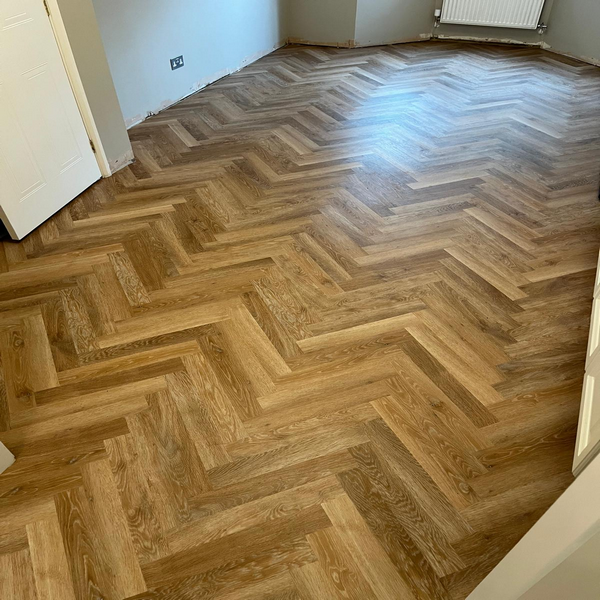
Among the premium types of vinyl flooring, Luxury Vinyl Tile (LVT) represents the benchmark for realistic textures. Advanced embossed-in-register printing aligns surface grooves directly with the photographic wood grain.
LVT wear layers typically measure between 0.3mm and 0.7mm thick. As a result, industry leaders like Karndean and Amtico back their collections with 25-year to lifetime residential guarantees.
5. Stone Plastic Composite (SPC)
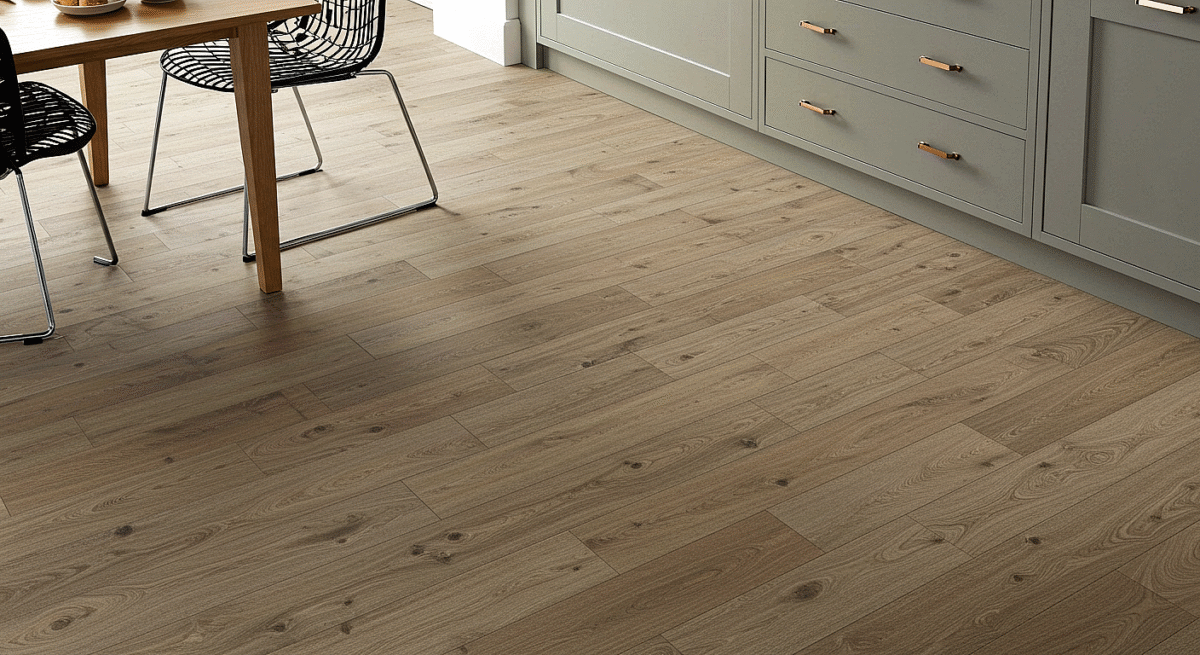
SPC flooring blends limestone powder (calcium carbonate) with PVC stabilizers to form an ultra-dense, rigid stone core. Consequently, it delivers unmatched resistance against heavy furniture indentations and impact damage.
Because the stone composite core will not expand under direct sunlight, SPC is ideal for south-facing garden rooms and kitchens with bi-fold doors. Furthermore, it bridges minor subfloor bumps without telegraphing flaws.
6. Wood Plastic Composite (WPC)
WPC combines recycled wood pulp with thermoplastic foaming agents. This creates a slightly thicker, aerated core that feels noticeably softer and warmer underfoot than stone composites.
In addition, the cellular structure provides superior sound insulation. Therefore, WPC is an exceptional option for upper-floor bedrooms and flats where footfall noise reduction is important.
Vinyl Flooring by Installation Method
The installation method you choose plays a critical role in how your floor performs over time:
- Click-Lock Floating Floors: Planks connect along tongue-and-groove joints without adhesive, making fitting fast and DIY-friendly.
- Glue-Down Fitting: Individual tiles are adhered directly to a screeded subfloor, ensuring complete stability under rolling appliances.
- Loose Lay Vinyl: Weighted backing boards rely on friction and perimeter tape to stay securely in place.
- Self-Adhesive Tiles: Peel-and-stick tiles provide a fast surface refresh for smaller utility rooms.
Room-by-Room Guide to Choosing Vinyl Flooring
Every area of the home presents unique traffic and moisture demands. Matching the right format to the room guarantees the longest lifespan:
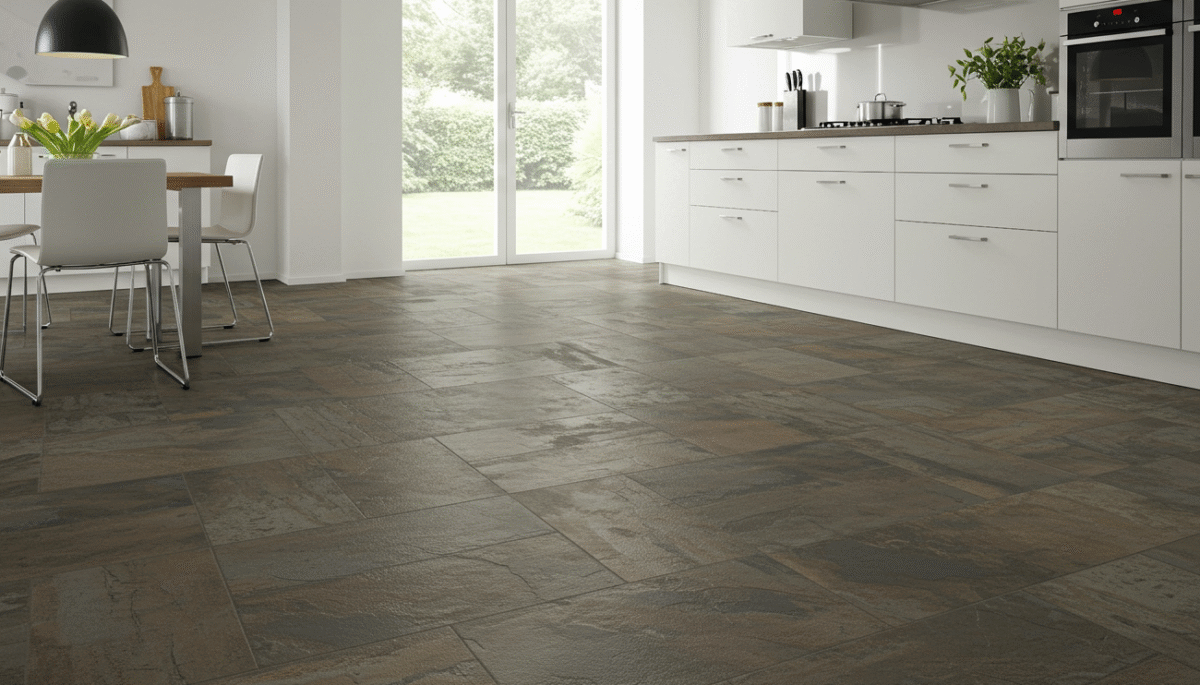
Kitchens & Utility Rooms: Kitchens require surfaces that handle spills, dropped pans, and food prep stains. SPC rigid vinyl with a 0.55mm wear layer provides the ultimate moisture barrier and dent resistance.
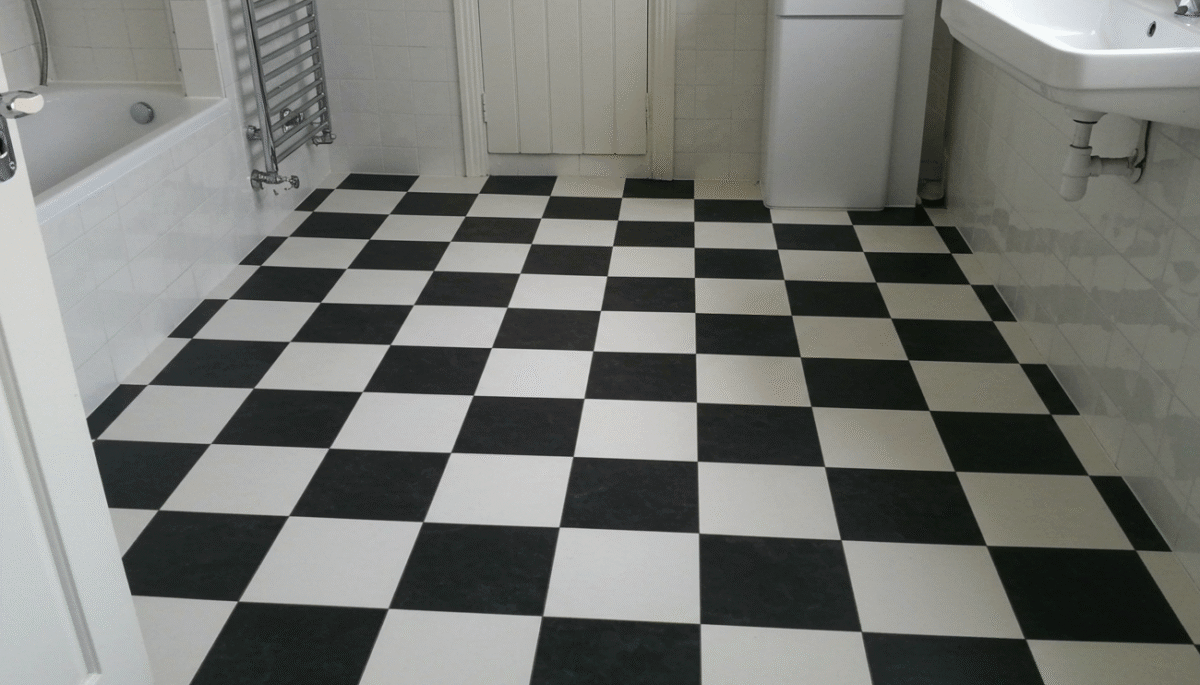
Bathrooms: Sheet vinyl flooring and 100% waterproof LVT perform exceptionally in damp bathroom environments. Unlike real timber, quality vinyl never warps when exposed to daily humidity.
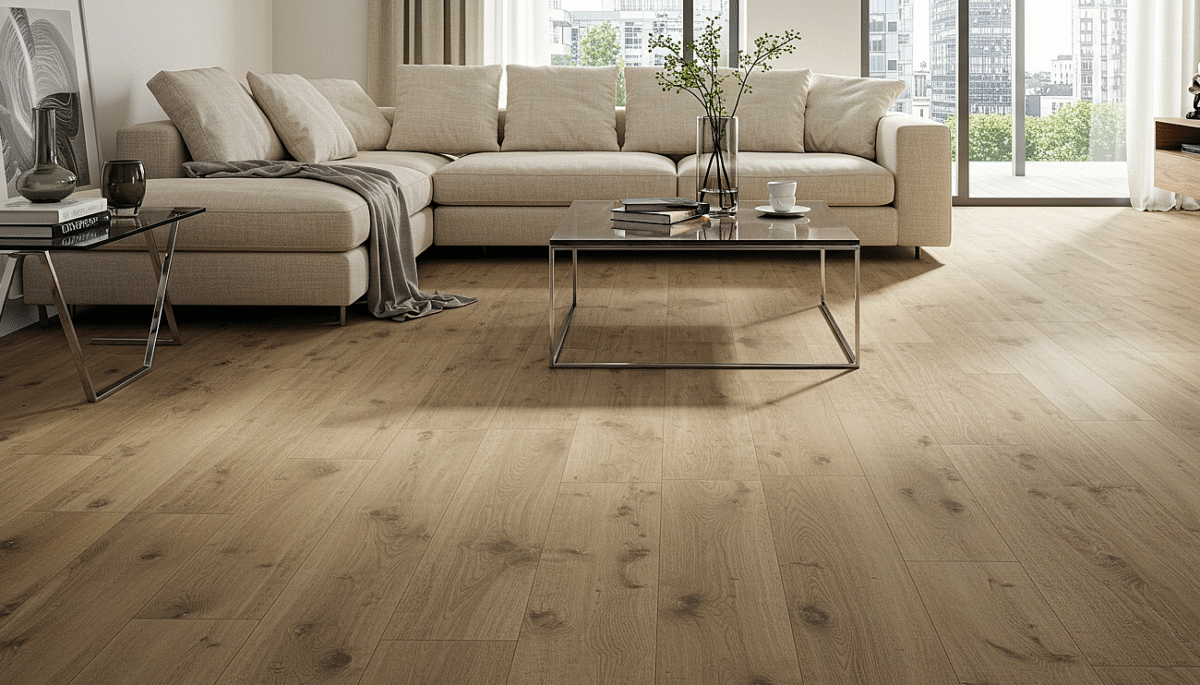
Living Rooms & Bedrooms: In family lounges, underfoot warmth and acoustic comfort take priority. Cushioned WPC boards and wood-effect LVT maintain a cosy, peaceful setting for bare feet.
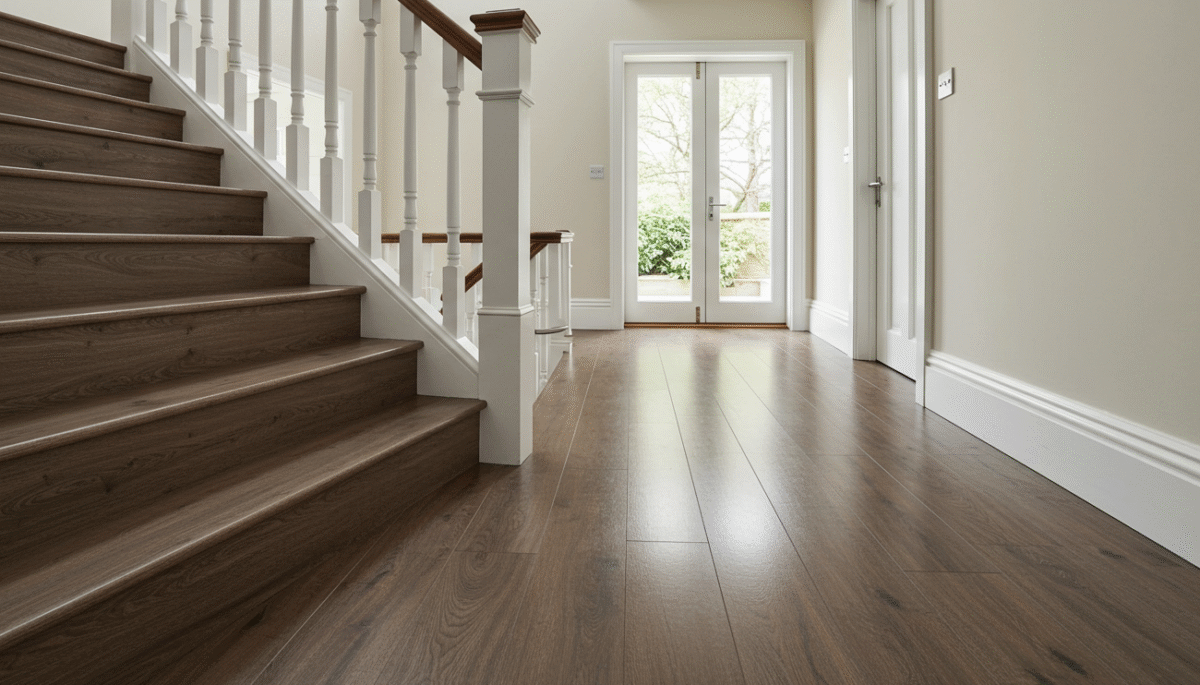
Hallways & Stairs: Entrance corridors endure abrasive outdoor dirt and wet shoes daily. Glue-down LVT with a 0.7mm wear layer anchored by stair nosings resists tracking and heavy footfall.
Key Features to Look for in Vinyl Flooring
When comparing different products, pay close attention to four crucial technical specifications:
- Wear Layer Thickness: Choose 0.3mm for bedrooms, 0.55mm for family kitchens, and 0.7mm for busy hallways with pets.
- Waterproofing: Verify whether the product is surface water-resistant or fully 100% waterproof across all core layers.
- Acoustic Rating: Look for products with integrated underlay that deliver at least an 18dB to 21dB impact sound reduction.
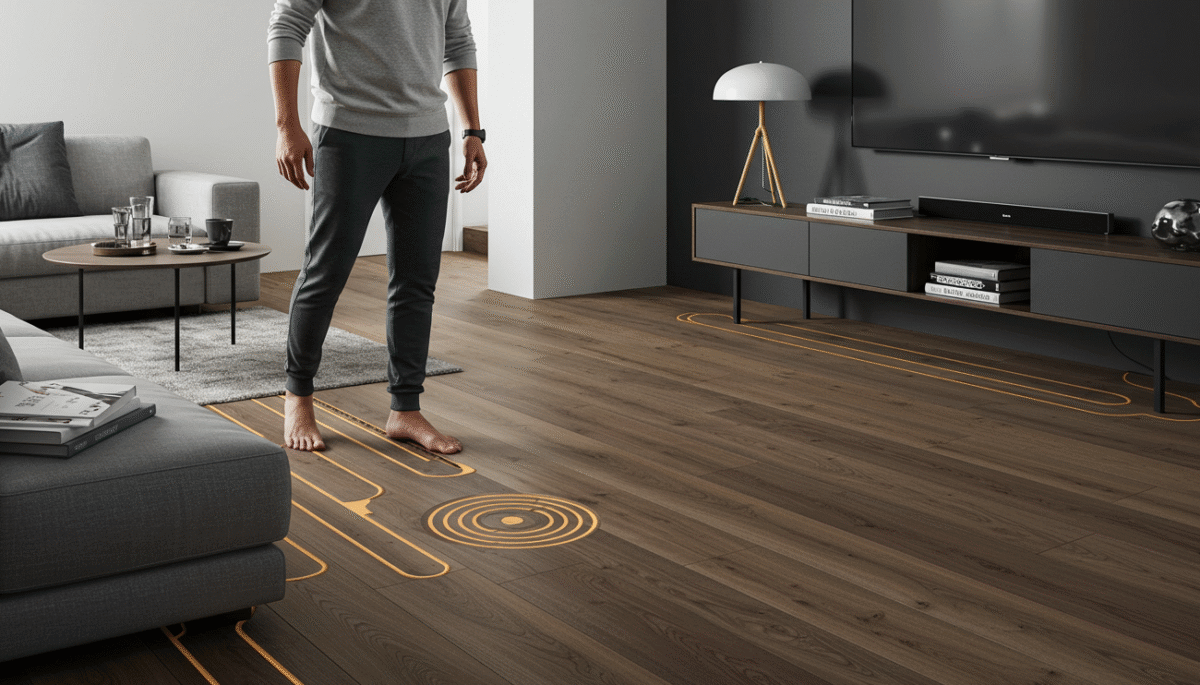
- Underfloor Heating Compatibility: Ensure the vinyl operates safely up to a standard surface temperature limit of 27°C.
Do You Need Underlay for Vinyl Flooring?
Whether you require underlay depends entirely on the format of your floor. For example, sheet vinyl and gluedown LVT do not require separate underlay when laid onto clean, level screeds.
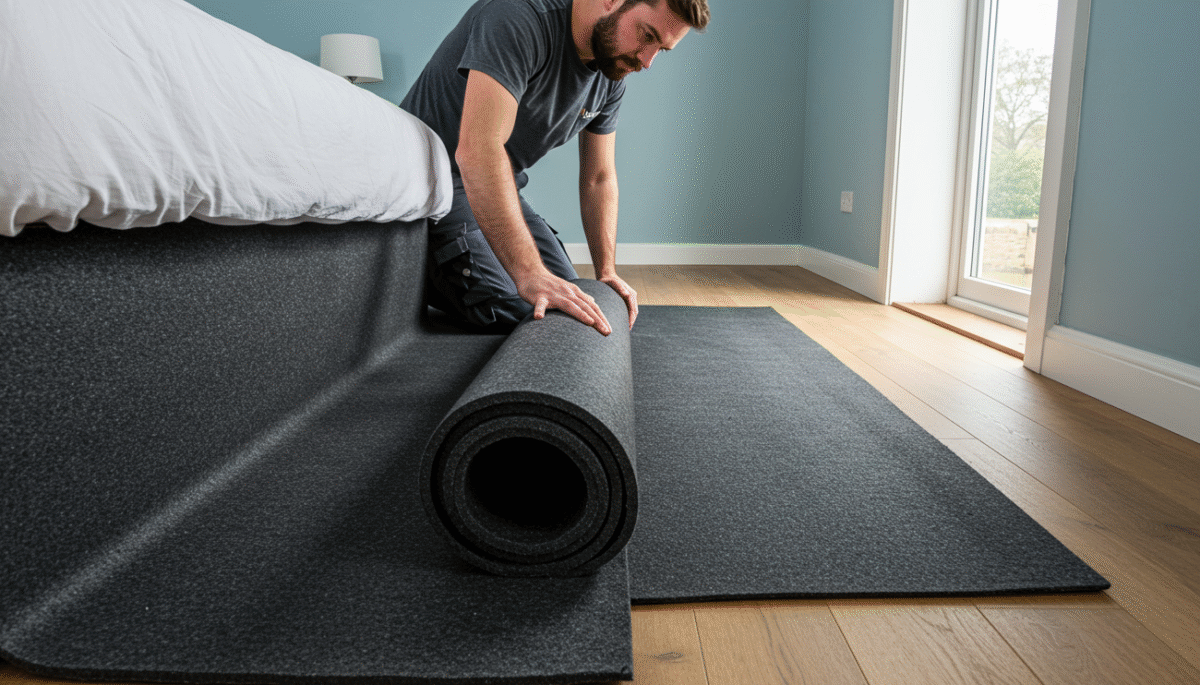
However, click-lock vinyl floating floors benefit substantially from specialist high-density underlay. Always use a dense, thin underlay (1mm to 1.5mm thick). Never use thick carpet underlay, as excess cushioning will flex and break the delicate click-lock joints.
Frequently Asked Questions
The main types of vinyl flooring include sheet vinyl rolls, standard vinyl floor planks, self-adhesive vinyl tiles, Luxury Vinyl Tile (LVT), Stone Plastic Composite (SPC), and Wood Plastic Composite (WPC). Each offers distinct core densities, wear layers, and installation methods.
SPC (Stone Plastic Composite) uses a limestone core that makes it extremely dense, impact-resistant, and dimensionally stable in direct sunlight. WPC (Wood Plastic Composite) features a foamed wood pulp core that makes it slightly thicker, warmer, and softer underfoot with superior acoustic sound absorption.
While almost all vinyl materials are naturally water-resistant, rigid SPC, WPC, and Luxury Vinyl Tiles (LVT) are 100% waterproof through their entire construction. Sheet vinyl is also completely waterproof as long as perimeter edges and joins are sealed.
Quality vinyl flooring lasts between 10 and 30 years depending on the wear layer thickness and maintenance. Premium LVT collections with 0.55mm to 0.7mm wear layers often include 25-year to lifetime residential warranties from manufacturers.
Conclusion
Evaluating the different types of vinyl flooring ensures you match your flooring choice with your family’s daily lifestyle. Whether you prefer the rigid dent resistance of SPC in a busy kitchen or the luxury styling of parquet LVT in an open-plan lounge, modern vinyl delivers dependable performance.
If you are planning a renovation, explore our showroom collection of luxury vinyl tiles (LVT) or visit our Harrogate store to compare large physical samples.